Bubble Hotteok Flame Baked Street Food Recipe (Healthy Oven Version)
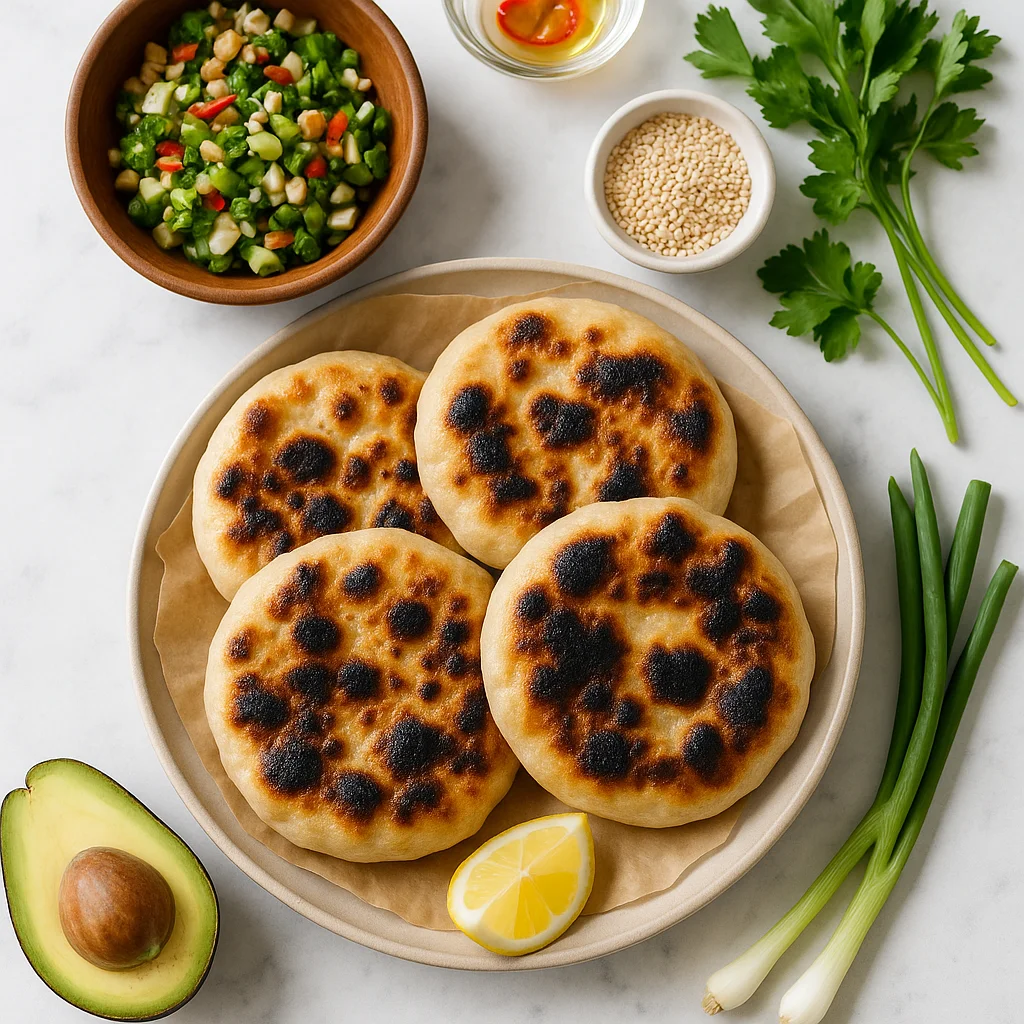
If you have ever stood at a Korean street market stall, watching a vendor press a golden hotteok onto a hot griddle until it puffs up into a glorious bubble, you already know the magic this recipe is chasing. This healthy bubble hotteok flame baked street food recipe brings that exact experience into your home kitchen, but with a genuinely lighter twist. Instead of the traditional deep-fried or heavily oiled pan method, these pancakes are oven baked at high heat, creating those signature blistered, chewy bubbles through steam and radiant heat rather than a pool of oil. The result is a crispy, caramelised exterior with a soft, yielding centre, and you save a significant chunk of calories in the process. This recipe is for anyone who loves Korean street food but wants to keep things balanced, whether you are baking for a weekend family treat or trying to recreate that market-stall nosiness without the guilt.
The dough here uses a blend of wholemeal spelt flour and a small amount of glutinous rice flour, which is what gives hotteok its characteristic chewiness. Spelt adds a mild nutty depth and brings more fibre and protein than plain white flour, making each pancake more satisfying. The dough is leavened with a small amount of instant yeast, just enough to create a light, pillowy texture and help form those beloved bubbles during baking. For the filling, coconut sugar replaces refined white sugar as the primary sweetener, bringing a gentle caramel note alongside a lower glycaemic impact. A generous mix of toasted sunflower seeds, pumpkin seeds and a scattering of black sesame adds crunch, healthy fats, and a striking look when the pancake is torn open. Ground cinnamon and a pinch of ginger warm the filling beautifully without adding any calories worth worrying about. A small drizzle of pure maple syrup ties everything together with just enough sweetness.
Freshly baked, these hotteok are gloriously golden on the outside and soft and stretchy within. The filling melts slightly as the pancakes bake, creating little pockets of sticky, spiced sweetness that ooze gently when you bite in. They are best eaten warm, straight from the baking tray, perhaps with a small pot of barley tea on the side in true Korean style. You can also serve them with a spoonful of plain Greek yoghurt for a creamy contrast that adds a little extra protein. The blistered surface, which forms naturally as the high oven heat works on the dough, gives these their bubble hotteok character without any flame or fryer needed. If you want an even more authentic char, a quick two-minute blast under a hot grill at the end of baking does the job beautifully.
From a nutrition standpoint, each of these baked hotteok delivers meaningful fibre from the spelt flour and seeds, slow-releasing carbohydrates, and a much lower saturated fat content compared to the traditionally fried version. Coconut sugar provides sweetness with a lower glycaemic index than refined sugar, and the seed mix contributes zinc, magnesium and heart-healthy unsaturated fats. The overall sugar content per serving sits well below what you would find in a traditional hotteok, and the baked method means you are not absorbing excess cooking oil with every bite. These pancakes are dairy free as written, and can be made vegan by confirming your yeast brand contains no additives. They are not gluten free due to the spelt and rice flour combination, but they are absolutely free from refined sugar and packed with wholesome ingredients that make them a street food snack you can feel genuinely good about.
Ingredients
- 200 g wholemeal spelt flour (plus extra for dusting)
- 80 g glutinous rice flour (also called sweet rice flour or mochiko)
- 1 tsp instant dried yeast
- 1 tsp coconut sugar (for the dough)
- 0.5 tsp fine sea salt
- 180 ml warm water (around 38 degrees C, not too hot)
- 1 tbsp light olive oil (plus extra for greasing hands)
- 3 tbsp coconut sugar (for the filling)
- 1 tbsp pure maple syrup
- 1 tsp ground cinnamon
- 0.3 tsp ground ginger
- 3 tbsp toasted sunflower seeds (roughly chopped)
- 2 tbsp toasted pumpkin seeds (roughly chopped)
- 1 tbsp black sesame seeds
- 1 tsp light olive oil (for brushing the tops before baking)
Instructions
- 1
Combine the warm water, instant yeast and 1 teaspoon of coconut sugar in a small bowl. Stir briefly and leave for 5 minutes until the mixture looks slightly frothy on top.
If nothing happens after 5 minutes, your water may have been too hot or the yeast is past its best. Start again with fresh yeast.
- 2
In a large mixing bowl, whisk together the wholemeal spelt flour, glutinous rice flour and fine sea salt. Pour in the yeast mixture and the tablespoon of light olive oil. Mix with a wooden spoon until a shaggy dough forms, then bring it together with your hands.
The dough will feel stickier than a regular bread dough because of the rice flour. That stickiness is what creates the chewy bubble hotteok texture.
- 3
Knead the dough gently on a lightly floured surface for about 4 minutes until it is smooth and slightly tacky. Place it back in the bowl, cover with a clean damp cloth and leave in a warm spot for 60 minutes to prove.
A switched-off oven with just the light on makes a perfect proving environment in cooler kitchens.
- 4
While the dough proves, make the filling. Mix the 3 tablespoons of coconut sugar, maple syrup, cinnamon, ground ginger, sunflower seeds, pumpkin seeds and black sesame in a small bowl until everything is evenly coated. Set aside.
- 5
Preheat your oven to 220 degrees C (200 fan, gas 7). Line a large baking tray with parchment paper.
High heat is essential here. It mimics the flame effect from street stalls and creates those blistered, bubbled surfaces.
- 6
Once proved, divide the dough into 8 equal portions. Lightly oil your hands with olive oil to prevent sticking. Flatten each portion in your palm into a rough circle, place about 1.5 tablespoons of filling in the centre, then pinch the edges firmly together to seal.
Seal the seam very well. Any gaps will cause the filling to leak and burn on the tray.
- 7
Place each filled parcel seam-side down on the prepared tray. Using a flat spatula or the bottom of a heavy glass lightly greased with oil, press each one down firmly into a flat round disc, roughly 1 cm thick.
This pressing step is what forms the classic hotteok shape and encourages even bubbling across the surface.
- 8
Brush the tops of each hotteok lightly with olive oil. Bake on the middle shelf for 14 to 16 minutes until the surfaces are golden, blistered and patchy with darker spots.
Rotating the tray halfway through helps everything colour evenly.
- 9
For extra char and an even more authentic flame baked finish, switch your oven to the grill setting on high and grill for 2 minutes. Watch them closely as they can catch quickly at this stage.
- 10
Remove from the oven and leave on the tray for 2 minutes before eating. The filling will be very hot. Serve warm and enjoy immediately for the best texture.
These are at their absolute best within 10 minutes of coming out of the oven, so gather everyone around before you bake the final batch.
Nutrition per serving
198kcal
Calories
5.2g
Protein
31g
Carbs
6.4g
Fat
4.1g
Fibre
8.3g
Sugar
112mg
Sodium
Pro Tips
- ✓
Oil your hands generously before shaping each hotteok to keep the sticky dough manageable.
- ✓
Do not skip the high oven temperature. Lower heat will produce a pale, soft surface rather than the blistered bubble effect.
- ✓
Toast your seeds in a dry pan for 2 to 3 minutes before using them in the filling to deepen their flavour significantly.
- ✓
If your dough springs back too much when pressing, let it rest for 2 minutes before pressing again.
- ✓
Using a cast iron skillet on a very high hob setting as an alternative to baking will give an even more direct flame baked effect.
- ✓
Coconut sugar can vary in moisture content between brands. If your filling looks very wet, reduce the maple syrup to half a tablespoon.
Frequently Asked Questions
Variations
- •
Chocolate Tahini Bubble Hotteok
Replace the seed and cinnamon filling with a mixture of 2 tablespoons of tahini, 1 tablespoon of raw cacao powder, 1 tablespoon of maple syrup and a pinch of sea salt. The result is a rich, nutty, slightly bitter filling that pairs beautifully with the chewy dough.
- •
Sweet Potato and Miso Hotteok
Mash 100g of cooked sweet potato with 1 teaspoon of white miso paste, a drizzle of maple syrup and a pinch of cinnamon. Use this as the filling for a savoury sweet version with extra beta carotene and a lovely umami depth.
- •
Walnut and Date Hotteok
Swap the seeds for roughly chopped walnuts and replace the coconut sugar with 4 finely chopped soft medjool dates. The dates create a sticky, fudgy filling with no added sugar, and the walnuts add omega 3 richness.
Substitutions
- •Wholemeal spelt flour → Wholemeal plain flour (The texture will be very similar, though spelt has a slightly nuttier flavour. Use the same quantity.)
- •Glutinous rice flour → Tapioca starch (Tapioca starch gives a different but still pleasantly chewy result. Use 60g rather than 80g as it absorbs liquid differently.)
- •Coconut sugar → Light brown sugar or raw cane sugar (The flavour will be slightly less caramel-like and the glycaemic index will be higher, but the recipe will still work well.)
- •Maple syrup → Brown rice syrup or raw honey (Brown rice syrup gives a milder sweetness. Honey adds floral notes and makes the recipe non-vegan.)
- •Sunflower and pumpkin seeds → Chopped walnuts or pecans (Both add healthy fats and crunch. Toast them lightly first for the best flavour.)
🧊 Storage
Store any cooled leftover hotteok in an airtight container at room temperature for up to 1 day, or refrigerate for up to 3 days. To reheat, place in a dry non-stick pan over medium heat for 2 to 3 minutes each side, or bake in a hot oven at 200 degrees C for 5 minutes. Avoid microwaving as it makes the dough rubbery and removes all the lovely crisp exterior.
📅 Make Ahead
You can prepare the filling up to 3 days ahead and keep it refrigerated in a sealed jar. The shaped, unfilled dough portions can be frozen after proving for up to 1 month. Thaw overnight in the fridge, bring to room temperature, then fill and bake as directed.
More Korean Desserts Recipes
Low Sugar Chapssal-Tteok Rice Cake Recipe with Black Bean and Jujube
Bungeo-ppang Low Sugar Red Bean Filling Recipe (Healthier Korean Fish Bread)

Bungeo-ppang Homemade Fish Pancake Without Deep Frying (Healthy Whole Grain Version)