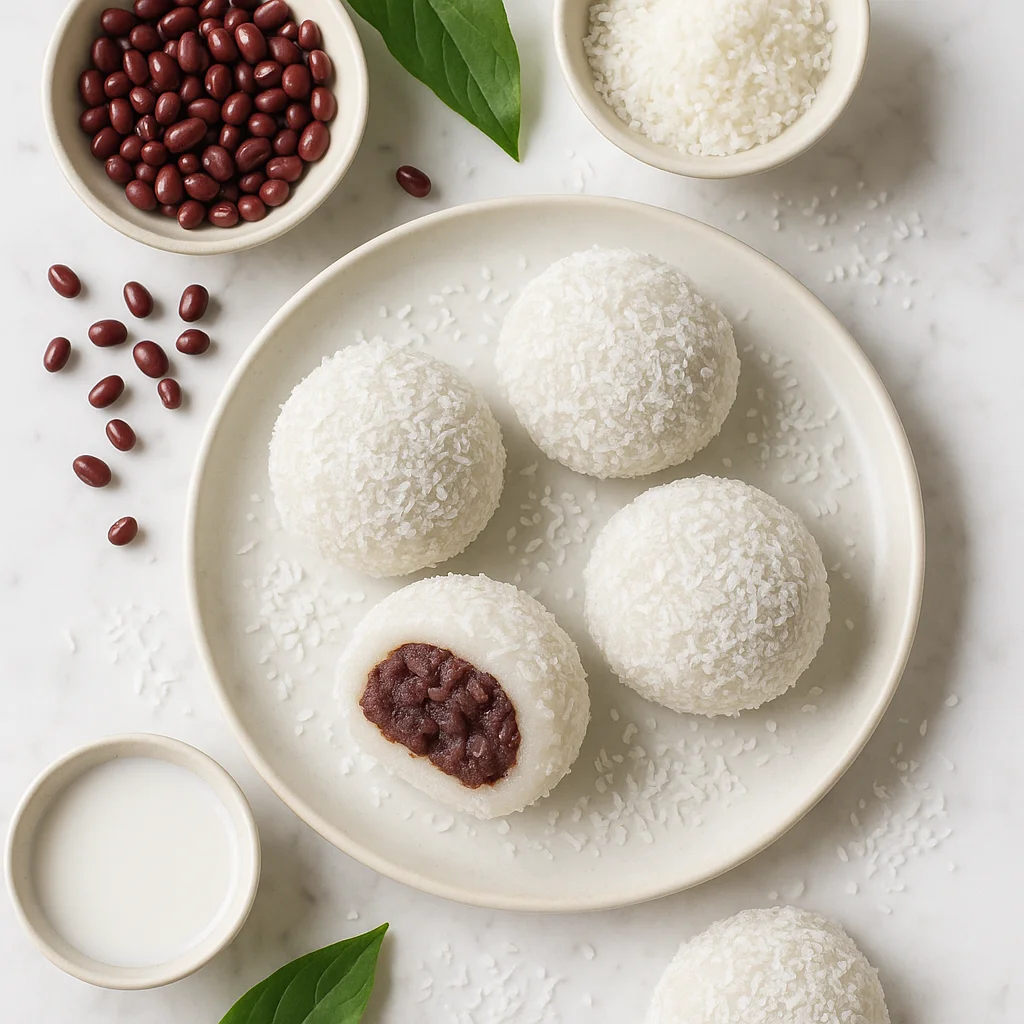
Low Sugar Chapssal-Tteok Rice Cake Recipe with Black Bean and Jujube
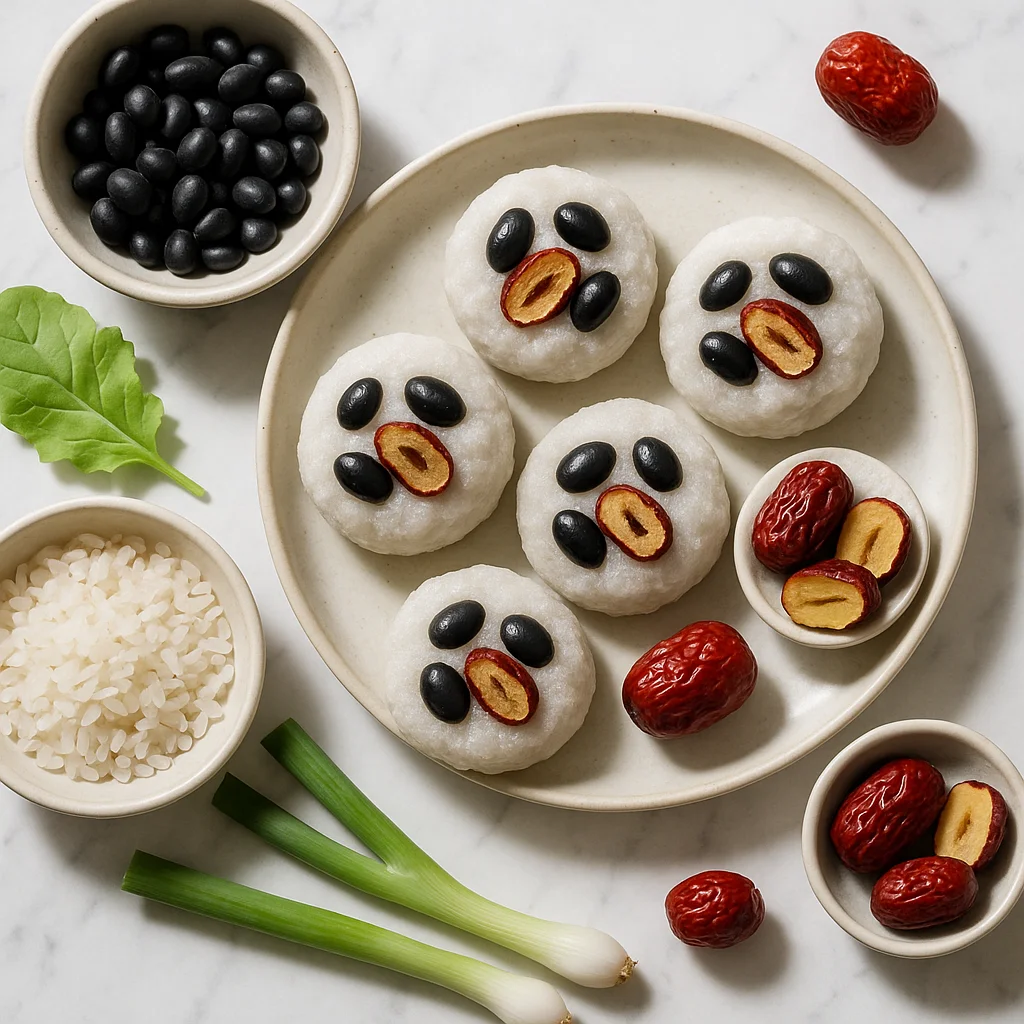
Despite its name, glutinous rice contains no gluten. The word refers to its sticky, adhesive quality rather than any wheat-based protein, which makes chapssal-tteok, the Korean glutinous rice cake, naturally suitable for people avoiding gluten. The confusion is common and worth clearing up before anyone who needs a gluten-free dessert dismisses this recipe unnecessarily. Chapssal-tteok is chewy, dense and subtly sweet, with a texture that is quite unlike anything in Western baking. This lower-sugar version uses black bean and jujube as the filling components, which are both traditional and both considerably less sweet than the usual commercially made versions found in Korean convenience stores.
Why this recipe works
Glutinous rice flour produces the characteristic elasticity and chew of rice cakes when mixed with hot water and steamed or microwaved. The dough has a silky, slightly translucent appearance when it is ready. Black bean paste, made from slow-cooked and mashed black soybeans with a small amount of honey, provides a deeply earthy, nutty filling that contrasts pleasantly with the neutral sweetness of the outer rice cake. Jujube, the dried red date used throughout Korean and Chinese confectionery, adds natural sweetness and a slight floral note.
Getting it right
Work with the dough while it is still warm. Chapssal-tteok dough stiffens as it cools and becomes progressively harder to shape. Have the filling portions ready before you start shaping so you can work quickly.
Dust your hands and work surface generously with more glutinous rice flour or potato starch to prevent the sticky dough from adhering to everything.
Common mistakes
Using regular rice flour instead of glutinous rice flour is the most consequential substitution error in this recipe. The result is a crumbly, granular texture that bears no resemblance to chapssal-tteok. Glutinous rice flour is the only option.
Overfilling stretches the dough too thin and causes it to split when you try to seal it. A small, compact filling portion wrapped in enough dough to enclose it comfortably is the right ratio.
Substitutions
Red bean paste is the most traditional alternative filling and the one most people associate with this style of rice cake. Sweet potato paste, cooked and mashed, makes a softer, sweeter filling. Sweetened chestnut cream is another excellent option.
Serving suggestion
Serve at room temperature, on the day of making. Dust the finished rice cakes lightly with soybean powder or extra glutinous rice flour to prevent them from sticking together on the plate. Eat within a few hours for the softest texture.
Ingredients
- 2 cups glutinous rice flour (chapssal garu, also labelled sweet rice flour)
- 1 tablespoon raw honey (or brown rice syrup for a fully vegan version)
- 1 teaspoon fine sea salt
- 3 cup warm water (adjust by a tablespoon if dough feels too dry)
- 1 cup cooked black beans (drained and patted dry, canned is fine)
- 8 whole dried jujubes (pitted and roughly chopped)
- 3 tablespoons raw pumpkin seeds (lightly toasted)
- 1 tablespoon toasted sesame seeds (for finishing, optional)
- 1 teaspoon ground cinnamon (adds warmth without sugar)
Instructions
- 1
Set up your steamer by filling the base pot with water and bringing it to a steady simmer over medium heat. Line the steamer basket with a clean piece of cheesecloth or a sheet of baking parchment with a few small holes poked through to allow steam to circulate.
If you do not have a dedicated steamer, a large pot with a heatproof colander set inside and a tight-fitting lid works just as well.
- 2
In a large mixing bowl, combine the glutinous rice flour, fine sea salt and ground cinnamon. Stir them together briefly so the salt and cinnamon are evenly distributed through the flour before any liquid is added.
- 3
Dissolve the raw honey in the warm water, stirring until fully combined. Pour this liquid slowly into the flour mixture, stirring with a fork or your hands as you go. The dough should come together into a soft, slightly tacky mass that holds its shape without crumbling. Add an extra tablespoon of water if the dough feels crumbly.
The dough should feel like soft play-dough. A little stickiness is normal and desirable for that classic tteok texture.
- 4
Gently fold the cooked black beans, chopped jujubes and toasted pumpkin seeds into the dough. Use your hands to bring everything together, being careful not to crush the beans completely. A few broken beans are fine and add to the rustic character of the finished rice cakes.
Make sure your black beans are really dry before folding them in. Excess moisture can make the dough too wet and affect the final texture.
- 5
Divide the dough into 12 roughly equal portions. Roll each one into a smooth ball between your palms, then press it gently into a small thick disc shape about 4 cm across. Arrange them in a single layer on the prepared steamer basket, leaving a small gap between each piece.
Lightly dampening your palms with water stops the dough sticking to your hands during shaping.
- 6
Place the steamer basket over the simmering water, cover with the lid and steam on medium-high heat for 22 to 25 minutes. The rice cakes are ready when they look slightly translucent and feel firm but springy when pressed lightly with a fingertip.
Resist lifting the lid for the first 20 minutes. Sudden temperature drops from escaping steam can cause the tteok to become dense rather than fluffy.
- 7
Remove the steamer basket from the heat. Let the rice cakes rest for 3 minutes before lifting them off the cloth. If using, sprinkle toasted sesame seeds over the tops while the cakes are still warm so they stick naturally. Serve warm or at room temperature.
Nutrition per serving
110kcal
Calories
3.2g
Protein
21g
Carbs
2.1g
Fat
2.8g
Fibre
3.8g
Sugar
98mg
Sodium
Pro Tips
- ✓
Always use glutinous rice flour, not regular rice flour. The two look similar but behave very differently and only the glutinous variety gives that stretchy, chewy tteok texture.
- ✓
Drying your cooked black beans thoroughly on a paper towel before adding them to the dough makes a real difference to the final consistency.
- ✓
Chopping the jujubes into small uneven pieces rather than a fine mince creates better flavour pockets throughout each cake.
- ✓
Steaming on a steady medium-high rather than a furious boil gives a more even cook and a softer crumb.
- ✓
If making these ahead, a very brief 20-second microwave reheat wrapped in a damp paper towel brings back the freshly steamed softness beautifully.
Frequently Asked Questions
Variations
- •
Matcha and Azuki
Add one teaspoon of culinary grade matcha powder to the dry flour mixture for a beautiful green dough with a grassy, slightly bitter edge. Replace the black beans with a small amount of unsweetened azuki bean paste rolled into tiny balls as a central filling. This version pairs especially well with a cup of hot sencha tea.
- •
Sesame and Goji Berry
Swap the pumpkin seeds for two tablespoons of black sesame seeds, which add a nutty depth and boost the calcium content. Replace the jujubes with dried goji berries for a brighter colour and a slightly more tart sweetness. This variation has a striking speckled appearance and a more complex flavour.
- •
Pumpkin and Cinnamon
Stir two tablespoons of pure pumpkin puree into the warm water before adding it to the flour. This creates a warm golden dough with a gentle squash flavour. Increase the cinnamon to half a teaspoon and add a pinch of ground ginger. The pumpkin adds moisture, beta-carotene and extra fibre with no additional sugar.
Substitutions
- •Raw honey → Brown rice syrup or maple syrup (Use the same one tablespoon quantity. Brown rice syrup has a lower glycaemic index than honey, making it a good choice for those particularly mindful of blood sugar responses.)
- •Dried jujubes → Medjool dates or dried cranberries (Medjool dates give a richer, caramel-like sweetness. Dried cranberries add a sharper tartness. Both work well in equal quantities. Choose unsweetened dried cranberries to keep the sugar content low.)
- •Pumpkin seeds → Sunflower seeds or chopped walnuts (Both add a pleasant texture contrast. Sunflower seeds keep it nut free. Walnuts add omega-3 fatty acids but will increase the calorie count slightly per serving.)
- •Cooked black beans → Cooked adzuki beans or edamame (Adzuki beans are traditional in East Asian rice cakes and have a naturally mild sweetness. Edamame adds a fresh, bright flavour and a boost of complete plant protein.)
🧊 Storage
Store cooled rice cakes in an airtight container at room temperature for up to 2 days. For longer storage, wrap each piece individually in cling film and place in a freezer-safe bag. Freeze for up to 6 weeks. Reheat by steaming for 5 minutes or microwaving wrapped in a damp paper towel for 25 to 30 seconds until soft and warm through.
📅 Make Ahead
You can prepare the dough up to 24 hours in advance. Wrap it tightly in cling film and refrigerate. Bring it back to room temperature for 15 minutes before shaping and steaming. The shaped uncooked rice cakes can also be arranged on a lined tray, frozen solid, then transferred to a bag and steamed straight from frozen for an extra 8 to 10 minutes.
More Korean Desserts Recipes
Bubble Hotteok Flame Baked Street Food Recipe (Healthy Oven Version)
Bungeo-ppang Low Sugar Red Bean Filling Recipe (Healthier Korean Fish Bread)

Bungeo-ppang Homemade Fish Pancake Without Deep Frying (Healthy Whole Grain Version)