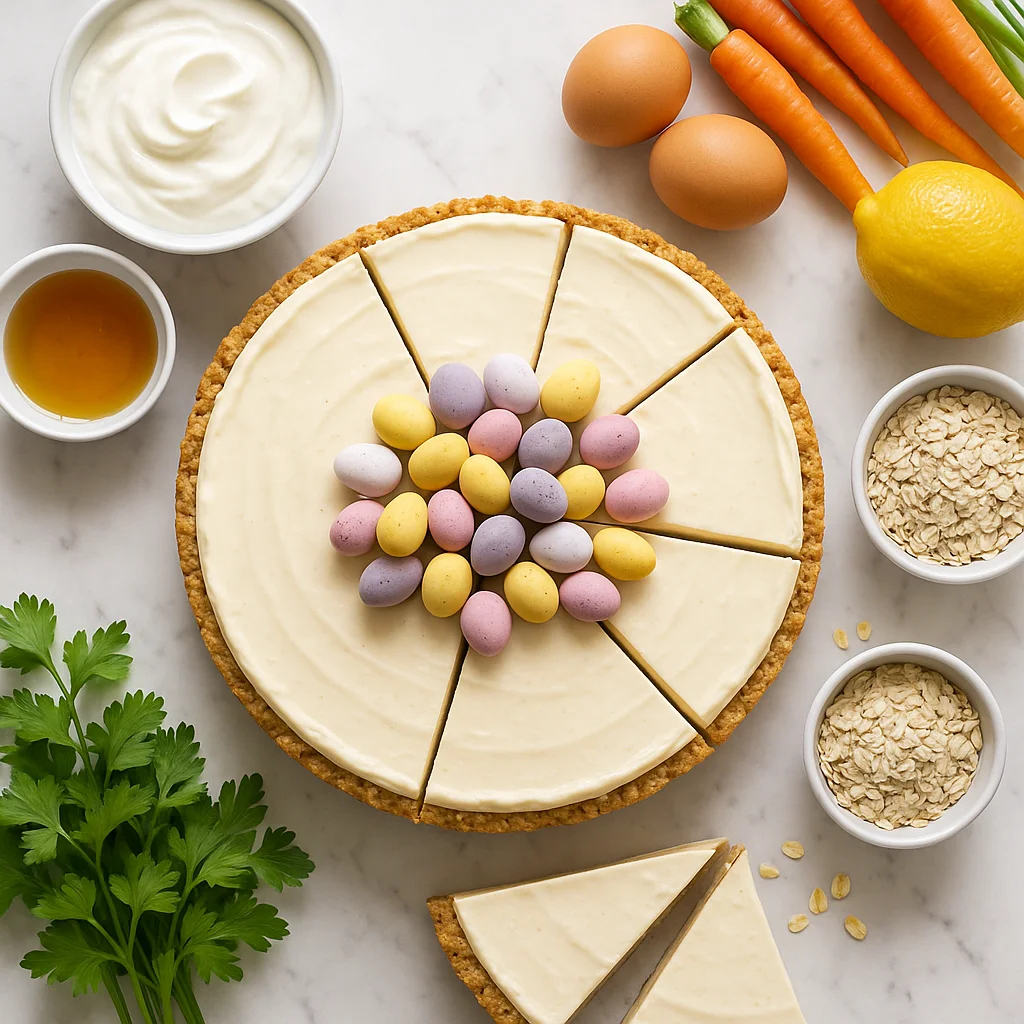
Easter calls for something that feels genuinely celebratory without the morning-after regret. This lightened-up cheesecake delivers on both counts. The filling combines low-fat cream cheese with thick Greek yogurt, which slashes the fat content considerably while keeping the texture smooth, rich and properly creamy. The oat biscuit base replaces a butter-heavy digestive crust with something that has more fibre and a more interesting crumb. You still get a cheesecake that looks beautiful on the table, slices cleanly and tastes indulgent. The calories just do not match the drama on the plate.
Why this recipe works
Greek yogurt adds a gentle tang that makes the filling taste fresher and more citrusy, which is exactly right for an Easter dessert. It also holds moisture differently to cream cheese alone, so the filling stays set without relying on heavy amounts of gelatine. Lemon zest woven through the filling amplifies that brightness throughout. The oat base, made with oats, a small amount of coconut oil and a drizzle of honey pressed firmly into the tin, gives you a sturdy platform that does not go soggy under the filling.
Getting it right
Patience with the chilling time is the most important step. This cheesecake needs at least four hours in the fridge before it is properly set, and overnight is better. The filling is softer than a baked cheesecake when it first goes in and needs the cold to firm up to sliceable consistency.
Beat the cream cheese until completely smooth before adding anything else. Any lumps at this stage remain in the finished filling. Add the Greek yogurt gradually on a low speed to avoid incorporating air that can cause the surface to crack during setting.
Common mistakes
Adding the fruit topping while the cheesecake is too cold makes decoration harder to apply neatly. Let it sit at room temperature for ten minutes first, then decorate and serve immediately.
Trying to unmould before the sides are fully set is the other trap. Run a thin knife around the inside edge of the tin before releasing the clasp if you are nervous.
Substitutions
Ricotta can replace some or all of the cream cheese for a lighter, more Italian-style filling. Whipped coconut cream replaces the dairy entirely for a vegan version. Crushed oatcakes work instead of blended oats for a more savoury base.
Serving suggestion
Top with fresh strawberries, raspberries and a few edible flowers for an Easter display that looks as good as it tastes. A very light dusting of icing sugar through a fine sieve adds a finishing touch without meaningfully adding to the sugar per slice.
Ingredients
- 120 g rolled oats (certified gluten-free if needed)
- 40 g almond flour
- 3 tbsp coconut oil (melted and cooled)
- 2 tbsp raw honey (for the crust)
- 1 pinch fine sea salt (for the crust)
- 350 g reduced-fat cream cheese (at room temperature)
- 250 g part-skim ricotta cheese (drained well if watery)
- 200 g full-fat plain Greek yogurt (at room temperature)
- 3 tbsp raw honey (for the filling)
- 2 tbsp coconut sugar
- 2 large eggs (at room temperature)
- 2 large egg whites (at room temperature)
- 1 tsp pure vanilla extract
- 1 tsp lemon zest (finely grated, from 1 lemon)
- 1 tbsp lemon juice (freshly squeezed)
- 2 tbsp cornstarch (helps the filling set without cracking)
Instructions
- 1
Preheat your oven to 160 degrees Celsius (320 degrees Fahrenheit) and line the base of a 20cm springform tin with baking paper. Lightly grease the sides with a small amount of coconut oil.
A springform tin makes it much easier to release the cheesecake cleanly once chilled.
- 2
Place the rolled oats in a food processor and pulse until they resemble coarse breadcrumbs. Add the almond flour and salt, then pulse once more to combine. Pour in the melted coconut oil and honey, and process until the mixture starts to clump together when you press it between your fingers.
Do not over-process. You want some texture remaining in the oats so the base stays a little crunchy after baking.
- 3
Tip the crust mixture into the prepared tin and press it firmly and evenly across the base using the back of a spoon or the flat base of a glass. Bake for 10 to 12 minutes until lightly golden. Remove from the oven and allow to cool completely before adding the filling.
Pre-baking the crust prevents it from becoming soggy once the filling goes in.
- 4
While the crust cools, prepare the filling. In a large mixing bowl, beat the reduced-fat cream cheese with a hand mixer on medium speed until completely smooth, about 2 minutes. Scrape down the sides of the bowl as needed.
Room temperature cream cheese is essential here. Cold cream cheese will leave lumps that are very difficult to beat out.
- 5
Add the drained ricotta to the cream cheese and beat again until fully incorporated and smooth. Add the Greek yogurt and mix on low speed just until combined.
- 6
Add the honey, coconut sugar, vanilla extract, lemon zest and lemon juice to the filling mixture. Mix on low speed until just combined. Sift in the cornstarch and fold through gently with a spatula.
Do not overmix after adding the cornstarch as this can toughen the texture.
- 7
In a separate small bowl, whisk the whole eggs and egg whites together lightly with a fork. Gently fold the whisked eggs into the cheesecake filling in two additions using a spatula, stirring slowly to avoid incorporating too much air.
Adding air at this stage can cause the cheesecake to puff up and then crack as it cools.
- 8
Pour the filling over the cooled crust and smooth the surface with a spatula. Tap the tin gently on the bench a few times to release any hidden air bubbles.
- 9
Place the springform tin inside a larger roasting tin. Pour enough hot water into the roasting tin to reach about 2cm up the side of the springform tin, creating a gentle water bath. Bake at 160 degrees Celsius for 45 to 50 minutes, until the edges are set but the centre still has a gentle wobble.
The water bath keeps the oven moist and helps the cheesecake bake gently and evenly, which greatly reduces the risk of cracking.
- 10
Turn off the oven but leave the cheesecake inside with the door slightly ajar for 30 minutes. This gradual cooling step is important for preventing surface cracks. Then remove from the oven and allow to cool fully at room temperature.
- 11
Once the cheesecake is at room temperature, remove the outer ring of the springform tin and refrigerate the cheesecake for at least 4 hours, or ideally overnight, until completely firm and set.
Overnight chilling produces the best texture and makes slicing much cleaner.
- 12
Before serving, decorate with your chosen Easter toppings. A scattering of small pastel chocolate eggs, a few fresh berries or a drizzle of honey all work beautifully. Slice with a sharp knife wiped clean between cuts for neat portions.
Nutrition per serving
210kcal
Calories
11g
Protein
18g
Carbs
10g
Fat
1.5g
Fibre
10g
Sugar
185mg
Sodium
Pro Tips
- ✓
Always bring your dairy ingredients to room temperature before mixing. Cold ricotta, cream cheese or yogurt will result in a lumpy filling.
- ✓
Drain ricotta in a fine mesh sieve for 30 minutes before using if it looks particularly wet, as excess moisture can affect how well the cheesecake sets.
- ✓
Do not open the oven door during the main baking time. Temperature fluctuations are a leading cause of cracks.
- ✓
If a small crack appears, do not worry. A topping of fruit, honey or a light dusting of freeze-dried raspberry powder will cover it easily.
- ✓
Use a springform tin that sits snugly without any gaps if you are using a water bath, or wrap the outside tightly in two layers of heavy-duty foil to prevent any water seeping in.
Frequently Asked Questions
Variations
- •
Lemon and Poppy Seed Easter Cheesecake
Add 1 tablespoon of poppy seeds and an extra teaspoon of lemon zest to the filling for a fragrant, citrusy variation that pairs beautifully with a fresh blueberry topping.
- •
Chocolate Swirl Version
Melt 30g of dark chocolate (70 percent cocoa or above) and cool slightly. Drop spoonfuls over the poured filling and swirl through with a skewer before baking for a marbled Easter cheesecake.
- •
No-Bake Version
Skip the eggs and cornstarch, then fold in 2 teaspoons of powdered gelatine dissolved in 2 tablespoons of warm water. Refrigerate for a minimum of 6 hours to set. The texture will be lighter and more mousse-like.
- •
Berry Topped Easter Cheesecake
Top the chilled cheesecake with a simple compote made by simmering 200g of mixed frozen berries with 1 tablespoon of honey for 8 minutes. Cool completely before spooning over the cheesecake.
Substitutions
- •Reduced-fat cream cheese → Full-fat cream cheese (Using full-fat cream cheese will increase the calorie and fat content but produce an even richer, more traditional cheesecake texture.)
- •Part-skim ricotta → Full-fat cottage cheese, blended smooth (Blend cottage cheese in a food processor until completely smooth before using. The flavour is slightly more tangy but the texture works well.)
- •Almond flour → Desiccated coconut (Desiccated coconut gives the crust a tropical note and keeps it nut-free. Use the same quantity and process in the same way.)
- •Coconut oil → Unsalted butter, melted (Butter works perfectly in the crust and will give a slightly richer, more traditional biscuit-like flavour.)
- •Raw honey → Pure maple syrup (Maple syrup substitutes one for one and gives a subtly different but equally lovely flavour.)
🧊 Storage
Store the cheesecake covered in the refrigerator for up to 4 days. Place individual slices in airtight containers to keep them fresh. The cheesecake can also be frozen, either whole or in individual slices, wrapped tightly in cling film and then foil, for up to 6 weeks. Thaw overnight in the fridge before serving.
📅 Make Ahead
This cheesecake is an excellent make-ahead dessert. Bake it up to 2 days before serving and store it in the refrigerator, covered. Add any decorative toppings on the day you plan to serve it for the best visual presentation.
More Easter Desserts Recipes

Dark Chocolate Covered Fruit Easter Dessert Platter with Berry and Citrus
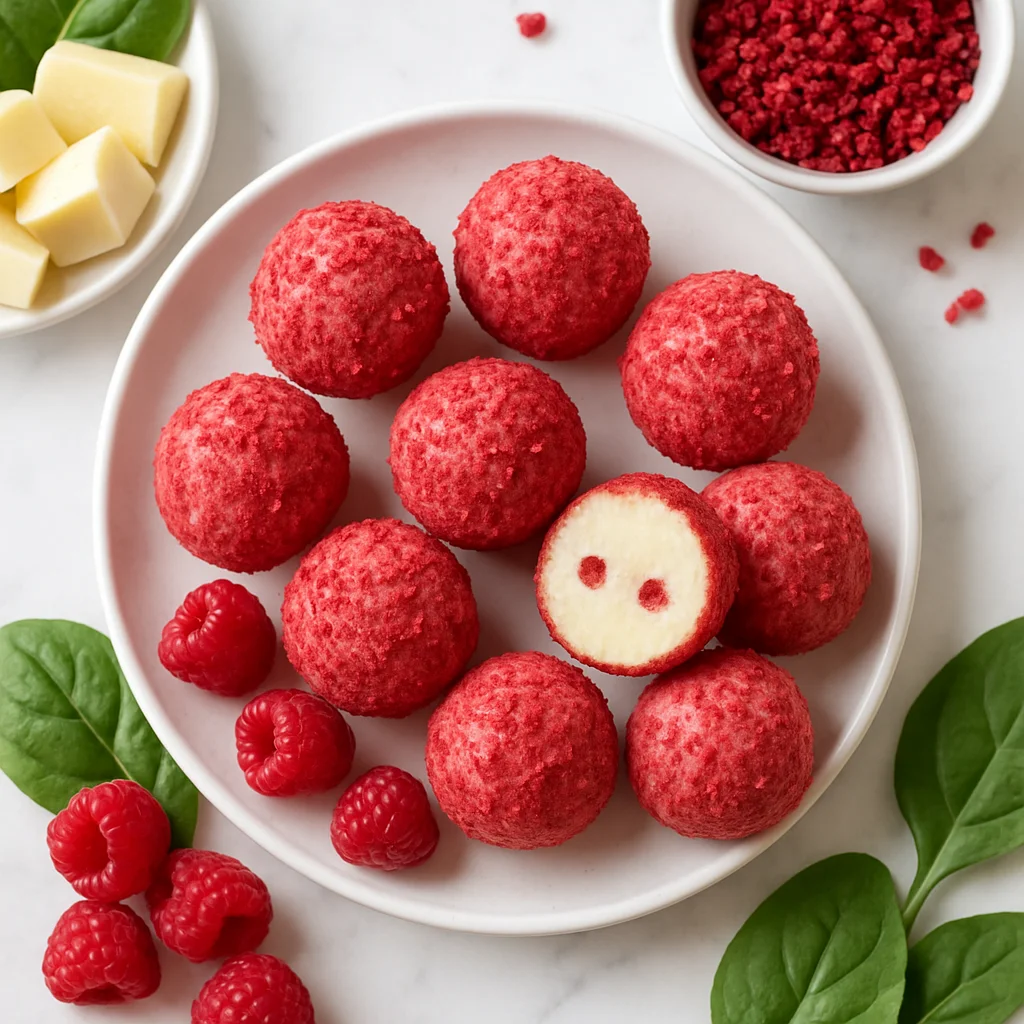
Easter White Chocolate Raspberry Truffles Keto (Sugar-Free & Creamy)
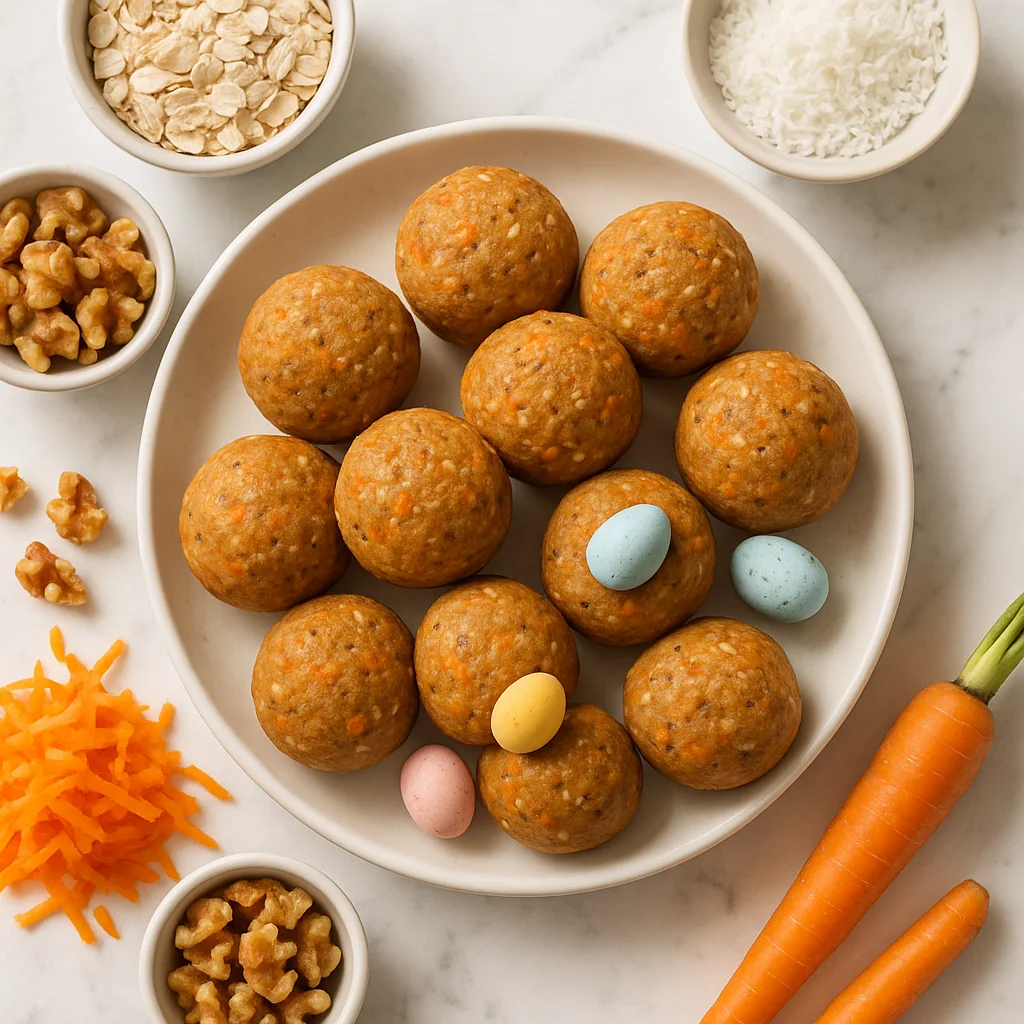
Easter Carrot Cake Protein Balls (Dairy Free)