Easter Lemon Coconut Macaroons Gluten Free (Light & Zesty)
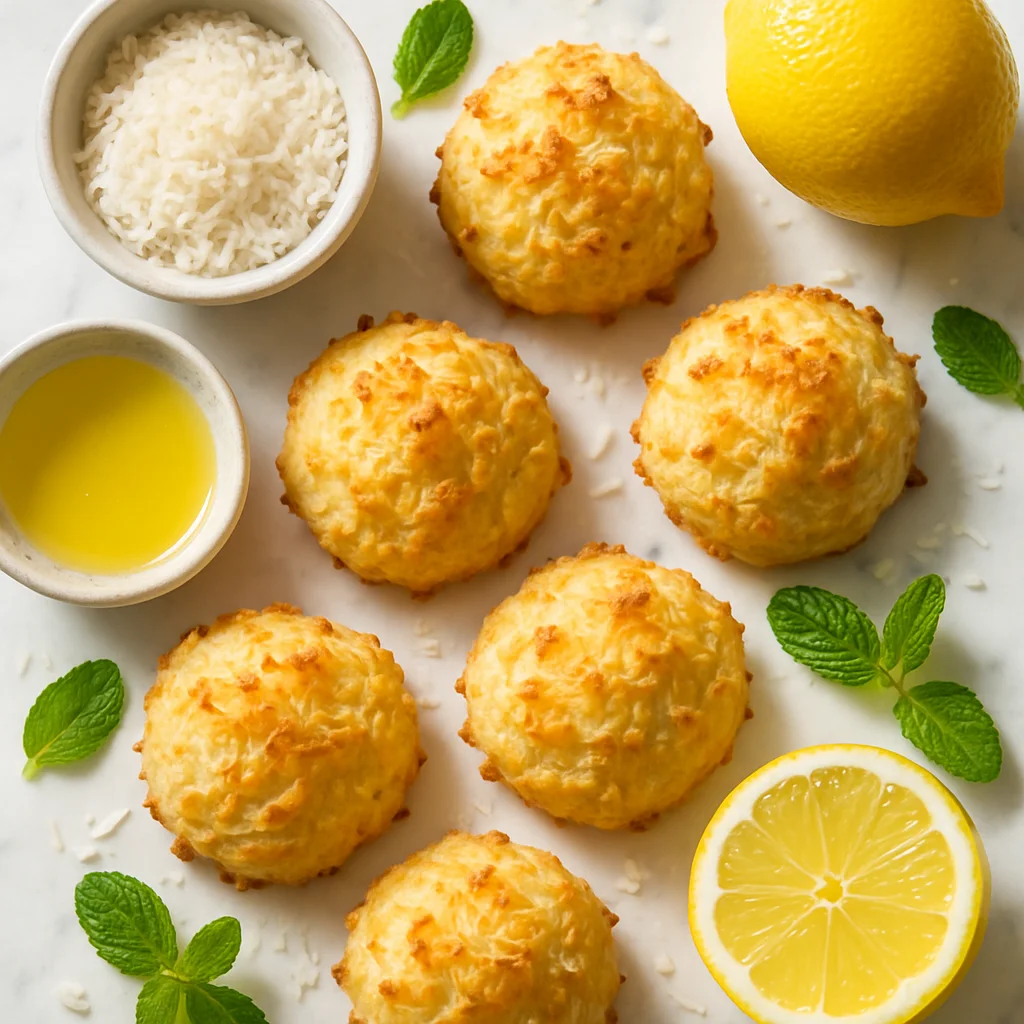
Lemon and coconut is a combination that does not get the recognition it deserves. Both are bright and tropical in their own right, and together they create a flavour that is simultaneously light and rich, fragrant and satisfying. These gluten-free Easter macaroons use both generously: plenty of desiccated coconut for the body of each macaroon, a full tablespoon of lemon zest woven through the mixture, and a small amount of lemon juice that adds acidity and helps the mixture hold together. The coconut toasts during baking and the lemon fragrance intensifies under the heat, producing a macaroon that smells extraordinary coming out of the oven and tastes even better once it has cooled.
Why this recipe works
Desiccated coconut provides both the structure and the primary flavour of these macaroons. Unsweetened desiccated coconut has enough natural fat to bind the mixture when combined with egg whites, and enough moisture to keep the interior of each macaroon soft and yielding after baking while the exterior caramelises and crisps. Egg whites provide the binding and add a light structure to the mixture. A small amount of maple syrup sweetens the macaroons naturally with a subtle caramel undertone. Lemon zest provides the aromatic oils that give these their distinctive character and prevent the coconut flavour from being too heavy.
Getting it right
Use the driest possible desiccated coconut. Freshly opened desiccated coconut is dry; coconut that has been open for a while absorbs moisture from the air and produces a wetter mixture that spreads too much during baking. Use fresh from the packet.
Bake until the exterior is properly golden, not just lightly coloured. The golden colour indicates sufficient caramelisation and produces the slight crunch that makes the texture interesting.
Common mistakes
Using sweetened desiccated coconut makes the macaroons very sweet and causes excessive browning during baking due to the additional sugar content. Unsweetened is essential.
Not chilling the mixture for fifteen minutes before shaping produces macaroons that spread too much in the oven. The chilling firms the coconut fat slightly and holds the mounded shape better.
Substitutions
Lime zest can replace lemon for a sharper, more tropical flavour. A half-dip in dark chocolate after baking adds richness and visual appeal. Orange zest produces a sweeter, more mellow citrus version that is particularly good at Christmas.
Serving suggestion
Serve at room temperature, arranged on a plate with a small dusting of icing sugar and a few thin strips of candied lemon peel on top. These keep in an airtight container for four days. The texture is at its best on the day of baking.
Ingredients
- 3 cups unsweetened desiccated coconut (fine or medium shred both work; do not use sweetened coconut or pre-toasted varieties — you want full control over sweetness and colour)
- 3 large egg whites (room temperature for best volume; ensure absolutely no yolk traces or the whites will not whip properly)
- 3 tablespoons pure maple syrup (grade A or B, not maple-flavoured syrup; grade B has a deeper, more robust flavour if you can find it)
- 2 teaspoons fresh lemon zest (from approximately 2 medium lemons; use a microplane for the finest zest and zest only the bright yellow layer — the white pith is bitter)
- 1 tablespoon fresh lemon juice (freshly squeezed only — bottled lemon juice lacks the brightness and can taste flat in baked goods)
- 1 teaspoon pure vanilla extract (pure extract, not imitation; vanilla softens the tartness of the lemon and adds depth to the overall flavour)
- 1 pinch fine sea salt (salt amplifies both the lemon and coconut flavours — do not skip it even though the quantity is tiny)
- 2 tablespoons tapioca flour (derived from cassava root and naturally gluten free; helps bind the mixture and contributes to the chewy interior texture; arrowroot powder is an equal swap)
Instructions
- 1
Preheat your oven to 165°C (325°F) fan-forced. Line a large baking tray with baking paper and set aside.
Fan-forced heat circulates air around every macaroon simultaneously, giving you even golden browning without needing to rotate the tray.
- 2
In a large mixing bowl, combine the unsweetened desiccated coconut, tapioca flour, lemon zest, and sea salt. Stir until evenly mixed.
Rubbing the lemon zest into the coconut with your fingertips for 30 seconds releases its essential oils and dramatically intensifies the citrus flavour throughout the finished macaroon.
- 3
In a separate clean bowl, whisk the egg whites until they become frothy and hold very soft peaks — about 1 to 2 minutes by hand or 30 seconds with a hand mixer. You do not need stiff peaks here.
Even a small trace of egg yolk or grease in the bowl will prevent the whites from foaming. Wipe your bowl with a little lemon juice or white vinegar on a paper towel to be safe.
- 4
Add the maple syrup, fresh lemon juice, and vanilla extract to the frothy egg whites and whisk briefly to combine.
Add the maple syrup and lemon juice after the whites are already frothy — adding liquid too early can prevent the whites from building volume.
- 5
Pour the egg white mixture over the coconut mixture and fold gently with a spatula until everything is thoroughly combined and the coconut is evenly coated. The mixture should be moist and hold together when pressed.
Fold gently using a 'J' motion with your spatula rather than stirring — this preserves the air you have whipped into the egg whites, keeping the finished macaroons light rather than dense.
- 6
Using a tablespoon or small cookie scoop, portion the mixture into compact mounds and place on the prepared baking tray about 4 cm apart. Press each mound firmly together with slightly damp hands to ensure they hold their shape during baking.
A 1.5-tablespoon cookie scoop gives you perfectly uniform macaroons that all bake at the same rate. Damp hands prevent the mixture from sticking and help you compress each mound firmly — compressed mounds hold their shape; loosely packed ones fall apart.
- 7
Bake in the preheated oven for 18 to 20 minutes, or until the edges and tops are lightly golden. The centres will still feel slightly soft but will firm up as they cool.
Start checking at 16 minutes — oven temperatures vary and overcooked macaroons go dry rather than staying chewy. You want the edges and tips golden but the very centre of the top to look just barely set.
- 8
Remove from the oven and allow the macaroons to cool on the tray for 10 minutes before transferring to a wire rack to cool completely. They firm up considerably as they cool.
Do not try to lift them while hot — the macaroons are structurally fragile until the coconut sugars cool and set. Patience here prevents crumbling.
- 9
Optional Easter decoration: drizzle with a simple lemon glaze (mix 2 tablespoons of powdered coconut sugar with 1 tablespoon of fresh lemon juice) or dip the bases lightly in melted 70% dark chocolate. Allow to set before serving.
For a pastel Easter look, press a small piece of freeze-dried raspberry or an edible flower onto each macaroon before the glaze sets. For the chocolate dip, let the macaroons cool completely first — even slightly warm macaroons will cause the chocolate to seize.
Nutrition per serving
85kcal
Calories
2g
Protein
7g
Carbs
6g
Fat
2g
Fibre
4g
Sugar
28mg
Sodium
Pro Tips
- ✓
Always use fresh lemon zest, bottled lemon flavouring or pre-squeezed juice simply cannot replicate the brightness of freshly grated peel. Zest your lemons directly over the coconut bowl so the fine mist of essential oils lands in the mixture.
- ✓
Room temperature egg whites foam more easily than cold ones. Take them out of the fridge at least 20 minutes before you start, if you are short on time, place the uncracked eggs in a bowl of warm (not hot) water for 5 minutes.
- ✓
Pressing each mound firmly and consistently before baking is the single most important step for macaroons that hold together. Loosely piled mounds spread and crumble; a compact, well-pressed mound bakes into a neat, chewy dome.
- ✓
For extra toasted coconut flavour, dry-toast half the desiccated coconut in a dry frying pan over medium heat for 2 to 3 minutes, stirring constantly, before mixing. Use it alongside the untoasted portion for a layered coconut flavour with more depth.
- ✓
These macaroons are at their textural best within the first 48 hours, the exterior is crispiest and the contrast with the chewy centre is most pronounced. Leave them uncovered at room temperature for the first 2 hours after baking to help the outside set properly before storing.
- ✓
If you are making these for Easter gifting or hampers, wait until the macaroons are completely cool before boxing them. Any residual warmth creates condensation inside the packaging, which softens the exterior and reduces shelf life. A small food-safe silica gel sachet in the box helps maintain crispness.
Frequently Asked Questions
Variations
- •
Lemon & Lime Coconut Macaroons
Replace half the lemon zest with lime zest and add a teaspoon of lime juice alongside the lemon juice for a tropical citrus twist.
- •
Dark Chocolate Dipped Lemon Macaroons
Once fully cooled, dip the base of each macaroon in melted 70% dark chocolate and place on baking paper to set. The bittersweet chocolate pairs beautifully with the bright lemon.
- •
Lavender Lemon Macaroons
Add half a teaspoon of culinary dried lavender to the coconut mixture before folding. This creates an elegant floral Easter variation that looks and tastes stunning.
- •
Lemon Raspberry Macaroons
Press a small freeze-dried raspberry into the top of each mound before baking for a pop of colour and a berry-citrus flavour combination that is perfect for spring.
- •
Toasted Coconut Lemon Macaroons
Dry-toast all of the desiccated coconut in a frying pan before mixing for a deeper, nuttier coconut flavour that contrasts beautifully with the bright lemon.
Substitutions
- •Maple syrup → Raw honey or agave nectar (Use the same quantity. Honey adds a floral sweetness; agave has a milder flavour and lower glycaemic index. Note that honey is not vegan.)
- •Tapioca flour → Arrowroot powder or coconut flour (Arrowroot is a 1:1 swap. If using coconut flour, use only 1 tablespoon as it is far more absorbent and will make the mixture very dry if over-used.)
- •Egg whites → Aquafaba (chickpea liquid) (Use 3 tablespoons of aquafaba in place of 3 egg whites. Whip until frothy before adding to the mixture. This makes the recipe fully vegan and egg free.)
- •Fresh lemon zest → Lemon extract (Use only 1/4 teaspoon of pure lemon extract in place of the fresh zest, it is highly concentrated. Fresh zest is strongly preferred for a natural flavour.)
- •Unsweetened desiccated coconut → Unsweetened coconut flakes (Larger flakes give a slightly chunkier texture. Pulse them briefly in a food processor to get closer to a desiccated coconut consistency if preferred.)
🧊 Storage
Store fully cooled macaroons in an airtight container at room temperature for up to 3 days, or refrigerate for up to 5 days. To restore crispiness to refrigerated macaroons, place them on a baking tray in a 150°C oven for 5 minutes. They can also be frozen in a single layer, then transferred to a zip-lock bag, for up to 6 weeks. Thaw at room temperature for 30 minutes before serving.
📅 Make Ahead
These macaroons are an excellent make-ahead Easter treat. Bake them up to 3 days before your event and store in an airtight container at room temperature. Alternatively, freeze the fully baked and cooled macaroons up to 6 weeks ahead and thaw on Easter morning. If adding a lemon glaze or chocolate dip, apply these on the day of serving for the best appearance.
More Easter Desserts Recipes
Dark Chocolate Covered Fruit Easter Dessert Platter with Berry and Citrus
Easter White Chocolate Raspberry Truffles Keto (Sugar-Free & Creamy)
Easter Carrot Cake Protein Balls (Dairy Free)