Easter Carrot Cake Protein Balls (Dairy Free)
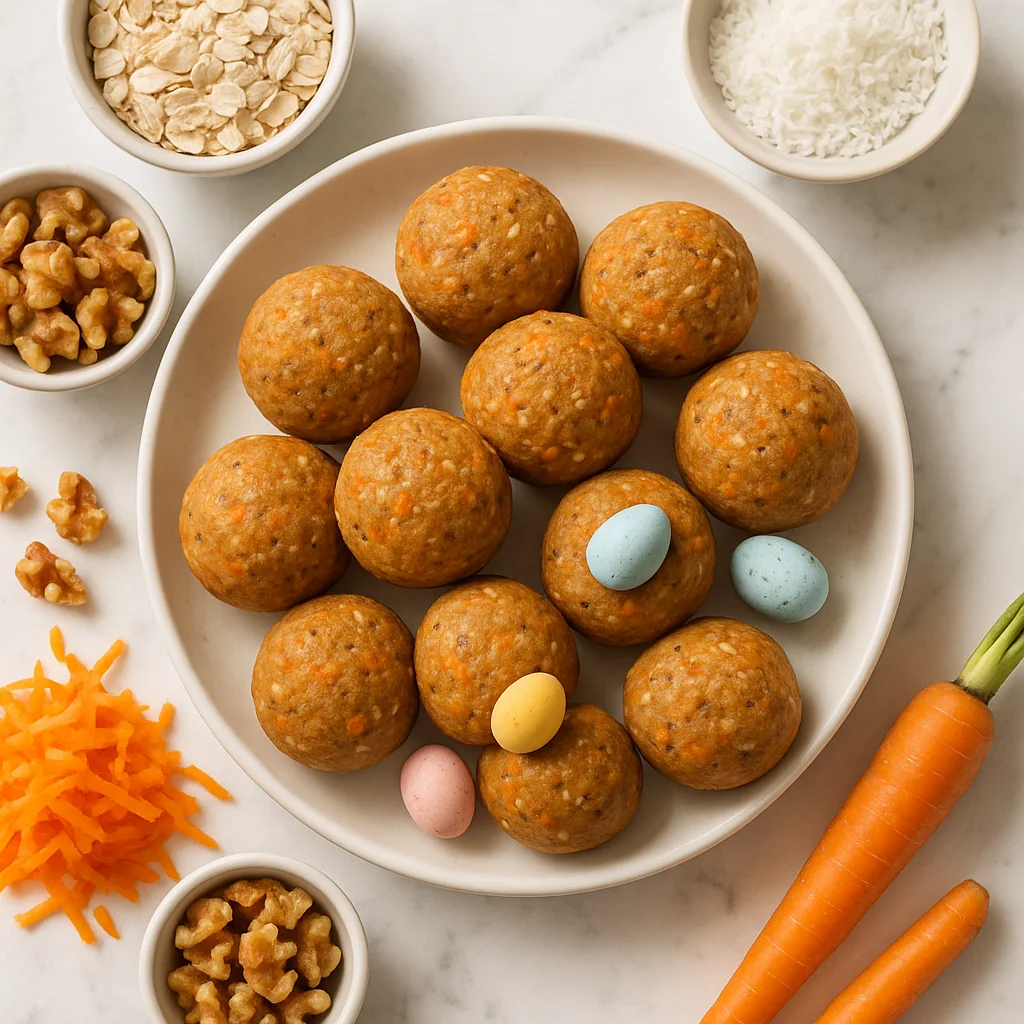
If you are searching for a wholesome Easter treat that satisfies your sweet tooth without derailing your healthy eating goals, these Easter carrot cake protein balls dairy free are exactly what you need. Inspired by the warm, spiced flavours of a classic carrot cake, these bite-sized energy balls deliver everything you love about the original dessert, grated carrot, cinnamon, nutmeg, ginger, and a hint of natural sweetness, without the refined sugar, butter, cream cheese frosting, or hundreds of calories per slice. Each ball clocks in at around 130 calories and packs a generous 8 grams of protein, making them a genuinely nutritious snack for adults and kids alike during the Easter holiday season. Whether you are filling Easter baskets, bringing something to a gathering, or simply treating yourself to a post-workout snack that feels festive, this recipe ticks every box.
The base of this recipe combines rolled oats and vanilla pea protein powder, both of which are completely dairy free and contribute to the satisfying texture and high protein content. Freshly grated carrot adds natural moisture, subtle sweetness, and a boost of beta-carotene, while unsweetened desiccated coconut gives each ball a delicate chew and a light tropical note that pairs beautifully with the warming spices. Almond butter binds everything together and adds heart-healthy monounsaturated fats, while pure maple syrup provides just enough natural sweetness to round out the flavour without relying on refined sugar.
One of the best things about this recipe is how effortlessly simple it is to pull together. There is absolutely no baking required, no specialist equipment needed beyond a mixing bowl and your hands, and the entire batch can be ready in under 20 minutes including a short chill time. This makes them a fantastic option for busy parents looking to prepare Easter snacks ahead of time, kids love helping roll the balls too, or for anyone who wants a healthier dessert option without spending hours in the kitchen. If you have a food processor, you can make the entire recipe in it to minimise washing up: grate the carrot using the grating disc, then switch to the S-blade to blitz the oats and bring everything together.
From a nutritional standpoint, these protein balls score highly across the board. The oats provide slow-release complex carbohydrates and a good dose of soluble fibre, which helps to support digestive health and keeps you feeling fuller for longer compared to traditional sugary Easter sweets. The pea protein powder is not only completely dairy free and vegan, but it is also a complete protein source that supports muscle recovery and satiety. The freshly grated carrot bumps up the fibre content further and adds natural beta-carotene, which the body converts to vitamin A. Ground flaxseed quietly boosts the omega-3 fatty acid content and acts as an additional binder, while the warming trio of cinnamon, ginger, and nutmeg provides the unmistakable flavour signature of a classic carrot cake.
Compared to a traditional slice of carrot cake made with vegetable oil, white flour, refined sugar, and cream cheese frosting, which can easily reach 450 to 600 calories per slice, these protein balls are a genuinely lighter, more nutrient-dense alternative that you can feel good about eating and sharing. They are suitable for a wide range of dietary needs, being dairy free, refined sugar free, egg free, and easily made gluten free by choosing certified gluten free oats. They are also naturally vegan, making them an inclusive option for gatherings where guests have varying dietary requirements.
For an extra festive Easter touch, you can roll the finished balls in extra desiccated coconut, crushed freeze-dried carrots, or finely chopped toasted walnuts. You could even press a small piece of dried apricot on top to mimic the look of a tiny carrot, or arrange the whole batch in a nest of shredded coconut tinted green with a drop of natural food colouring for a show-stopping Easter centrepiece. If you want to lean into the carrot cake flavour even further, try adding a tablespoon of raisins or a handful of finely chopped walnuts to the mixture, both are classic carrot cake additions that work beautifully in no-bake ball form.
These Easter carrot cake protein balls can be made up to five days in advance and stored in the fridge, making them one of the most practical make-ahead Easter recipes in your repertoire. The flavour actually deepens and improves after 24 hours as the spices have time to meld together. They also freeze beautifully for up to three months, so you can batch-cook a double portion and always have a healthy snack on hand. Whether you are a health-conscious home baker, a parent looking for a better-for-you Easter treat, or simply someone who adores the flavours of carrot cake in a convenient no-bake form, this recipe is guaranteed to become a seasonal favourite. Give them a try this Easter and discover just how delicious eating well can really be.
Ingredients
- 1 cup rolled oats (use certified gluten free oats if needed; old-fashioned rolled oats work best — avoid instant oats as they become too mushy)
- 1 cup vanilla pea protein powder (ensure dairy free brand; approximately 60g — different brands vary in absorbency so adjust moisture levels accordingly)
- 3 cup freshly grated carrot (approximately 2 medium carrots, peeled and finely grated — freshly grated is essential; pre-packaged grated carrot is too dry and less flavourful)
- 1 cup unsweetened desiccated coconut (fine desiccated coconut works best for binding; plus extra for rolling if desired)
- 1 cup smooth almond butter (natural, no added sugar or salt; ensure it is at room temperature for easy mixing — warm briefly in the microwave if very thick)
- 3 tbsp pure maple syrup (grade A or B; can reduce to 2 tbsp for a lower sugar result — if adding raisins as a variation, reduce to 1.5 tbsp)
- 1 tsp ground cinnamon (Ceylon cinnamon gives a more delicate, complex flavour if available)
- 1 tsp ground ginger (dried ground ginger; increase to 3/4 tsp if you prefer a more pronounced ginger flavour)
- 1 tsp ground nutmeg (freshly grated nutmeg gives the best flavour if you have a microplane)
- 1 tsp pure vanilla extract (ensure dairy free; use pure extract rather than vanilla essence for the best flavour)
- 1 tbsp ground flaxseed (adds fibre, omega-3 fatty acids, and helps bind the mixture — also known as linseed; chia seeds work as a 1:1 substitute)
- 1 pinch fine sea salt (enhances all the other flavours; do not skip this even though the quantity is small)
Instructions
- 1
Peel and finely grate 2 medium carrots. Place the grated carrot onto a clean tea towel or several layers of kitchen paper and squeeze out as much excess moisture as possible. This step is important to prevent the balls from becoming too wet and sticky.
Twist the tea towel tightly and squeeze hard over the sink — you may be surprised by how much liquid comes out of what looks like a dry vegetable. The drier your carrot, the easier the mixture will be to roll into neat balls.
- 2
Add the rolled oats to a blender or food processor and pulse 5 to 8 times until you have a coarse oat flour — you want some texture remaining, not a fine powder. Alternatively, leave the oats whole for a chunkier bite.
Partially blending the oats creates a better binding texture that helps the balls hold together more easily. If you prefer a chunky, energy-ball-style texture similar to a classic snack ball, keep the oats whole — both approaches work well.
- 3
In a large mixing bowl, combine the blended oats, vanilla pea protein powder, desiccated coconut, ground cinnamon, ground ginger, ground nutmeg, ground flaxseed, and sea salt. Whisk together until evenly combined.
Whisking the dry ingredients together first ensures the spices and protein powder are evenly distributed throughout the mixture, so every ball tastes the same.
- 4
Add the almond butter, maple syrup, and vanilla extract to the dry ingredients. Stir well with a spatula or wooden spoon until the mixture begins to come together.
If your almond butter has been stored in the fridge or is very thick, warm it in the microwave for 15 to 20 seconds first — runny nut butter incorporates far more easily and evenly than cold, stiff butter.
- 5
Add the squeezed grated carrot to the bowl and mix thoroughly until the carrot is evenly distributed throughout the dough. The mixture should be firm enough to hold its shape when pressed. If it feels too wet, add one tablespoon of extra desiccated coconut or oats at a time. If it is too dry, add half a teaspoon of almond butter or a tiny splash of water.
Test the consistency by pressing a small amount of mixture firmly in your palm — it should hold together in a compact shape without crumbling apart or sticking excessively to your hand. If in doubt, it is better to err on the slightly drier side as the mixture continues to hydrate as it chills.
- 6
Using a tablespoon or small cookie scoop, portion the mixture into 14 equal portions. Roll each portion firmly between your palms into a smooth ball shape. If desired, roll each ball in extra desiccated coconut to coat.
Lightly dampening your hands with cold water before rolling prevents the mixture sticking to your palms and helps you achieve a smoother ball shape. A 1.5 tablespoon cookie scoop is the ideal size and speeds up the portioning significantly.
- 7
Place the finished protein balls onto a plate or tray lined with baking parchment. Transfer to the refrigerator and chill for at least 20 minutes to firm up before serving.
For the absolute best flavour and texture, chill overnight — the spices deepen and meld together beautifully after 24 hours, and the balls firm up to the perfect snackable consistency. They will keep in the fridge for up to 5 days in an airtight container.
Nutrition per serving
130kcal
Calories
8g
Protein
11g
Carbs
6g
Fat
3g
Fibre
4g
Sugar
55mg
Sodium
Pro Tips
- ✓
Always squeeze excess moisture from the grated carrot thoroughly, this is the single most important step for achieving the right texture. Wrap the grated carrot in a clean tea towel and twist hard over the sink; you will be surprised how much liquid comes out.
- ✓
For the best, most vibrant carrot flavour, always use freshly grated carrots rather than pre-packaged grated carrot, which tends to be drier, less sweet, and less aromatic.
- ✓
If you want to save on washing up, make the entire recipe in a food processor: use the grating disc for the carrot, then switch to the S-blade to pulse the oats and combine all the ingredients together, no extra bowls needed.
- ✓
Chill the balls for at least 20 minutes before serving, they firm up beautifully and the spice flavours deepen significantly as they rest. For the best flavour, make them the day before and chill overnight.
- ✓
A small cookie scoop (approximately 1.5 tablespoons) ensures all your protein balls are the same size, which matters for consistent nutrition per serving and makes them look more professional on a serving plate.
- ✓
For an Easter party presentation, arrange the finished balls in a shallow nest of shredded coconut lightly tinted green with a drop of natural food colouring, and tuck in a few candy-coated mini eggs for a festive centrepiece that doubles as a snack.
Frequently Asked Questions
Variations
- •
Pineapple Carrot Cake Balls
Add 2 tablespoons of very well-drained crushed pineapple along with the grated carrot for a tropical carrot cake flavour. Ensure you squeeze all moisture from both the carrot and pineapple.
- •
Walnut Crunch Carrot Balls
Fold in 3 tablespoons of finely chopped walnuts for extra texture, healthy omega-3 fats, and a classic carrot cake flavour. Note this version is not nut free.
- •
Coconut Cream Cheese Style Coating
Blend 2 tablespoons of coconut cream with 1 tablespoon of lemon juice and a teaspoon of maple syrup, then drizzle over chilled balls for a dairy free cream cheese flavour glaze.
- •
Raisin Spice Carrot Balls
Stir in 3 tablespoons of raisins or sultanas for natural sweetness and a traditional carrot cake texture. This reduces the need for added maple syrup, reduce to 1.5 tablespoons if adding raisins.
Substitutions
- •Pea protein powder → Brown rice protein powder or hemp protein powder (Use the same quantity. Hemp protein will add a slightly nuttier, earthier flavour. Avoid whey protein to keep the recipe dairy free.)
- •Almond butter → Sunflower seed butter or tahini (Sunflower seed butter makes the recipe nut free. Tahini adds a more savoury note but works well with the warming spices. Use the same quantity.)
- •Maple syrup → Brown rice syrup or date syrup (Use the same quantity. Date syrup adds a richer, more caramel-like flavour and a slightly higher fibre content.)
- •Rolled oats → Certified gluten free oats or buckwheat flakes (Buckwheat flakes make the recipe suitable for those avoiding all oats. Use the same quantity and pulse as directed.)
- •Desiccated coconut → Finely ground almonds or extra rolled oats (Finely ground almonds add extra protein and fat. Extra oats will make the balls slightly denser. Use the same quantity as a direct swap.)
🧊 Storage
Store in an airtight container in the refrigerator for up to 5 days. For longer storage, freeze in a single layer on a baking tray until solid, then transfer to a freezer-safe bag or container and freeze for up to 3 months. Thaw overnight in the fridge before eating.
📅 Make Ahead
These protein balls are ideal for making ahead. Prepare the full batch up to 5 days before your Easter gathering and store in the fridge. Alternatively, freeze up to 3 months in advance and thaw the day before serving. The flavour actually improves after 24 hours as the spices develop.
More Easter Desserts Recipes
Dark Chocolate Covered Fruit Easter Dessert Platter with Berry and Citrus
Easter Lemon Coconut Macaroons Gluten Free (Light & Zesty)
Easter White Chocolate Raspberry Truffles Keto (Sugar-Free & Creamy)