Healthy Chocolate Easter Eggs Homemade with a Coconut Cream Filling
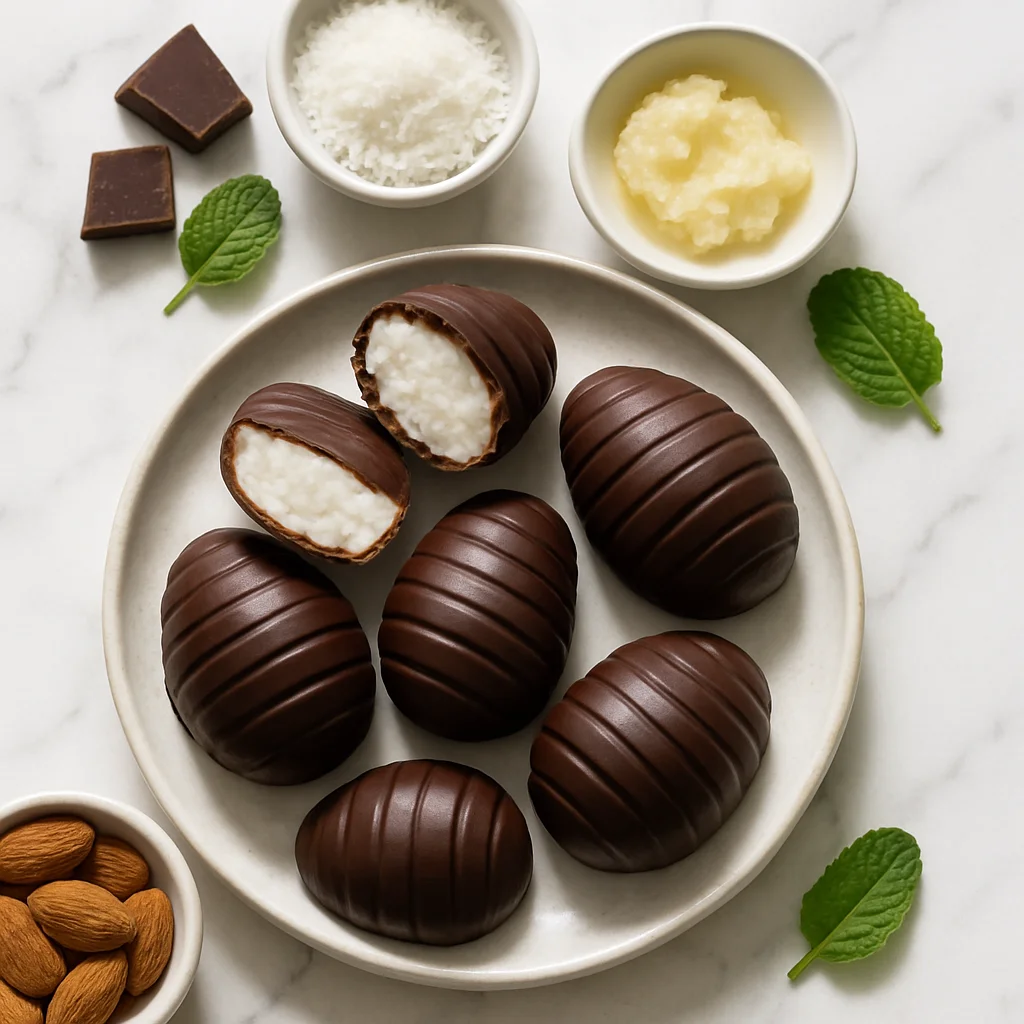
Making your own healthy chocolate Easter eggs homemade is honestly one of the most satisfying things you can do in the kitchen before Easter arrives. These eggs use a rich dark cacao shell packed with antioxidants, and a silky coconut cream and almond butter filling that tastes indulgent without the sugar spike. They are a brilliant choice for parents wanting to give kids something genuinely nourishing, for anyone following a dairy-free or vegan lifestyle, and for the health-conscious chocolate lover who refuses to give up Easter tradition. No fancy equipment required, no refined sugar anywhere in the recipe, and the whole process is surprisingly simple.
The magic here really comes down to the ingredients. Raw cacao powder is the star of the shell, bringing a deep, complex chocolate flavour alongside a meaningful dose of magnesium and iron. It is blended with coconut oil, which gives the shell that satisfying snap when you bite in, and pure maple syrup for gentle natural sweetness. The filling combines full-fat coconut cream with smooth almond butter, a tiny pinch of sea salt and a touch of vanilla extract. That salt and vanilla combination is what takes the filling from nice to genuinely craveable. Ground flaxseed gets stirred into the filling as well, adding fibre and omega-3 fatty acids in a way you will never taste but your body will absolutely notice.
The texture of these eggs is everything. The outer shell is firm and crisp, with a glossy finish if you take a moment to temper the chocolate mixture slightly before moulding. Inside, the filling is creamy and dense, almost fudge-like when cold, softening to a smooth, mellow richness once it reaches room temperature. They are lovely served straight from the fridge on Easter morning, arranged in a little nest of shredded coconut or tucked into a small gift box for someone you love. You can also dust them with freeze-dried raspberry powder or a pinch of flaky sea salt for a more grown-up presentation that looks genuinely impressive on a dessert table.
From a nutritional standpoint, each egg delivers roughly 130 calories, a solid 3 grams of fibre, and healthy fats from both the coconut oil and almond butter. There is no refined sugar, no dairy, no gluten and no hydrogenated oils, which puts these miles ahead of commercial Easter eggs loaded with dextrose, emulsifiers and preservatives. The natural sweetness from maple syrup is lower on the glycaemic index compared to white sugar, meaning a gentler rise in blood glucose. For anyone managing dietary restrictions or simply trying to eat more whole foods, this recipe gives you a festive treat that genuinely aligns with your health goals. You can make a full batch in one afternoon and feel good about every single egg you hand out.
Ingredients
- 120 g raw cacao powder (sifted to remove lumps)
- 80 ml coconut oil (melted, refined for neutral flavour)
- 3 tbsp pure maple syrup (for the chocolate shell)
- 1 tsp vanilla extract (for the shell)
- 1 pinch sea salt (for the shell)
- 120 ml full-fat coconut cream (chilled overnight and use only the thick part)
- 80 g smooth almond butter (unsweetened, at room temperature)
- 2 tbsp pure maple syrup (for the filling)
- 1 tsp vanilla extract (for the filling)
- 1 tbsp ground flaxseed (adds fibre and omega-3s)
- 1 pinch sea salt (for the filling)
Instructions
- 1
Combine the melted coconut oil, sifted raw cacao powder, maple syrup, vanilla extract and sea salt in a medium bowl. Whisk until completely smooth and glossy with no dry patches remaining.
If the mixture feels grainy, the coconut oil may have been too hot. Let it cool for two minutes before whisking again.
- 2
Spoon a thin layer of the chocolate mixture into each cavity of a silicone Easter egg mould, coating the base and sides evenly. Use the back of a small spoon or a pastry brush to push the chocolate up the sides.
Aim for a shell about 3mm thick so it holds its shape once filled.
- 3
Place the mould in the freezer for 10 minutes until the chocolate shell is completely set and firm to the touch.
- 4
While the shells set, make the filling. Beat together the thick coconut cream, almond butter, maple syrup, vanilla extract, ground flaxseed and sea salt in a small bowl until smooth and well combined. The mixture should be thick enough to hold its shape on a spoon.
If the filling seems too loose, refrigerate it for 10 minutes before using. It firms up quickly.
- 5
Remove the mould from the freezer. Spoon the coconut almond filling into each chocolate shell, leaving a small gap at the top of about 3mm to allow for the final chocolate cap.
Do not overfill or the filling will spill out when you seal the eggs.
- 6
Pour the remaining chocolate mixture over each filled shell to seal the eggs completely. Smooth the tops with the back of a spoon so they are flat and even.
Work quickly here as the cold shell can cause the fresh chocolate layer to start setting fast.
- 7
Return the filled mould to the freezer for at least 50 minutes until the eggs are fully set and release cleanly from the mould when gently flexed.
- 8
Pop the eggs out of the mould and transfer them to the fridge to bring them up to a slightly softer serving temperature. Dust with freeze-dried raspberry powder or flaky sea salt if desired before serving.
Eat straight from the fridge for the firmest bite, or let them sit at room temperature for five minutes for a creamier filling texture.
Nutrition per serving
128kcal
Calories
3g
Protein
10g
Carbs
9g
Fat
3g
Fibre
5g
Sugar
45mg
Sodium
Pro Tips
- ✓
Chill your coconut cream can overnight in the fridge so the thick cream separates from the liquid, making a denser filling.
- ✓
Silicone egg moulds are essential here. Rigid plastic moulds make it very difficult to release the eggs cleanly.
- ✓
If your kitchen is warm, work quickly when handling the chocolate mixture to prevent it melting before the shells fully set.
- ✓
A small pastry brush gives you the most even chocolate shell coating compared to using a spoon alone.
- ✓
These eggs are fragile at room temperature in a warm kitchen, so keep them refrigerated until just before serving.
Frequently Asked Questions
Variations
- •
Dark Chocolate and Tahini Eggs
Swap the almond butter in the filling for smooth tahini and add a teaspoon of raw honey instead of maple syrup. The result is a slightly more bitter, sesame-forward filling that pairs beautifully with the dark cacao shell.
- •
Mint Chocolate Easter Eggs
Add half a teaspoon of pure peppermint extract to the chocolate shell mixture and a few drops to the filling for a refreshing mint chocolate combination. Top with crushed freeze-dried mint leaves for a festive finish.
- •
Espresso Almond Easter Eggs
Stir a teaspoon of instant espresso powder into the chocolate shell mixture before moulding. The coffee note deepens the cacao flavour and makes these a brilliant treat for adults at an Easter gathering.
- •
Peanut Butter Eggs
Replace the almond butter with natural smooth peanut butter for a classic chocolate peanut butter flavour combination. This version is especially popular with kids and tastes remarkably close to a Reese's-style egg but with far cleaner ingredients.
Substitutions
- •Coconut oil → Cacao butter (Cacao butter gives a richer, more authentic chocolate flavour and a harder snap in the shell. Melt it gently as it scorches easily.)
- •Maple syrup → Raw honey or agave nectar (Honey adds a floral note and works beautifully here, though it makes the recipe no longer vegan. Agave has a lighter flavour and is still vegan-friendly.)
- •Full-fat coconut cream → Cashew cream (Soak 100g raw cashews in water for four hours, drain and blend with 3 tablespoons of water until completely smooth. This creates a neutral, creamy filling base.)
- •Ground flaxseed → Chia seeds (ground) or hemp seeds (Any of these add fibre and healthy fats to the filling without altering the taste noticeably.)
- •Almond butter → Sunflower seed butter (A great nut-free alternative with a slightly earthier flavour. Ensure the brand you use has no added sugar or palm oil.)
🧊 Storage
Store the finished Easter eggs in an airtight container in the fridge for up to 10 days. Keep them away from strong-smelling foods as the coconut oil in the shell can absorb odours. You can also freeze them in a single layer in a sealed container for up to 6 weeks. Thaw in the fridge for an hour before eating.
📅 Make Ahead
These eggs are ideal for making ahead. You can prepare a full batch up to a week before Easter and keep them refrigerated in an airtight container. The flavour actually deepens slightly after a day or two in the fridge as the filling firms and the vanilla note develops. Freeze batches even further in advance if you are planning ahead for a larger gathering.
More Easter Desserts Recipes

Dark Chocolate Covered Fruit Easter Dessert Platter with Berry and Citrus
Easter White Chocolate Raspberry Truffles Keto (Sugar-Free & Creamy)
Easter Carrot Cake Protein Balls (Dairy Free)