Gluten Free Carrot Cake with Light Cream Cheese Frosting
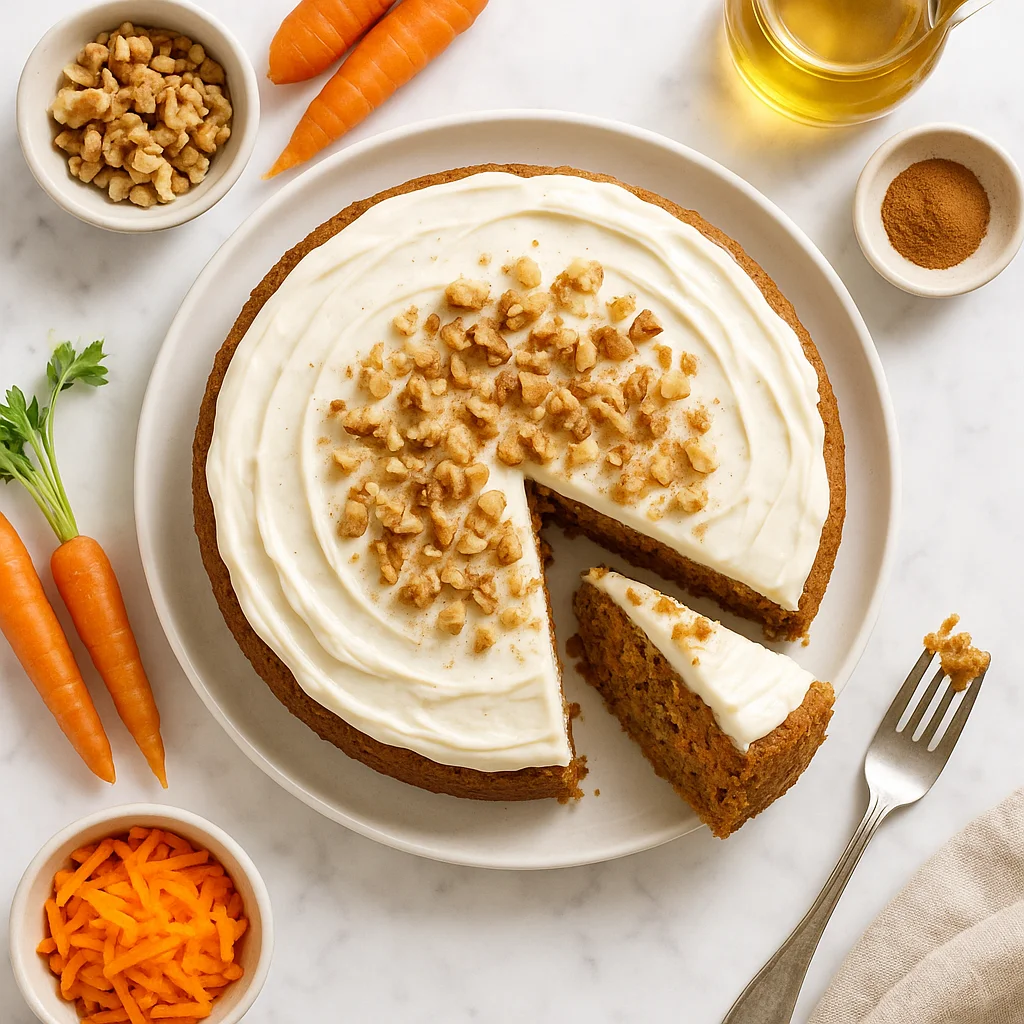
If you have been searching for a gluten free carrot cake with cream cheese frosting that actually delivers on both flavour and nutrition, you have found exactly the right recipe. This version takes everything you love about a classic carrot cake, the warm spice, the tender crumb, the tangy frosting, and rebuilds it from the ground up with wholesome, health-conscious ingredients that make every slice genuinely worth enjoying without the guilt.
Traditional carrot cake recipes are often loaded with refined white flour, excessive amounts of white sugar, and a cream cheese frosting that relies on mountains of icing sugar to achieve that signature sweetness. Our gluten free version swaps all of that out without sacrificing any of the flavour or texture that makes carrot cake so universally beloved. Instead of refined flour, we use a blend of almond flour and certified gluten free oat flour. This combination gives the cake a beautifully moist, slightly dense crumb that holds together perfectly when sliced, while also adding a meaningful boost of protein and dietary fibre compared to any wheat-based version.
For sweetness, we rely on pure maple syrup and a modest amount of coconut sugar. These natural sweeteners bring a deeper, more complex flavour than refined white sugar, and they have a lower glycaemic impact that helps avoid the sharp blood sugar spike associated with traditional cake. The result is a cake that tastes indulgent but sits far more comfortably within a balanced, health-conscious lifestyle.
The star of the show, of course, is the freshly grated carrot. We use a generous three cups, which not only gives the cake its characteristic moisture and sweetness but also packs in beta-carotene, vitamin K, and a good dose of dietary fibre. Grating your own carrots fresh is essential here, pre-shredded bags from the supermarket are too dry and coarse, and they will not distribute through the batter in the same way. A standard box grater on the medium holes is perfect. Alongside the carrot, we fold in crushed pineapple, drained thoroughly, which is a classic baker's trick for adding natural sweetness and keeping the sponge exceptionally moist without any additional fat or oil.
Warm spices are non-negotiable in a good carrot cake. We use a generous hand with cinnamon, a touch of ground ginger, a pinch of nutmeg, and a whisper of cardamom for a spice profile that is warm, aromatic, and deeply satisfying. These spices also carry real health benefits, cinnamon in particular has been widely studied for its potential to support healthy blood sugar regulation, which pairs beautifully with the lower-sugar approach of this recipe. If you want to amplify the warmth further, a pinch of allspice or a tiny scraping of fresh orange zest stirred into the batter adds a lovely brightness that complements the carrot beautifully.
Now let us talk about the cream cheese frosting, because it deserves its own moment. Conventional cream cheese frosting typically calls for full-fat cream cheese beaten together with anywhere from two to four cups of icing sugar. Our lighter version uses reduced-fat cream cheese combined with a small amount of pure maple syrup and a splash of vanilla extract. The frosting is tangy, creamy, and perfectly sweet without being cloying. A squeeze of fresh lemon juice lifts the whole thing and keeps it from tasting flat. If you prefer a frosting with a slightly fluffier, lighter texture, you can fold in two to three tablespoons of lightly whipped heavy cream after beating the cream cheese, this is a technique used by many professional bakers to add lift and airiness without extra sugar. If you prefer a firmer frosting that pipes more easily, a brief rest in the refrigerator will thicken it up beautifully.
One of the most common questions about gluten free cakes is whether the texture will be noticeably different from a wheat-based version. The honest answer is that it is different, but in a good way. The almond and oat flour blend produces a crumb that is remarkably moist and tender, arguably more so than a conventional carrot cake. The cake also benefits from resting overnight in the refrigerator after baking, which allows the spices to deepen and the crumb to firm up to the perfect sliceable consistency.
This recipe is naturally gluten free, making it ideal for anyone with coeliac disease or gluten sensitivity, as well as anyone simply choosing to reduce their gluten intake. It is also refined sugar free, making it a great option for those following a clean eating approach. With around 285 calories per slice, notably less sugar than a standard carrot cake, and a satisfying amount of fibre from the almond flour and oats, this is a dessert you can serve with genuine pride at any occasion, from birthday celebrations to weekend afternoon baking projects.
Baking this cake is straightforward and rewarding. The batter comes together in one bowl in under twenty minutes, and the two round cake layers bake up evenly and reliably. Whether you choose to make it as a layered celebration cake, bake it in a single rectangular pan for a casual everyday treat, or divide it into cupcakes for a party, the results are consistently delicious. We also include tips for making this recipe dairy free if needed, as well as ideas for adding chopped walnuts or raisins if you enjoy those classic additions.
This gluten free carrot cake with cream cheese frosting is proof that healthy baking does not have to mean compromise. It is the kind of recipe that will become a regular in your rotation, one that impresses guests, satisfies cravings, and leaves you feeling good long after the last slice is gone.
Ingredients
- 2 cups almond flour (blanched, finely ground — do not substitute with almond meal as it is too coarse and will make the cake heavy)
- 1 cup certified gluten free oat flour (or blend certified GF rolled oats in a food processor until completely fine and powdery)
- 1.5 tsp baking powder (check it is certified gluten free — some brands use wheat starch as a filler)
- 0.5 tsp baking soda
- 0.3 tsp fine sea salt
- 2 tsp ground cinnamon (use Ceylon cinnamon for a more delicate, nuanced flavour if available)
- 0.5 tsp ground ginger
- 0.3 tsp ground nutmeg (freshly grated nutmeg is significantly more aromatic than pre-ground if you have it)
- 0.1 tsp ground cardamom (optional but recommended — adds a floral warmth that elevates the spice blend)
- 3 cups freshly grated carrot (about 4 medium carrots, grated on the medium holes of a box grater — do not use pre-shredded supermarket carrot as it is too dry and coarse)
- 0.5 cup crushed pineapple (drained very well and pressed firmly in a fine sieve or clean cloth — residual liquid is the leading cause of a dense crumb)
- 4 large eggs (room temperature — cold eggs can cause coconut oil to seize and create lumps in the batter)
- 0.5 cup pure maple syrup (grade A, room temperature — grade B has a stronger flavour if you prefer a more pronounced maple taste)
- 0.3 cup coconut sugar (adds a light caramel depth; substitute monk fruit sweetener 1:1 for a lower glycaemic option)
- 0.3 cup melted coconut oil (cooled to room temperature before adding — if it is too warm it will cook the eggs when combined)
- 1 tsp pure vanilla extract
- 340 g reduced-fat cream cheese (softened fully to room temperature — this is non-negotiable for a smooth, lump-free frosting; full-fat cream cheese produces a richer, firmer result if preferred)
- 3 tbsp pure maple syrup (for frosting — start with 2 tablespoons and add more to taste; adding too much liquid at once is a common cause of runny frosting)
- 1 tsp pure vanilla extract (for frosting)
- 1 tbsp fresh lemon juice (for frosting — brightens and lifts the flavour; do not substitute with bottled lemon juice)
Instructions
- 1
Preheat your oven to 175°C (350°F). Grease two 8-inch round cake pans and line the bases with circles of parchment paper. Set aside.
Lining the base with parchment and greasing the sides ensures the cakes release cleanly without breaking. You can also lightly flour the sides with oat flour for extra insurance.
- 2
In a large mixing bowl, whisk together the almond flour, gluten free oat flour, baking powder, baking soda, salt, cinnamon, ginger, nutmeg, and cardamom until fully combined and no lumps remain.
Whisk the dry ingredients very thoroughly — almond flour in particular tends to clump. Breaking up any lumps now ensures an even, consistent batter and a well-risen cake.
- 3
In a separate medium bowl, whisk the eggs, maple syrup, coconut sugar, melted coconut oil, and vanilla extract together vigorously until smooth and well combined.
Make sure the coconut oil is cooled to room temperature before combining with the eggs — if it is still warm it can begin to cook the eggs and create scrambled streaks in your batter.
- 4
Pour the wet ingredients into the dry ingredients and stir gently with a spatula until just combined. Do not overmix.
Stop stirring as soon as no dry streaks remain. Over-mixing gluten free batters develops the starches in the oat flour and can result in a denser, slightly gummy crumb.
- 5
Fold in the grated carrots and well-drained crushed pineapple. Stir until evenly distributed throughout the batter.
Squeeze the pineapple in a clean cloth or press firmly in a fine sieve until almost no liquid drips out — this is one of the most important steps for achieving a moist but not dense result. Pat the grated carrot with a paper towel if it seems very wet.
- 6
Divide the batter evenly between the two prepared cake pans, smoothing the tops with the back of a spoon or an offset spatula.
Use a kitchen scale to weigh the batter into each pan for truly even layers. Equal layers bake at the same rate and give you a more professional, level cake when assembled.
- 7
Bake for 33 to 37 minutes, or until the tops are golden brown and a toothpick inserted into the centre comes out clean or with just a few moist crumbs.
Start checking at 30 minutes as oven temperatures vary. Almond flour cakes can go from perfectly baked to over-baked quickly. The top should feel set and spring back slightly when pressed gently in the centre.
- 8
Allow the cakes to cool in their pans on a wire rack for 15 minutes, then carefully run a knife around the edges and invert onto the rack to cool completely before frosting.
The cakes must be completely cool — not just slightly warm — before frosting. Even residual warmth will cause the cream cheese frosting to melt and slide. If you are in a hurry, cool the layers in the refrigerator for 30 minutes.
- 9
While the cakes cool, make the cream cheese frosting. Beat the softened reduced-fat cream cheese with an electric hand mixer or stand mixer on medium speed for 2 minutes until smooth and fluffy.
Room temperature cream cheese is essential — cold cream cheese will remain lumpy no matter how long you beat it. If you forgot to take it out ahead of time, cut it into small cubes and microwave in 10-second bursts until just softened.
- 10
Add the maple syrup, vanilla extract, and lemon juice to the cream cheese. Beat on medium speed for another 1 to 2 minutes until fully combined and creamy. Taste and adjust sweetness if desired.
Add the maple syrup gradually rather than all at once — adding too much liquid at once is a primary cause of runny frosting. If the frosting seems too soft after combining, refrigerate for 20 to 30 minutes before spreading.
- 11
Place the first cooled cake layer on a serving plate or cake board. Spread approximately one third of the frosting over the top in an even layer. Place the second cake layer on top.
Anchor the cake board or plate with a damp paper towel underneath to prevent it from sliding while you frost. Press the second layer gently but firmly onto the frosting to ensure the layers adhere.
- 12
Use the remaining frosting to cover the top of the cake and spread down the sides to your preferred coverage — you can do a full coat or a rustic semi-naked style. Refrigerate for at least 30 minutes before slicing and serving.
A turntable makes frosting the sides much easier and gives a cleaner, more even result. For the neatest slices, use a sharp knife dipped in hot water and wiped dry between each cut.
Nutrition per serving
285kcal
Calories
8g
Protein
26g
Carbs
17g
Fat
3g
Fibre
14g
Sugar
210mg
Sodium
Pro Tips
- ✓
Grate carrots fresh on the medium holes of a box grater rather than using pre-shredded supermarket bags, fresh carrots are far moister, finer in texture, and distribute through the batter much more evenly, which is key to that signature tender crumb.
- ✓
Press the drained crushed pineapple firmly in a fine sieve or wrap it in a clean cloth and squeeze out as much liquid as possible, excess moisture from the pineapple is one of the most common reasons this cake turns out dense rather than tender.
- ✓
Do not skip bringing refrigerated ingredients to room temperature before you begin. Cold eggs can cause the coconut oil to seize and solidify into small lumps in the batter; cold cream cheese will always produce a lumpy frosting no matter how long you beat it.
- ✓
This cake genuinely improves after an overnight rest in the refrigerator, the spices deepen, the crumb firms to a perfect sliceable texture, and the flavours meld together. Make it the day before you plan to serve it whenever possible.
- ✓
For clean, bakery-style slices, refrigerate the fully assembled and frosted cake for at least 30 minutes before cutting. Dip a sharp knife in hot water and wipe it dry between each cut for the neatest result.
- ✓
If your frosting is too soft to spread neatly, refrigerate it for 20 to 30 minutes before using. If it is still too loose, beat in one tablespoon of tapioca starch or arrowroot powder to help it firm up without adding more sweetener. Conversely, folding in two to three tablespoons of lightly whipped heavy cream after beating will give you a fluffier, lighter-textured frosting.
Frequently Asked Questions
Variations
- •
Carrot Cake Cupcakes
Divide the batter evenly into 16 to 18 lined muffin cups. Bake at 175°C for 20 to 24 minutes until a toothpick comes out clean. Cool completely before piping or spreading the cream cheese frosting on top.
- •
Spiced Raisin and Walnut Carrot Cake
Fold half a cup of plump raisins and half a cup of roughly chopped walnuts into the batter along with the carrots for a more traditional, textured carrot cake experience.
- •
Tropical Carrot Cake
Add a quarter cup of unsweetened desiccated coconut and a quarter cup of finely chopped dried mango to the batter for a tropical twist. The coconut also adds a pleasant chew to the crumb.
- •
Mini Carrot Layer Cakes
Use four 6-inch cake pans instead of two 8-inch pans and reduce the bake time to approximately 22 to 26 minutes. Stack as individual mini cakes for elegant individual servings at a celebration.
Substitutions
- •Almond flour → Sunflower seed flour (Grind raw sunflower seeds to a fine flour. Note that sunflower seed flour can turn green when combined with baking powder due to a natural chemical reaction, this is harmless but worth being aware of.)
- •Gluten free oat flour → Buckwheat flour or millet flour (Both work well and keep the recipe gluten free. Buckwheat adds a slightly earthier, nuttier flavour while millet flour is milder and closer to oat flour in taste.)
- •Maple syrup → Raw honey (Use in a 1:1 ratio. Honey is slightly sweeter than maple syrup so you may want to reduce by one tablespoon. Note this makes the recipe non-vegan.)
- •Coconut sugar → Monk fruit sweetener (Use an equal amount of a 1:1 baking blend of monk fruit sweetener for a lower glycaemic option with no impact on blood sugar.)
- •Coconut oil → Light olive oil or avocado oil (Use in equal quantities. These oils are flavourless and will not affect the taste of the cake.)
- •Reduced-fat cream cheese → Full-fat cream cheese (Full-fat cream cheese produces a richer, firmer frosting. The calorie and fat content per slice will increase but the frosting will be easier to pipe and work with.)
🧊 Storage
Store the finished cake covered in the refrigerator for up to 5 days. Allow individual slices to sit at room temperature for 15 minutes before serving for the best texture and flavour. Do not store at room temperature for extended periods due to the cream cheese frosting.
📅 Make Ahead
Bake the cake layers up to 2 days in advance. Once fully cooled, wrap tightly in cling film and store at room temperature. Alternatively, freeze unfrosted layers for up to 1 month, thaw overnight in the refrigerator before frosting. The cream cheese frosting can be made up to 2 days ahead and refrigerated in an airtight container; re-beat briefly before using.
More Gluten-Free Desserts Recipes
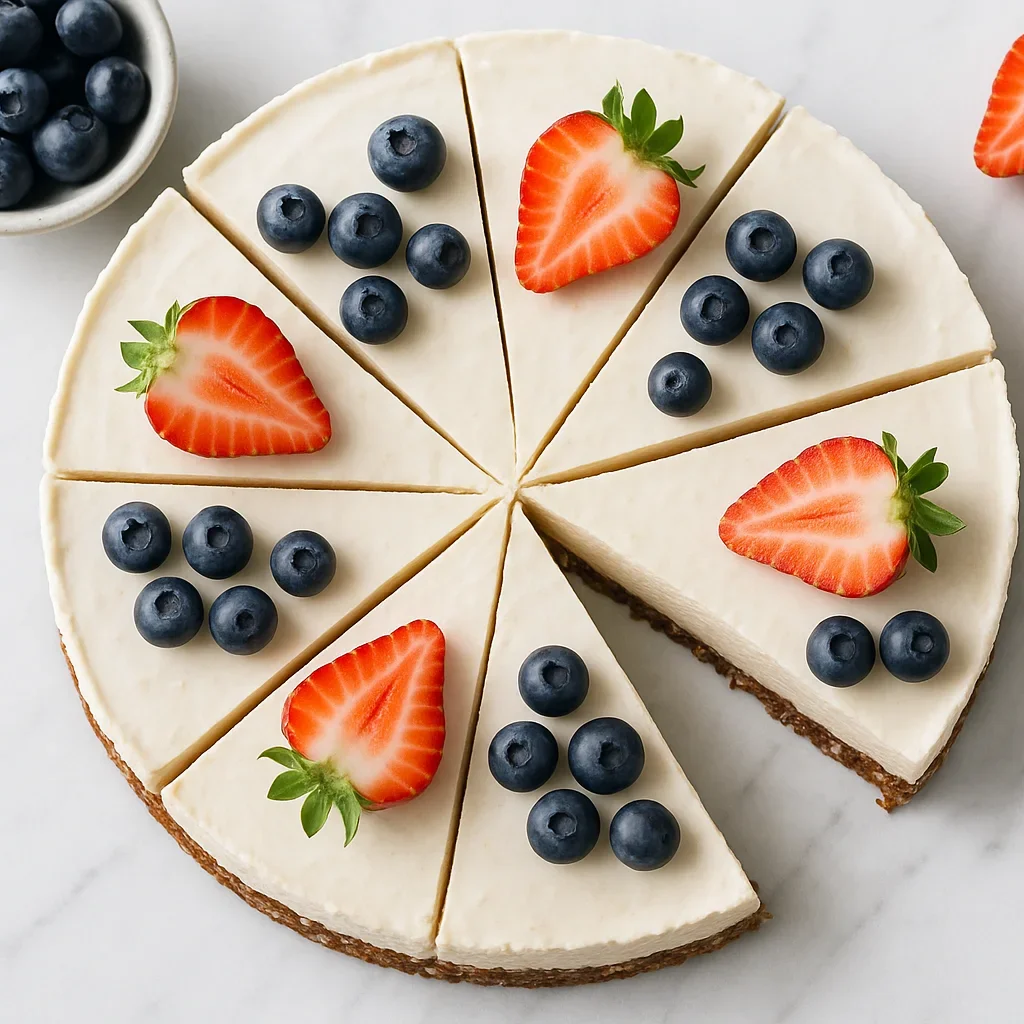
Lightened-Up Gluten Free No Bake Cheesecake with Almond Date Crust
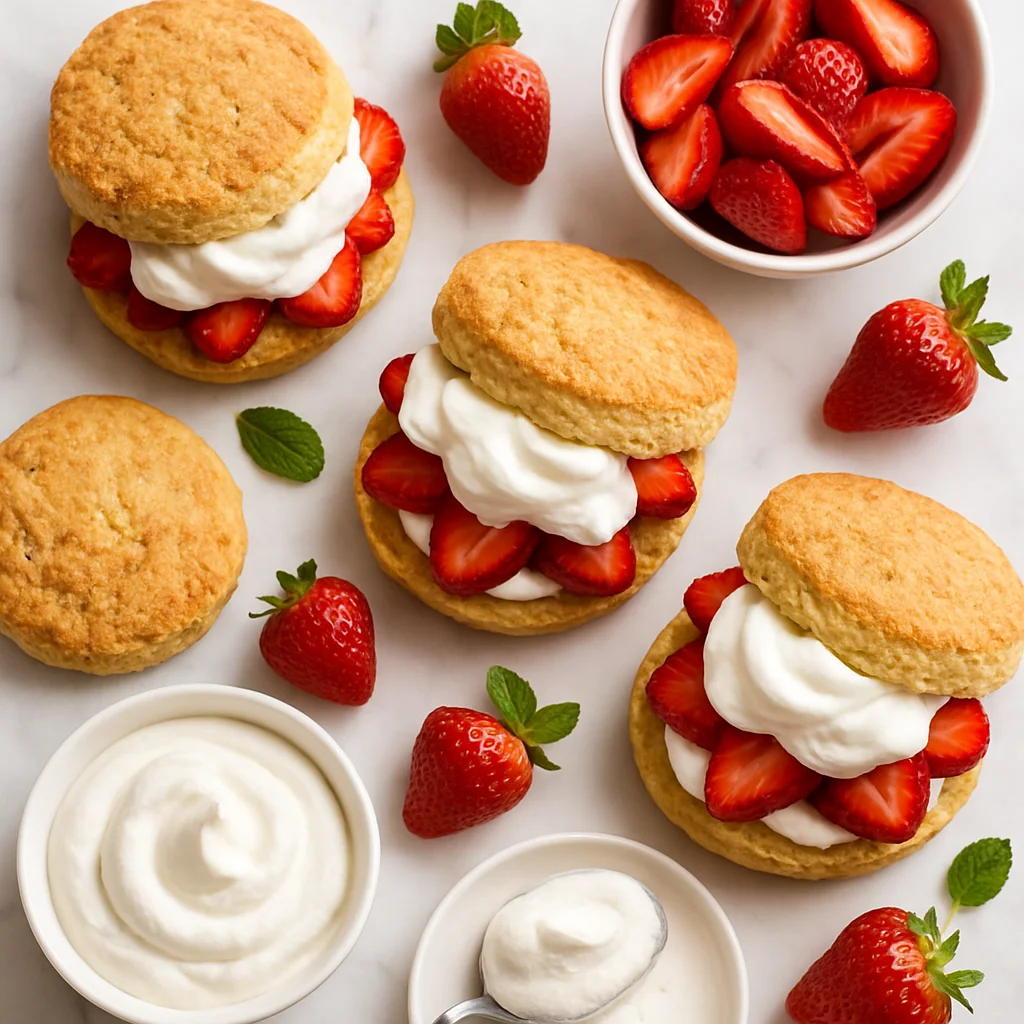
Light & Fluffy Gluten Free Strawberry Shortcake with Almond Flour Biscuits
Gluten Free Peanut Butter Blondies (Fudgy, High-Protein & Naturally Sweetened)