Healthy Bibingka Recipe: Baked Rice Cake with Coconut and Less Sugar
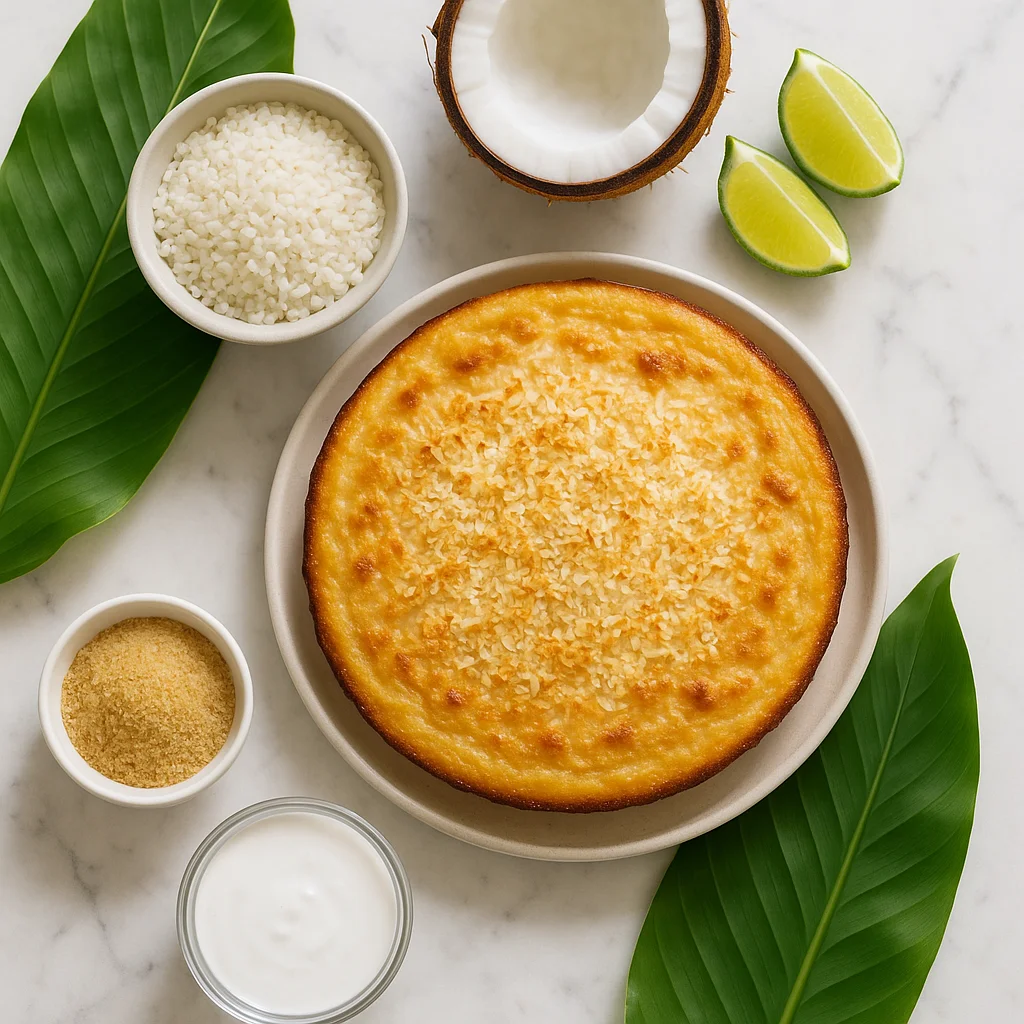
In Manila and across the Philippines, the weeks before Christmas are marked by a specific smell. Street vendors set up clay pots lined with banana leaves and stoked with charcoal, and the smell of bibingka baking drifts through the early morning crowds leaving the Simbang Gabi, the nine-day series of pre-dawn masses central to Filipino Christmas culture. Bibingka is not fancy food. It is comfort food in the truest sense. This healthier home version captures the same tender rice cake texture and coconut sweetness using a little less sugar and a lighter hand with the butter, without losing any of the warmth that makes the original so deeply associated with celebration.
Why this recipe works
Glutinous rice flour gives bibingka its characteristic texture: soft, slightly chewy and dense in the most satisfying way. Coconut milk adds richness and a subtle tropical sweetness that is inseparable from the flavour of the dish. Eggs provide the structure that holds the cake together during baking. Banana leaves lining the baking tin are not just aesthetically traditional. They impart a faint, green, herbal aroma to the underside of the cake that is part of what makes bibingka taste the way it does. If you can find them at an Asian supermarket, use them.
Getting it right
Preheat your oven fully before the batter goes in. Bibingka benefits from a hot initial blast that sets the surface quickly and creates a slight crust on top. A consistently low oven produces a more uniformly cooked but less textured result.
If using banana leaves, soften them briefly over a gas flame or in boiling water before lining the tin. This makes them pliable and prevents splitting.
Common mistakes
Using rice flour instead of glutinous rice flour produces a crumbly, sandy texture rather than the soft chew the recipe needs. The glutinous type is essential. It is gluten-free despite the name.
Over-sweetening the batter makes bibingka taste more like a Western tea cake than the gently sweet rice cake it should be. Coconut milk provides natural sweetness. Trust it.
Substitutions
Oat milk mixed with a tablespoon of coconut cream can replace the full coconut milk for a lighter version. Grated cheese on top during the final five minutes of baking, which is traditional, can be replaced with a scattering of desiccated coconut.
Serving suggestion
Serve warm, ideally straight from the oven, topped with a small sliver of salted butter and a sprinkling of desiccated coconut. A cup of hot ginger tea alongside makes it feel properly traditional.
Ingredients
- 1.5 cups brown rice flour (sifted)
- 1 tsp baking powder (aluminium-free preferred)
- 0.3 tsp fine sea salt
- 2 large eggs (at room temperature)
- 1 cup full-fat coconut milk (well shaken, from a can)
- 3 tbsp raw honey (or pure maple syrup for vegan version)
- 1 tbsp virgin coconut oil (melted, plus extra for greasing)
- 1 tsp pure vanilla extract
- 2 tbsp unsweetened desiccated coconut (for topping)
- 2 sheets banana leaf (optional, cleaned and softened over low heat)
Instructions
- 1
Preheat your oven to 180 degrees Celsius (350 degrees Fahrenheit). Grease a 20cm round cake tin lightly with coconut oil. If using banana leaves, line the tin with a softened sheet, pressing it gently into the base and sides so it sits flush. Trim any excess overhang with scissors. If skipping the banana leaf, line the tin with parchment paper instead.
To soften banana leaves quickly, hold each sheet briefly over a low gas flame or run it under hot water until pliable. This prevents tearing when you press it into the tin.
- 2
In a medium mixing bowl, whisk together the brown rice flour, baking powder and fine sea salt until evenly combined. Make sure there are no lumps in the flour before you add the wet ingredients.
- 3
In a separate large bowl, crack in both eggs and whisk them lightly. Add the coconut milk, raw honey, melted coconut oil and vanilla extract. Whisk everything together until the mixture is smooth and uniform.
If your honey has crystallised, warm it gently for a few seconds before adding so it blends smoothly into the batter.
- 4
Pour the dry ingredients into the wet ingredients. Stir gently with a spatula or wooden spoon until just combined. The batter will be quite loose and pourable, which is exactly right for bibingka. Do not overmix as this can make the cake dense.
- 5
Pour the batter into the prepared tin. Scatter the unsweetened desiccated coconut evenly over the surface.
For a slightly richer topping, press a very thin slice of reduced-fat white cheese onto the surface before baking. This recreates the classic salty-sweet combination without going overboard on calories.
- 6
Bake in the centre of the oven for 28 to 32 minutes. The bibingka is ready when the top is golden, the edges have pulled slightly away from the sides of the tin, and a skewer inserted into the centre comes out clean.
All ovens vary a little, so start checking at the 25-minute mark.
- 7
Remove from the oven and leave the cake to cool in the tin for 10 minutes before turning it out. Serve warm, either as whole slices or cut into smaller portions for sharing.
A very light brush of coconut oil over the warm top just before serving adds a subtle sheen and enhances the coconut aroma beautifully.
Nutrition per serving
185kcal
Calories
4g
Protein
26g
Carbs
8g
Fat
2g
Fibre
7g
Sugar
105mg
Sodium
Pro Tips
- ✓
Room temperature eggs blend more evenly into the batter and help the cake rise more consistently.
- ✓
Full-fat coconut milk gives the best texture. Light coconut milk will work but the cake will be less moist.
- ✓
Brown rice flour absorbs liquid differently from white rice flour, so do not be alarmed by the loose batter.
- ✓
If you want extra flavour depth, add a small pinch of ground cardamom or a tiny grating of lime zest to the dry mix.
- ✓
Banana leaves are worth tracking down at an Asian grocery store because they genuinely transform the aroma of the finished cake.
Frequently Asked Questions
Variations
- •
Pandan Bibingka
Add one teaspoon of pure pandan extract or two tablespoons of fresh pandan juice to the wet ingredients. This turns the cake a soft green and adds a floral, slightly nutty flavour that is very traditional across Southeast Asia.
- •
Cheese-Topped Bibingka
Lay two thin strips of reduced-fat white cheese or queso blanco over the batter before baking. The cheese melts and caramelises slightly on top, delivering that classic salty contrast without adding excessive saturated fat.
- •
Mango Coconut Bibingka
Fold 60 grams of finely diced fresh mango into the batter before pouring it into the tin. The mango softens during baking and creates pockets of fruity sweetness throughout the cake, reducing the need for added sweetener.
Substitutions
- •Brown rice flour → White rice flour (The cake will be slightly less nutty and have a little less fibre, but the texture will be marginally lighter.)
- •Raw honey → Pure maple syrup (A one-to-one swap that also makes the recipe vegan-friendly. The flavour will be slightly more caramel-like.)
- •Full-fat coconut milk → Oat milk with one tablespoon of coconut cream stirred in (This reduces the overall fat content but keeps some coconut flavour. The texture will be slightly less rich.)
- •Eggs → Flax eggs (Mix one tablespoon of ground flaxseed with three tablespoons of water per egg. Rest for 5 minutes before using. Works well for a vegan version though the cake will be a little denser.)
- •Banana leaves → Parchment paper (No flavour difference but you lose the subtle tropical aroma. Works perfectly fine for everyday baking.)
🧊 Storage
Store cooled leftovers in an airtight container at room temperature for up to 2 days, or refrigerate for up to 4 days. To refresh, warm individual slices in a low oven at 160 degrees Celsius for 5 to 8 minutes, or microwave briefly until just heated through.
📅 Make Ahead
You can mix the dry ingredients and the wet ingredients separately up to 24 hours in advance. Keep them covered and refrigerated separately, then combine and bake when ready. The baked cake also freezes well for up to one month when wrapped tightly in cling film and placed in a zip-lock bag.
More Filipino Desserts Recipes
Low Sugar Filipino Yema Recipe: Creamy Egg Yolk Candy with Coconut Milk
Baked Banana Lumpia Turon Recipe No Fry (Crispy and Guilt-Free)
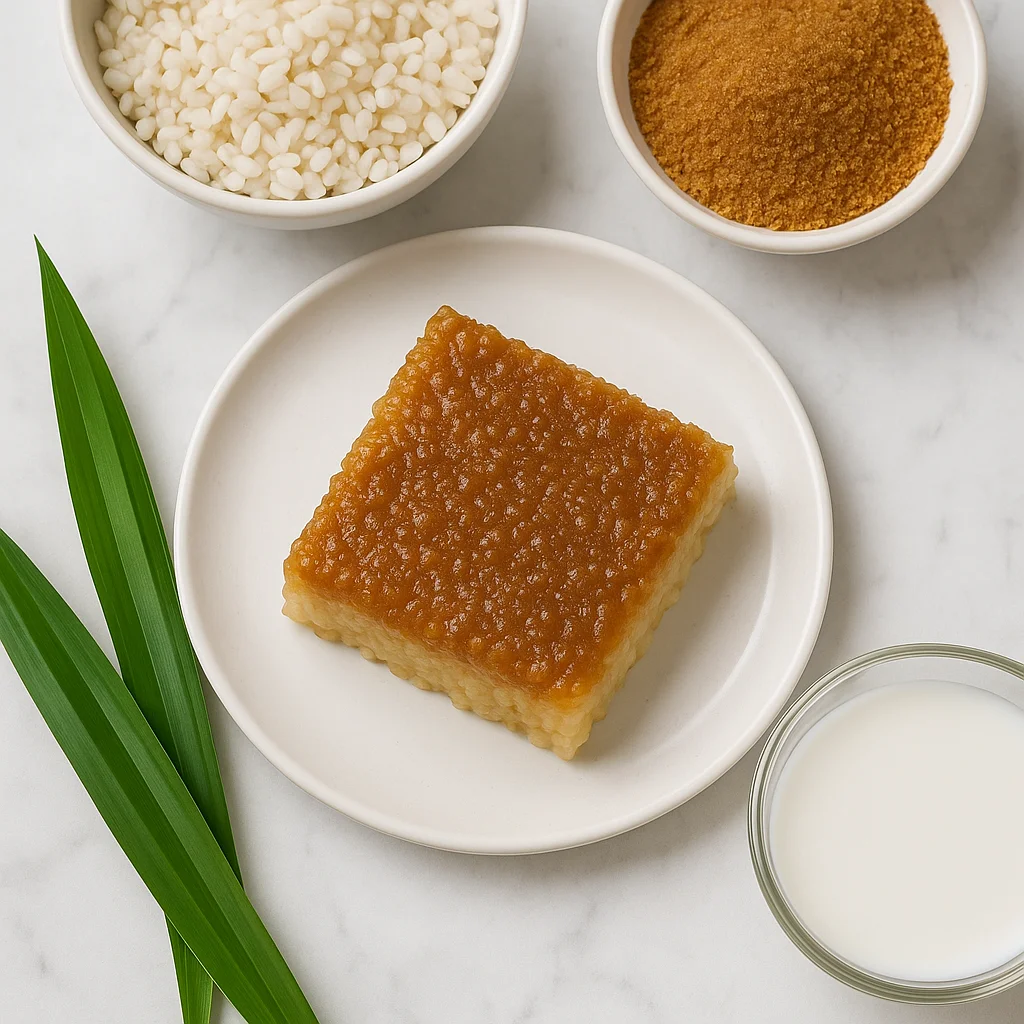
Low Sugar Biko Recipe: Filipino Sticky Rice Cake with Coconut Caramel