Soft & Chewy Sugar Free Peanut Butter Cookies with Oat Flour
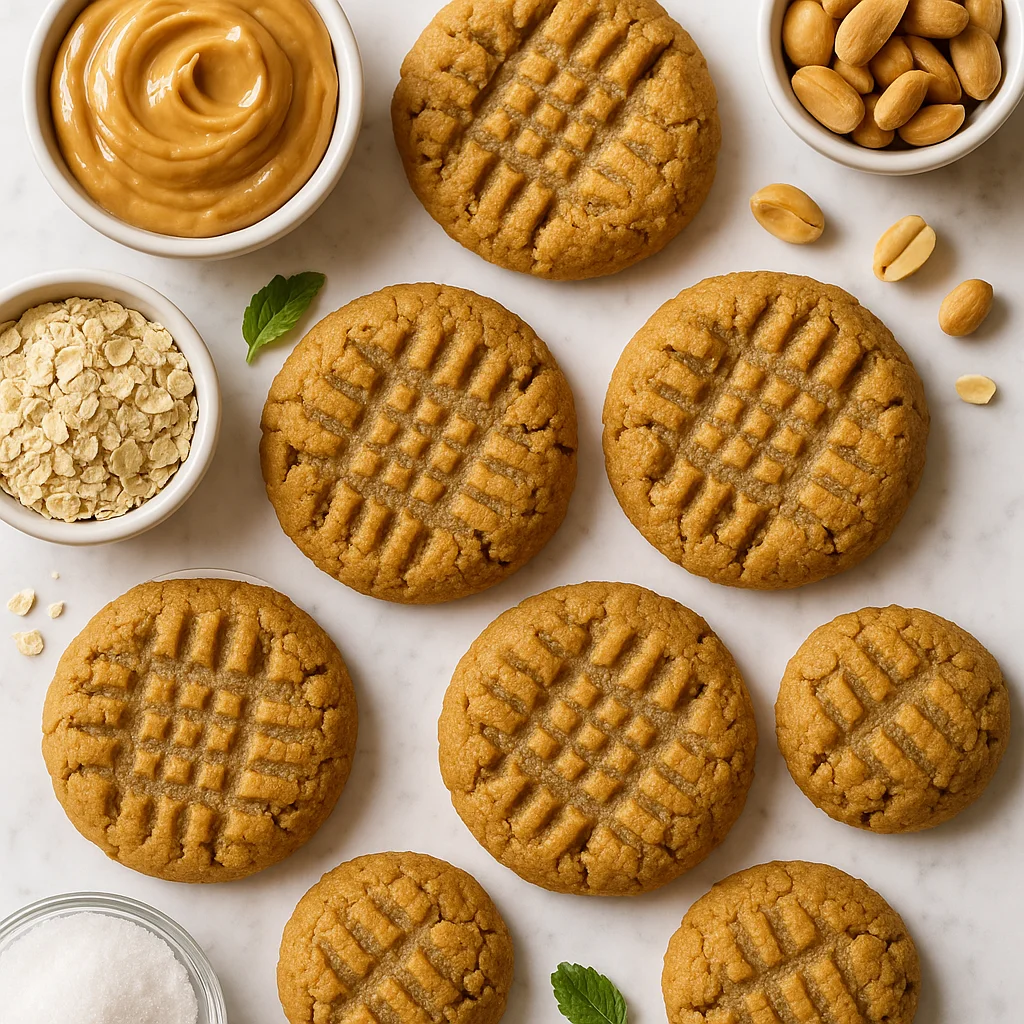
If you have been searching for sugar free peanut butter cookies that actually taste like the real thing, you have just found your new favourite recipe. These cookies are soft in the centre, lightly golden on the edges, and packed with deep, nutty peanut butter flavour, all without a single gram of added sugar. Whether you are managing blood sugar levels, following a low-carb lifestyle, or simply trying to cut back on refined sweeteners, this recipe was designed with your goals in mind.
What makes these cookies stand out from the crowd is the combination of natural peanut butter, oat flour, and erythritol, a naturally-derived sugar alcohol that bakes beautifully without spiking blood glucose. Unlike sucralose-based recipes that rely solely on artificial sweeteners, this recipe layers in flavour through real vanilla extract, a touch of ground cinnamon, and a tiny pinch of sea salt that brings everything together. The result is a cookie that genuinely satisfies your sweet tooth without the guilt.
Oat flour is the secret weapon here. It adds a subtle nutty depth that complements the peanut butter perfectly, while also contributing more fibre than plain white flour. Each cookie contains around 2.4 grams of fibre, a meaningful contribution toward your daily intake. If you are used to 3-ingredient peanut butter cookies, you will notice immediately how much better the texture is when you add oat flour to the mix. These are not crumbly or dry, they have a real cookie chew that holds up well even a couple of days after baking.
You can make your own oat flour at home in under a minute by blending rolled oats in a high-speed blender or food processor until you have a fine, powdery flour. Use certified gluten-free oats if you need these cookies to be strictly gluten-free. One cup of rolled oats yields approximately one cup of oat flour, so the swap is perfectly 1:1. Homemade oat flour is just as effective as store-bought and saves money too.
For sweetness, we use powdered erythritol rather than granular, because the finer texture dissolves more evenly into the dough and prevents any grittiness. Erythritol is one of the best natural sugar substitutes for baking because it behaves similarly to sugar in terms of structure and browning, but it contains almost zero calories and has a glycaemic index of zero. If you prefer monk fruit sweetener or a monk fruit and erythritol blend, that works just as well in this recipe. You can also powder your own granular erythritol at home using a blender, simply blend for 30 to 60 seconds until it reaches a fine, icing-sugar consistency.
The egg in this recipe acts as a binder to hold everything together without the need for extra flour or butter. This keeps the calorie count lower than a typical peanut butter cookie while still giving you a satisfying, cohesive texture. Each cookie comes in at approximately 118 calories, with 5 grams of protein and only 1.8 grams of naturally occurring sugar, making them an excellent high-protein snack as well as a dessert.
These sugar free peanut butter cookies are also naturally gluten-free when you use certified gluten-free oat flour, which is great news for anyone with gluten sensitivity. They are dairy-free, refined sugar-free, and suitable for diabetics, keto beginners, and anyone following a lower-sugar diet. They are not strictly keto due to the oat flour, but they are significantly lower in carbohydrates than standard peanut butter cookies. For a fully keto version, substitute the oat flour with almond flour using the same quantity, the cookie will be denser and slightly more moist, but every bit as delicious.
One of the best things about this recipe is how quickly it comes together. From mixing bowl to oven, you are looking at about 10 minutes of hands-on prep time. The cookies bake in just 12 minutes, and the hardest part is letting them cool on the tray, they need a few minutes to firm up before you try to move them. This is completely normal for peanut butter-based cookies without a heavy flour structure holding them together.
The type of peanut butter you choose matters more than you might expect. Natural smooth peanut butter made with just peanuts and salt gives you the deepest flavour and keeps the recipe free from hidden sugars and hydrogenated oils. Always stir the jar thoroughly before measuring, as the natural oils tend to separate and sit on top. If your peanut butter is very stiff or has been stored in the fridge, bring it to room temperature before mixing so it incorporates easily without leaving lumps in the dough.
You can also customise these cookies endlessly. Stir in some sugar free chocolate chips for a peanut butter chocolate version, add a sprinkle of flaky sea salt on top before baking, or press a piece of dark chocolate into the centre straight out of the oven for a healthier peanut butter blossom. The variations section below has even more ideas to keep things interesting.
Whether you are baking for yourself, for a diabetic family member, or for a health-conscious gathering, these sugar free peanut butter cookies are the kind of recipe that earns a permanent spot in your rotation. They are honest, wholesome, and genuinely delicious, proof that eating less sugar does not mean giving up on the treats you love.
Ingredients
- 1 cup natural smooth peanut butter (no added sugar or palm oil; stir the jar thoroughly before measuring as natural oils separate; bring to room temperature if cold)
- 3 cup oat flour (certified gluten-free if needed; or blend 3/4 cup rolled oats in a high-speed blender for 30–60 seconds to make your own)
- 1 cup powdered erythritol (must be powdered not granular to avoid grittiness; or use powdered monk fruit sweetener; you can powder granular erythritol yourself in a blender)
- 1 large egg (room temperature; acts as the primary binder — do not skip unless making the vegan version with a flax egg)
- 1 teaspoon pure vanilla extract (use pure extract rather than imitation for the best flavour)
- 1 teaspoon baking soda (check it is fresh — old baking soda can cause flat, dense cookies)
- 1 teaspoon fine sea salt (balances the sweetness and enhances the peanut butter flavour; do not skip)
- 1 teaspoon ground cinnamon (optional but recommended — adds warmth without overpowering the peanut butter)
- 1 tablespoon unsweetened almond milk (only add if dough feels too stiff to press with a fork; any plant or dairy milk works equally well)
Instructions
- 1
Preheat your oven to 175°C (350°F). Line a large baking sheet with parchment paper and set aside.
Do not skip the parchment paper — peanut butter cookies tend to stick to unlined trays even when greased. A silicone baking mat also works well as an alternative.
- 2
In a large mixing bowl, combine the natural peanut butter, powdered erythritol, egg, and vanilla extract. Stir together with a wooden spoon or rubber spatula until smooth and fully combined.
If your peanut butter is very stiff from being refrigerated, let it sit at room temperature for 15 to 20 minutes first for easier mixing. Cold peanut butter can cause the dough to feel lumpy and uneven.
- 3
Add the oat flour, baking soda, sea salt, and cinnamon to the bowl. Mix until a soft, cohesive dough forms. If the dough feels very stiff or crumbly, add the tablespoon of almond milk and mix again.
The dough should hold together when pressed but not feel sticky or wet. Oat flour absorbs moisture differently depending on the brand and how finely it is milled, so use the almond milk only if the dough is too stiff to press down without cracking around the edges.
- 4
Scoop the dough into 16 equal portions using a tablespoon or small cookie scoop (about 1.5 tablespoons each). Roll each portion gently between your palms to form a ball, then place them on the prepared baking sheet spaced about 5cm (2 inches) apart.
Consistent sizing ensures even baking. A small cookie scoop (1.5 tablespoon capacity) is ideal here — it portions the dough quickly and gives you uniform cookies that bake at the same rate.
- 5
Use a fork to press each dough ball down in a criss-cross pattern to about 1cm thick. This is the classic peanut butter cookie look and also helps them bake more evenly.
If the fork sticks to the dough, dip it in a small bowl of water between presses. Press firmly but not so hard that the cookie becomes paper-thin — aim for about 1cm thickness for the best soft-centre texture.
- 6
Bake in the preheated oven for 11 to 13 minutes, until the edges are lightly golden and the tops look just set. The centres may still look slightly underdone — this is correct.
Do not overbake. These cookies firm up significantly as they cool and will become dry and crumbly if left in the oven past the point where the edges are just golden. When in doubt, pull them out — they will continue to set on the hot tray.
- 7
Remove the baking sheet from the oven and allow the cookies to cool on the tray for at least 8 minutes before transferring to a wire rack. They will be very soft when hot and will firm up as they cool.
Rushing this step is the most common reason peanut butter cookies fall apart. The cookies are fragile and almost liquid inside when they first come out of the oven. Give them a full 8 to 10 minutes on the tray before attempting to move them — they will firm up considerably as they cool.
Nutrition per serving
118kcal
Calories
5g
Protein
8g
Carbs
7g
Fat
2.4g
Fibre
1.8g
Sugar
98mg
Sodium
Pro Tips
- ✓
Use powdered erythritol rather than granular, it incorporates more smoothly and prevents a gritty texture in the finished cookie. If you only have granular erythritol, blend it in a high-speed blender for 30 to 60 seconds until it reaches a fine, powdery consistency similar to icing sugar.
- ✓
Natural peanut butter with no added oil or sugar is essential for the best flavour and a healthier result. Look for brands with just peanuts and salt on the ingredient list. Always stir the jar thoroughly before measuring to recombine the separated natural oils, unmixed peanut butter can make the dough too dry.
- ✓
For slightly thicker cookies that spread less, refrigerate the dough for 20 to 30 minutes before shaping. Cold dough holds its shape better in the oven and gives you a taller, chewier cookie. This is especially helpful in warm kitchens.
- ✓
These cookies actually taste better the next day once the flavours have had time to develop and the texture settles into a perfect soft chew. If you can resist eating them all immediately, store them overnight in a sealed container for the best result.
- ✓
If you prefer crunchier cookies, bake for the full 13 minutes and let them cool completely on the tray without moving them, the residual heat from the tray continues to bake the base slightly, adding extra crispness. This method works particularly well if you are making these as an on-the-go snack.
- ✓
Always check that your baking soda is fresh before starting. To test it, drop a small amount into hot water, if it bubbles actively, it is still good. Stale baking soda is one of the most common causes of flat, dense cookies that do not rise properly.
Frequently Asked Questions
Variations
- •
Chocolate Chip Sugar Free Peanut Butter Cookies
Fold in 3 tablespoons of sugar free dark chocolate chips or roughly chopped 85% dark chocolate into the finished dough before scooping. The rich chocolate contrasts beautifully with the salty peanut butter base.
- •
Peanut Butter Protein Cookies
Replace 2 tablespoons of the oat flour with an unflavoured or vanilla plant-based protein powder. This boosts the protein content to approximately 7 grams per cookie and makes them an even better post-workout snack.
- •
Spiced Peanut Butter Cookies
Add 1/4 teaspoon of ground ginger and a pinch of ground nutmeg alongside the cinnamon for a warmly spiced autumnal version. These pair especially well with a chai tea or black coffee.
- •
Peanut Butter Blossom Sugar Free Version
As soon as the cookies come out of the oven, press one small piece of 90% dark chocolate or a sugar free chocolate disc into the centre of each cookie. The heat from the cookie slightly melts the chocolate for a stunning and delicious finish.
Substitutions
- •Oat flour → Almond flour (Use the same quantity. Almond flour gives a slightly denser, more moist cookie and makes the recipe lower in carbs and more keto-friendly. The flavour is slightly richer.)
- •Powdered erythritol → Monk fruit sweetener or xylitol (Use the same quantity. Monk fruit is slightly sweeter so you may want to reduce by 1 tablespoon. Xylitol is toxic to dogs, keep cookies away from pets if using this substitute.)
- •Egg → Flax egg (1 tbsp ground flaxseed + 3 tbsp water) (Mix and rest for 5 minutes before using. Makes the recipe vegan. Texture will be slightly softer.)
- •Natural peanut butter → Almond butter or sunflower seed butter (Use the same quantity. Sunflower seed butter makes it nut-free. Expect a slightly different flavour profile with either substitute.)
- •Almond milk → Any plant or dairy milk (The milk is only used to adjust dough consistency if needed. Any liquid milk alternative works the same way.)
🧊 Storage
Store cooled cookies in an airtight container at room temperature for up to 4 days. For longer storage, refrigerate for up to 1 week. Separate layers with parchment paper to prevent sticking. The texture is best on days 2 and 3 after baking.
📅 Make Ahead
The dough can be made up to 48 hours in advance and stored covered in the refrigerator. You can also pre-scoop and shape the cookies onto a lined tray, cover with plastic wrap, and refrigerate overnight before baking. Bake straight from cold, add 1 to 2 minutes to the baking time.