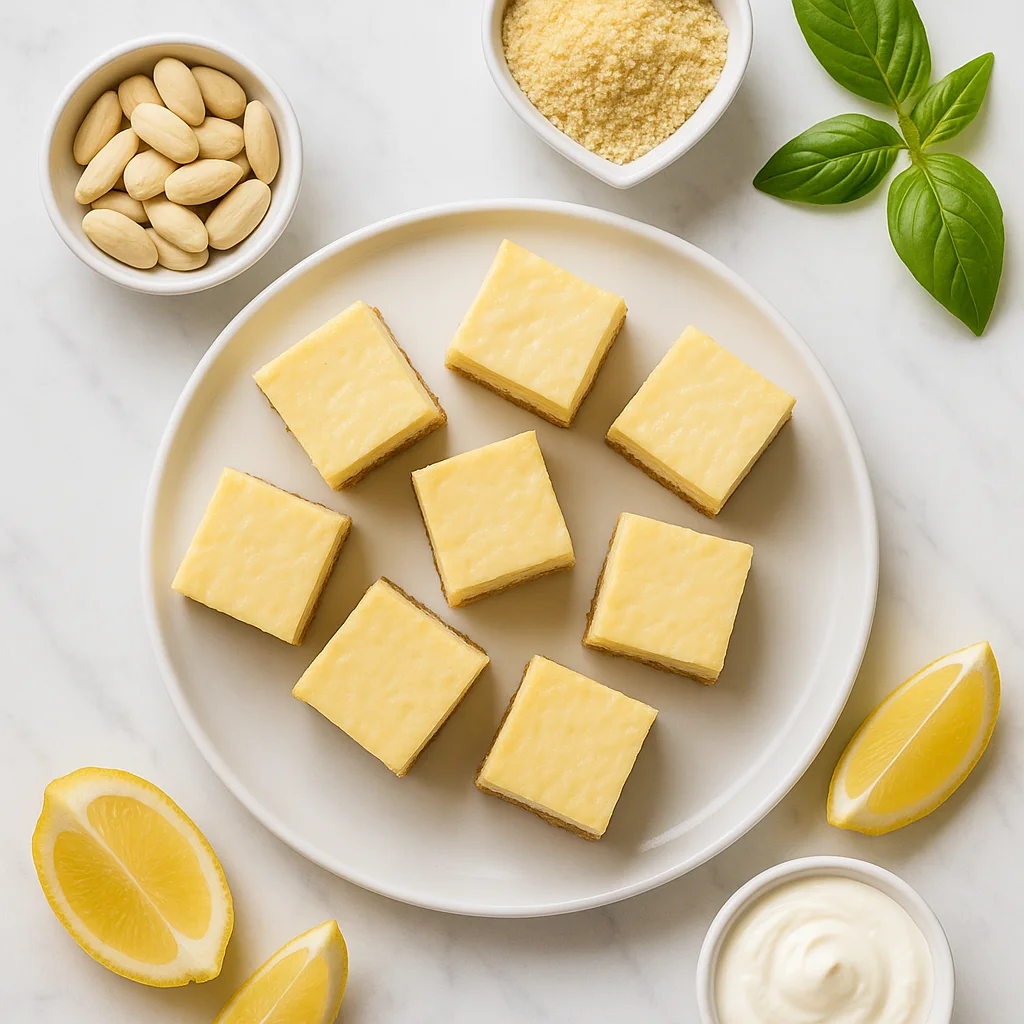
Low Carb Lemon Bars with Almond Crust (Keto, Gluten-Free)
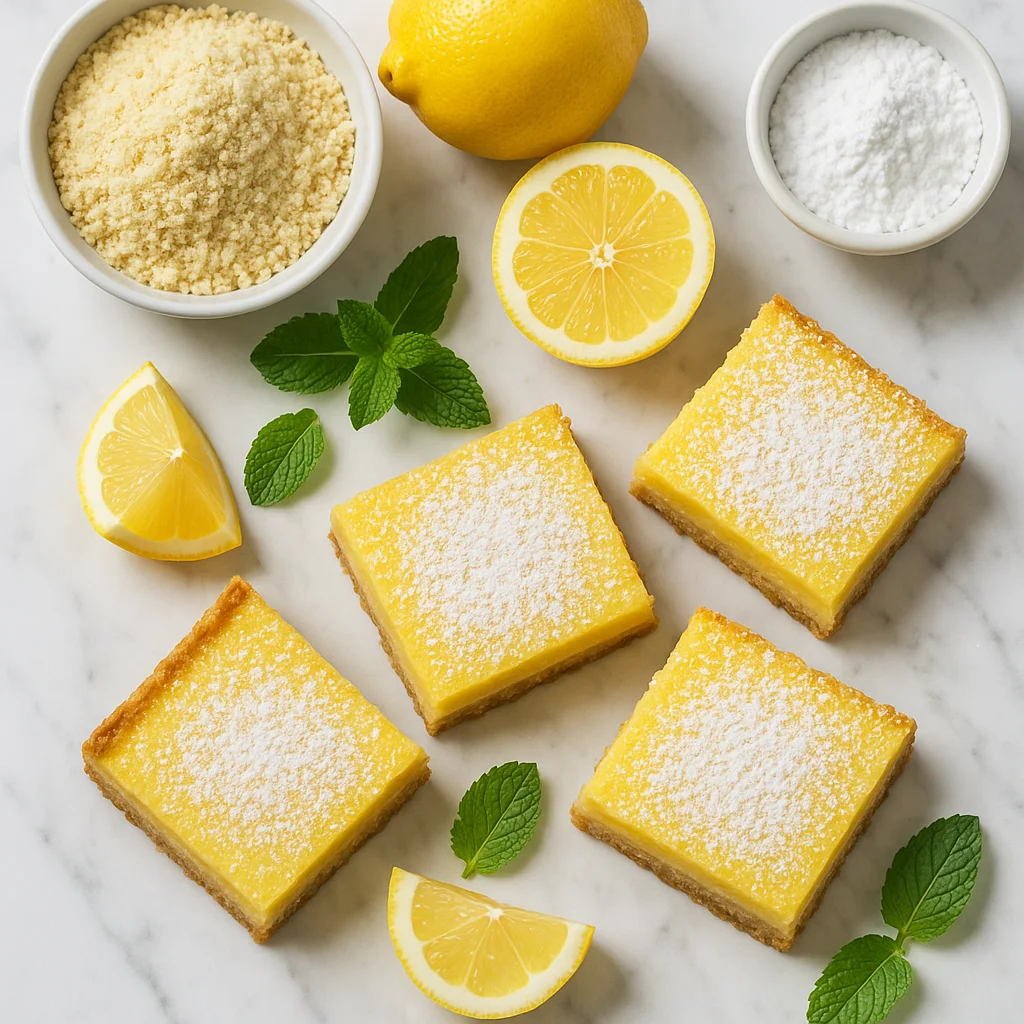
Standard lemon bar recipes use a shortbread crust made from plain flour, icing sugar and butter, and a filling of lemon juice, sugar and eggs that sets into a bright yellow, firm curd. They taste extraordinary. They also contain enough refined carbohydrates to rule them out for anyone eating low-carb or following a ketogenic diet. This version solves that cleanly. The crust is made from almond flour and a small amount of erythritol, producing a buttery, crumbly base that is indistinguishable in texture from the original. The filling uses the same eggs and lemon juice, sweetened with erythritol, and sets just as firm and bright. The total carbohydrate count drops dramatically while the flavour remains completely intact.
Why this recipe works
Almond flour behaves similarly to a butter and flour shortbread when bound with coconut oil and pressed into a tin. Its natural fat content contributes the richness that makes the crust feel satisfying rather than dry or dusty. Erythritol dissolves cleanly into the lemon filling without the aftertaste that some other sweeteners produce at higher quantities, and it does not affect the way the eggs set, which some sweeteners can. The ratio of lemon juice to eggs is the same as a conventional lemon curd, ensuring the chemical reaction that creates the set is unchanged.
Getting it right
Pre-bake the crust until fully golden before adding the filling. An under-baked almond flour crust has a greasy, heavy quality that does not improve once the filling is added. It should be properly dry and starting to colour at the edges before the lemon layer goes on.
Bake the filled bars at a low temperature, around 160 degrees Celsius, to avoid scrambling the eggs in the filling. The filling should still wobble slightly in the centre when you remove it from the oven. It will set further as it cools.
Common mistakes
Cutting the bars before they are completely cold and refrigerated produces a filling that is still too soft and pulls apart messily. Refrigerate for at least three hours before slicing.
Using granulated erythritol rather than powdered in the filling leaves gritty particles that do not dissolve properly in the lemon juice. Use powdered erythritol throughout.
Substitutions
Monk fruit sweetener works one-for-one in place of erythritol. A lime version using the same quantities of lime juice produces a sharper, more aromatic bar. Key lime zest stirred into the filling adds an extra citrus dimension.
Serving suggestion
Serve chilled, dusted with a small amount of powdered erythritol through a fine sieve. Cut into small squares for a party platter or larger bars for an everyday snack. Keep refrigerated and eat within five days.
Ingredients
- 1.8 cups blanched almond flour (not almond meal, packed and levelled)
- 2 tbsp coconut flour (sifted)
- 3 tbsp granulated erythritol monk fruit blend (such as Lakanto Classic)
- 0.3 tsp fine sea salt
- 4 tbsp unsalted butter (softened to room temperature, not melted)
- 1 tsp pure vanilla extract
- 3 whole large eggs (room temperature)
- 2 whole large egg yolks (room temperature, adds richness to filling)
- 0.5 cup granulated erythritol monk fruit blend (for the filling)
- 0.5 cup fresh lemon juice (from approximately 3 to 4 large lemons)
- 1 tbsp fresh lemon zest (finely grated, from the same lemons)
- 2 tbsp coconut cream (the thick layer from a chilled can, adds silkiness)
- 1 tbsp arrowroot powder (helps the filling set firmly without a starchy taste)
- 1 tbsp powdered erythritol (for dusting the finished bars, optional)
Instructions
- 1
Preheat your oven to 175C (350F). Line an 8x8-inch square baking pan with parchment paper, leaving an overhang on two sides so you can lift the bars out easily later.
Greasing the pan lightly before adding the parchment stops it sliding around while you press in the crust.
- 2
In a medium mixing bowl, combine the almond flour, coconut flour, 3 tablespoons of erythritol blend and the sea salt. Stir well until evenly mixed.
- 3
Add the softened butter and vanilla extract to the dry ingredients. Use a fork or your fingertips to work the butter in until the mixture clumps together and holds its shape when pressed. It should feel like a slightly oily dough, not crumbly dust.
Butter must be soft but not melted. Melted butter produces a greasy, dense crust rather than a tender shortbread-style base.
- 4
Transfer the crust dough into the prepared pan. Press it firmly and evenly across the base using the back of a spoon or the flat base of a small glass. Get it as level as possible so it bakes evenly.
- 5
Bake the crust on the centre rack for 12 to 14 minutes until the edges are golden and the surface looks set and lightly dry. Remove from the oven and allow it to cool for 10 minutes while you prepare the filling. Do not turn the oven off.
A fully baked crust is essential. An underbaked base will go soggy once the filling is added.
- 6
In a large bowl, whisk together the 3 whole eggs and 2 egg yolks until smooth. Add the 0.5 cup erythritol blend and whisk again for about a minute until slightly pale.
- 7
Add the fresh lemon juice, lemon zest, coconut cream and arrowroot powder to the egg mixture. Whisk thoroughly until the arrowroot is completely dissolved and the mixture is smooth with no lumps.
Whisk the arrowroot into the lemon juice separately first if you want to guarantee no lumps form in the filling.
- 8
Pour the lemon filling slowly and evenly over the pre-baked crust. Return the pan to the oven and bake for 16 to 18 minutes. The filling is ready when the edges look set and the centre has a very slight wobble, similar to a just-set custard.
Do not overbake. The filling continues to firm up as it cools, and overbaking makes it rubbery rather than creamy.
- 9
Remove the pan from the oven and allow the bars to cool at room temperature for 30 minutes. Transfer to the fridge and chill for at least 60 minutes, or up to overnight, before slicing.
Chilling overnight actually improves the texture significantly and makes the bars much easier to cut cleanly.
- 10
Once fully chilled, lift the bars out of the pan using the parchment overhang. Place on a cutting board and use a sharp knife wiped clean between each cut to slice into 16 squares. Dust with powdered erythritol just before serving.
Wiping the knife between cuts gives you those clean, professional-looking edges rather than smeared sides.
Nutrition per serving
145kcal
Calories
4g
Protein
6g
Carbs
12g
Fat
2g
Fibre
1g
Sugar
58mg
Sodium
Pro Tips
- ✓
Use room temperature eggs in the filling. Cold eggs can cause the filling to curdle slightly when mixed with the warm lemon juice.
- ✓
Always use fresh lemon juice. Bottled juice is more acidic and less fragrant, and it can make the filling taste sharp rather than bright.
- ✓
For extra clean slices, run a thin spatula or knife around all four edges before lifting the bars from the pan.
- ✓
Zest your lemons before juicing them. It is much easier and you lose less zest.
- ✓
If your coconut cream is too firm to whisk in easily, warm it gently for 10 seconds in the microwave until it just loosens.
- ✓
The bars taste best after a full overnight chill. The flavour deepens and the filling firms up to the ideal texture.
- ✓
Store the powdered erythritol for dusting separately and only add it just before serving, as it can absorb moisture in the fridge and disappear into the surface.
Frequently Asked Questions
Variations
- •
Lemon Lavender Bars
Add 1 teaspoon of dried culinary lavender to the almond flour crust mixture along with the other dry ingredients. The floral note pairs beautifully with the bright lemon filling and makes these bars feel a little more sophisticated for a dinner party or afternoon tea.
- •
Lime and Coconut Bars
Swap the lemon juice and zest for fresh lime juice and lime zest, and add 2 tablespoons of desiccated coconut to the almond flour crust. Press a few toasted coconut flakes on top of the filling before baking for a tropical flavour profile.
- •
Lemon Poppy Seed Bars
Stir 1 tablespoon of poppy seeds into the almond flour crust before pressing it into the pan. Poppy seeds add a gentle nuttiness and a lovely visual texture to the base, complementing the tangy lemon filling nicely.
- •
Orange and Cardamom Bars
Replace the lemon juice with fresh orange juice and substitute orange zest for lemon zest. Add 0.5 teaspoon of ground cardamom to the crust mixture. The result is warmer and more floral, with a flavour that suits autumn and winter entertaining particularly well.
Substitutions
- •unsalted butter → refined coconut oil (Use the same quantity, softened to a spreadable consistency. The crust will have a very subtle coconut flavour and the texture will be slightly firmer once chilled.)
- •erythritol monk fruit blend → pure erythritol or allulose (Both work well. Allulose gives a slightly softer, more moist texture to the filling. Pure erythritol can feel slightly cooling on the palate in large amounts, so a blend is generally preferred.)
- •arrowroot powder → tapioca starch (Use the same amount. Tapioca starch behaves almost identically to arrowroot in this type of custard-style filling and is easier to find in some regions.)
- •coconut cream → full-fat sour cream (Use the same quantity. Sour cream adds a mild tanginess that complements the lemon flavour well. This option is not suitable for dairy-free versions.)
- •fresh lemon juice → fresh Meyer lemon juice (Meyer lemons are sweeter and less acidic than regular lemons, producing a milder, more floral filling. You may want to reduce the sweetener slightly to balance the flavour.)
🧊 Storage
Store the bars in an airtight container in the fridge for up to 5 days. Place a sheet of parchment between layers if stacking them to prevent sticking. The crust stays pleasantly firm for the first two days and softens slightly after that, though the flavour remains excellent throughout. Do not leave the bars at room temperature for more than 2 hours due to the egg-based filling.
📅 Make Ahead
These bars are an ideal make-ahead dessert. Bake them the day before you need them and chill overnight. The texture and flavour both improve with a longer chill time. Add the powdered erythritol dusting only just before serving, as it tends to dissolve into the surface during extended refrigeration. The crust can also be baked blind a day ahead, cooled, wrapped and kept at room temperature, then filled and baked the following day.
More Low-Carb Desserts Recipes
Dark Chocolate Low Carb Almond Flour Brownies with Black Bean Boost
Zesty Lemon Low Carb Coconut Flour Cookies with Chia Seeds
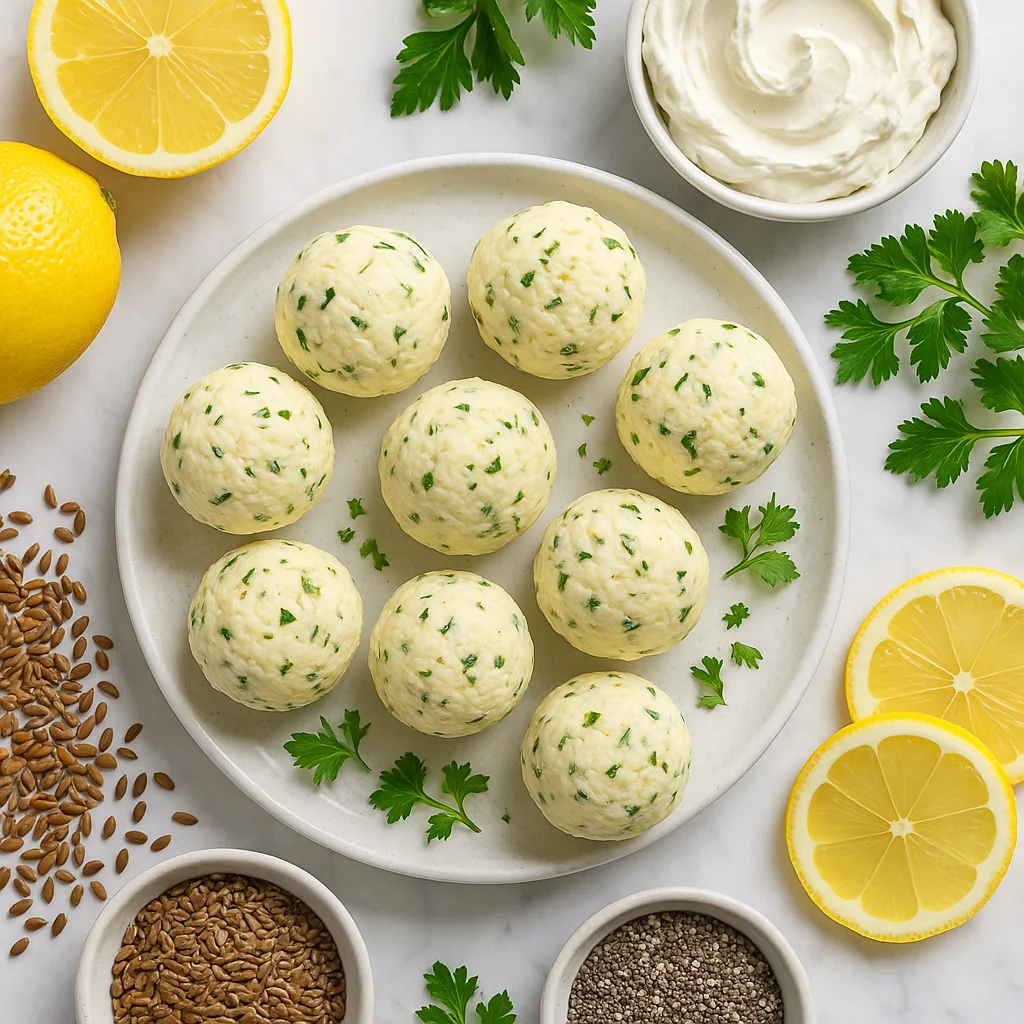
Lemon Herb Low Carb Cream Cheese Fat Bombs with Chia & Flaxseed