Italian Almond Biscotti Gluten Free with Crispy, Low-Sugar Classic
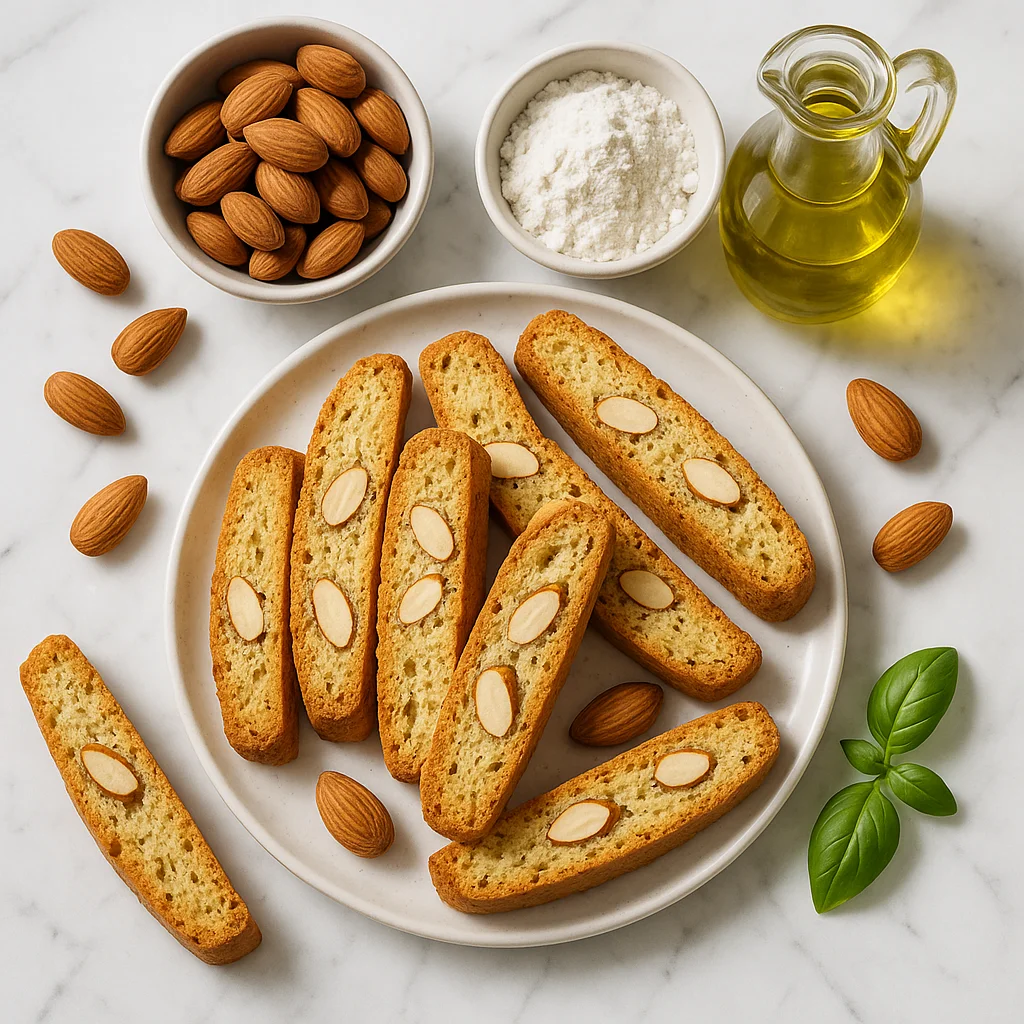
If you have ever craved the satisfying snap of a classic Italian biscotti but needed to skip the gluten, you are in exactly the right place. This Italian almond biscotti gluten free recipe brings together everything you love about the traditional Tuscan twice-baked cookie, the golden crust, the toasty almond flavour, the perfect dunkability, while making meaningful improvements to the nutritional profile. Traditional biscotti can be surprisingly high in refined flour and sugar, leaving little room for fibre or protein. This version flips that script entirely.
By building the base from a combination of fine blanched almond flour and a small amount of tapioca starch, we achieve a dough that holds together beautifully and bakes to a genuinely crisp, dry texture without a speck of wheat in sight. The distinction between fine blanched almond flour and coarse almond meal matters enormously here, blanched almond flour is made from almonds with the skins removed and ground to a powder fine enough to mimic wheat flour's texture, while almond meal is grainier and produces a denser, more crumbly result. Always use fine blanched almond flour for biscotti.
Almond flour is a true workhorse in gluten free baking. It contributes healthy monounsaturated fats, a meaningful dose of vitamin E, and a naturally subtle sweetness that means we can use significantly less added sweetener. Here we sweeten the dough with pure maple syrup rather than refined white sugar, which adds a gentle caramel note and keeps the biscotti refined-sugar free. The total sweetener content is kept modest, just enough to round out the flavours without tipping the cookies into high-calorie territory. If you prefer a virtually zero-sugar option, the maple syrup can be replaced with a liquid monk fruit sweetener or allulose at a 1:1 ratio, which makes these biscotti suitable for very low-carb or diabetic-friendly eating patterns without any textural compromise.
Whole roasted almonds are folded through the dough, giving every slice those characteristic crunchy pockets of nut that Italian biscotti are famous for. Almonds are one of the most nutrient-dense nuts available, packed with fibre, magnesium, and plant-based protein, so this addition is doing real nutritional work rather than simply adding texture. For the deepest flavour, lightly toasting the almonds in a dry skillet for three to four minutes before adding them to the dough makes a noticeable difference, the heat activates aromatic compounds that survive the double-bake beautifully.
A touch of orange zest lifts the whole recipe with bright citrus aromatics, a nod to the classic almond and orange pairing you find throughout Italian confectionery. Pure vanilla extract and a hint of almond extract deepen the overall flavour so that even with reduced sweetener the biscotti taste complex and satisfying. For a more traditional Tuscan profile, try the anise variation listed below, a teaspoon of anise seeds added to the dough is one of the oldest and most beloved flavour combinations in Italian biscotti history.
The technique here follows the authentic Italian double-bake method. The dough is first shaped into a log and baked until just set, then sliced on the diagonal and returned to the oven at a lower temperature to dry out completely. This is what gives biscotti their legendary shelf life and their characteristic hardness that makes them ideal for dipping. Do not rush either bake, the second, longer, lower-temperature bake is what transforms soft cookies into the properly crisp, dippable result that stands up beautifully to a mug of espresso, a cup of herbal tea, or even a glass of almond milk. Flipping each biscotto halfway through the second bake ensures both cut faces dry evenly.
One of the great practical advantages of this gluten free version is that almond flour dough is far more forgiving than wheat-based dough. Gluten-containing doughs can toughen and become unpleasantly chewy if overworked, but almond flour dough has no gluten to develop. You are also getting significantly more fibre per biscotto than a conventional wheat-based recipe provides, which helps slow the absorption of natural sugars and contributes to genuine satiety.
These biscotti are dairy free and can easily be made paleo by swapping the tapioca starch for arrowroot powder. They are also ideal for batch cooking and freezing, bake a double batch, freeze half, and you have a wholesome treat on demand for up to three months. They store exceptionally well at room temperature too, making them a perfect make-ahead choice for holiday cookie boxes, hostess gifts, or simply keeping something wholesome on the counter for a mid-morning snack with coffee.
Whether you are coeliac, gluten intolerant, reducing refined carbohydrates, or simply curious to try a genuinely better-for-you spin on a beloved Italian classic, this recipe is designed to deliver without compromise. Once you taste how good an Italian almond biscotti gluten free version can be, it may well become your permanent go-to, for yourself, and for every guest who deserves a little something special alongside their coffee.
Ingredients
- 2 cups fine blanched almond flour (packed and levelled, not almond meal — the skin-free, finely ground variety is essential for the right texture)
- 3 tablespoons tapioca starch (helps bind and gives the biscotti a slightly crisp snap; swap 1:1 for arrowroot powder for a paleo version)
- 1 teaspoon baking powder (use certified gluten free if coeliac — some brands are processed in facilities that handle wheat)
- 1 teaspoon fine sea salt (balances the sweetness and sharpens the almond flavour)
- 2 large eggs (room temperature eggs incorporate more smoothly and give better structure; cold eggs can make the dough uneven)
- 3 tablespoons pure maple syrup (grade A for cleanest flavour; can substitute liquid monk fruit sweetener or allulose 1:1 for a lower-sugar version)
- 1 teaspoon pure vanilla extract (use pure extract, not imitation, for the best flavour result)
- 1 teaspoon pure almond extract (a little goes a long way — do not exceed 1/2 teaspoon or the flavour can become medicinal)
- 1 tablespoon fresh orange zest (from approximately 1 medium orange; use a microplane for fine zest and avoid the bitter white pith)
- 3 cup whole raw almonds (lightly toasting in a dry skillet for 3 to 4 minutes before adding significantly deepens the flavour; roughly chop if you prefer cleaner slices)
Instructions
- 1
Preheat your oven to 325°F (165°C). Line a large baking sheet with parchment paper and set aside.
Using parchment rather than a silicone mat gives a crisper bottom crust during the first bake — silicone traps moisture and can make the base of the log steam rather than bake.
- 2
In a large mixing bowl, whisk together the almond flour, tapioca starch, baking powder, and sea salt until evenly combined with no lumps.
Sifting the almond flour breaks up any clumps and helps prevent dense pockets in the finished biscotti. If you do not have a sifter, whisk vigorously for 30 seconds.
- 3
In a separate small bowl, whisk the eggs, maple syrup, vanilla extract, almond extract, and orange zest together until smooth and slightly frothy.
Whisking the wet ingredients until slightly frothy helps incorporate a small amount of air, which gives the biscotti a slightly lighter, less dense crumb.
- 4
Pour the wet ingredients into the dry ingredients and stir with a spatula until a cohesive, slightly sticky dough forms. Fold in the whole almonds until evenly distributed.
The dough will be noticeably stickier than conventional wheat-based biscotti dough — this is completely normal with almond flour. Resist the urge to add extra flour, which will make the biscotti dry and crumbly.
- 5
Transfer the dough to the centre of the prepared baking sheet. With lightly damp hands, shape it into a log approximately 12 inches long, 3 inches wide, and 3/4 inch tall. Smooth the top and sides.
Dampening your hands with cold water prevents sticking and helps you achieve a neat, even log shape. If the dough feels too soft to hold its shape, refrigerate it for 10 minutes before forming — this is especially helpful in warm kitchens.
- 6
Bake the log at 325°F for 28 to 30 minutes, until the top is golden and the log feels set and firm to a gentle touch. Remove from the oven and allow to cool on the baking sheet for 10 minutes.
The log is ready when the top feels set and dry to a light touch and a toothpick inserted in the centre comes out clean. Do not skip the cooling time — slicing too soon causes the log to crumble and fall apart.
- 7
Reduce the oven temperature to 275°F (135°C). Using a sharp serrated knife, slice the cooled log on a slight diagonal into biscotti approximately 3/4 inch thick.
Use a gentle sawing motion — let the serrated blade do the work rather than pressing straight down. Pressing causes the log to crack through the whole almonds rather than slicing cleanly through them.
- 8
Arrange the slices cut-side down in a single layer on the baking sheet. Return to the oven and bake at 275°F for 22 to 25 minutes, flipping each biscotto carefully halfway through, until deeply golden and completely dry to the touch.
The biscotti will feel slightly soft and almost underdone when they first come out of the second bake — this is correct. They firm up dramatically as they cool. Overbaking at this stage can make them too brittle to dip without snapping.
- 9
Remove from the oven and transfer the biscotti to a wire cooling rack. Allow to cool completely — at least 20 to 30 minutes — before serving or storing. They will crisp to their final texture as they cool.
Do not stack or store the biscotti until they are completely cool — even slight residual warmth trapped in an airtight container will create condensation that softens the texture you worked hard to achieve.
Nutrition per serving
95kcal
Calories
3.8g
Protein
6.2g
Carbs
6.9g
Fat
1.6g
Fibre
2.4g
Sugar
38mg
Sodium
Pro Tips
- ✓
Always use fine blanched almond flour, not coarse almond meal, almond meal is made from whole almonds with the skins on and produces a grainy, crumbly texture that will not hold together through the double-bake process.
- ✓
Toast your almonds before adding them to the dough: 3 to 4 minutes in a dry skillet over medium heat until fragrant makes a significant difference to the depth of flavour in the finished biscotti.
- ✓
If your kitchen is warm or your dough feels too soft to shape into a neat log, refrigerate it for 10 to 15 minutes. The coconut oil in almond flour firms up with chilling and makes shaping much easier.
- ✓
A sharp serrated bread knife is non-negotiable for clean slices, use a gentle sawing motion and let the blade do the work. A straight-edged knife pressed down will crack the log through the whole almonds.
- ✓
For the crispiest possible biscotti, prop the oven door open very slightly with a wooden spoon during the second bake. This allows moisture to escape and produces a drier, more authentic texture.
- ✓
These biscotti are an excellent candidate for batch cooking and freezing. Bake a double batch, cool completely, then freeze in a single layer before transferring to a zip-seal bag. They thaw to crisp perfection at room temperature in about 30 minutes.
Frequently Asked Questions
Variations
- •
Chocolate-Dipped Almond Biscotti
Once fully cooled, dip one end of each biscotto into 70% dark chocolate that has been melted and tempered. Place on parchment to set at room temperature. Adds a rich flavour contrast with minimal extra sugar.
- •
Lemon Pistachio Biscotti
Swap the orange zest for lemon zest and replace the whole almonds with roughly chopped unsalted pistachios. Reduce the almond extract to 1/4 teaspoon. Bright, fresh, and utterly delicious.
- •
Anise and Almond Biscotti
Add 1 teaspoon of anise seeds to the dough for a more traditional Tuscan flavour profile. Omit the almond extract and orange zest. Pairs exceptionally well with vin santo or herbal tea.
- •
Espresso Almond Biscotti
Add 1 tablespoon of finely ground espresso powder to the dry ingredients and increase the vanilla extract to 1 and 1/2 teaspoons. The coffee flavour intensifies beautifully during the long second bake.
Substitutions
- •Tapioca starch → Arrowroot powder (A 1:1 swap that keeps the recipe paleo-friendly. The texture is virtually identical.)
- •Maple syrup → Raw honey (Use the same quantity. Honey adds a slightly floral note. Note the recipe will no longer be vegan.)
- •Whole raw almonds → Whole roasted hazelnuts or cashews (Works well for nut variety. Adjust flavour extracts to complement your chosen nut, hazelnut extract pairs beautifully with hazelnuts.)
- •Orange zest → Lemon zest (A 1:1 swap that gives a brighter, slightly more tart citrus note without changing the recipe structure.)
- •Eggs → Flax eggs (1 tbsp ground flaxseed + 3 tbsp water per egg, rested 5 minutes) (Makes the recipe vegan and egg free. Expect a slightly denser, more fragile texture. Chill dough before shaping.)
🧊 Storage
Store completely cooled biscotti in an airtight container at room temperature for up to 14 days. For longer storage, place in a zip-seal freezer bag with the air pressed out and freeze for up to 3 months. Thaw at room temperature for 30 minutes before serving, no reheating needed.
📅 Make Ahead
These biscotti are an ideal make-ahead treat. The dough log can be shaped, wrapped tightly in cling film, and refrigerated for up to 24 hours before the first bake. Alternatively, bake the full batch ahead and store at room temperature, they actually improve in crispness after the first day.
More Italian Desserts Recipes
Italian Sfogliatelle Ricotta Dairy Free with Flaky Shells with Cashew Cream Filling
Dairy Free Espresso Affogato Recipe with Coconut Banana Nice Cream
Italian Panna Cotta Low Calorie with Creamy Vanilla Dessert Under 120 Calories