Easy Homemade French Macarons Recipe (Lighter and Naturally Sweetened)
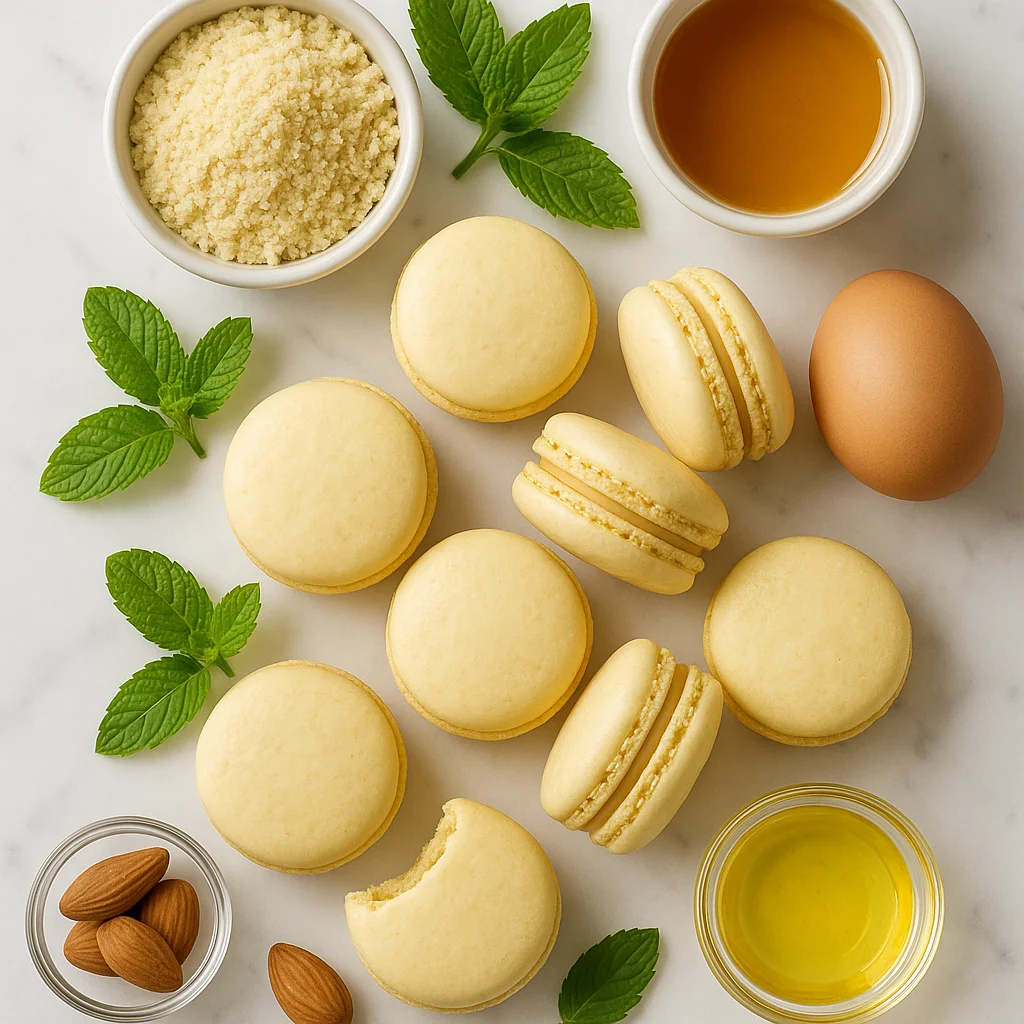
French macarons have a reputation problem. They are associated with failure: hollow shells, cracked surfaces, feet that refuse to form, filling that slides off. Much of this reputation is earned by recipes that leave out the information that actually matters. This simplified version, naturally sweetened with a smaller amount of icing sugar and filled with a lighter cream, is honest about the technique from the start. Follow the steps in the right order, pay attention to the two or three things that genuinely affect the outcome, and you will pull a tray of recognisable, beautiful macarons from the oven on the first attempt.
Why this recipe works
The macaron shell is made from almond flour, icing sugar and aged egg whites. Ageing the egg whites, which simply means leaving them uncovered in the fridge for 24 hours, removes excess moisture and makes them easier to whip to a stable meringue. The macaronage step, folding the almond mixture into the whipped egg whites, is where most failures happen. You are looking for a batter that flows slowly off the spatula in a thick ribbon. Too thick and the shells will crack; too thin and they will spread flat.
Getting it right
Weigh your ingredients. Macarons are precise chemistry, and volume measurements are not accurate enough. A kitchen scale is non-negotiable.
Rest the piped shells for 30 to 45 minutes before baking. They should form a dry skin on the surface that does not stick when you lightly touch it. This skin is what forces the batter to expand sideways during baking, creating the characteristic foot at the base of each shell.
Common mistakes
Opening the oven door during baking is the most common cause of cracked shells. The shells need consistent heat throughout. Do not peek.
Underbaking produces shells that stick to the baking parchment and pull apart when you try to remove them. Let them cool fully on the tray before attempting to lift.
Substitutions
Food colouring can be added to the shell batter in gel form (not liquid, which affects consistency) for coloured macarons. The filling can be swapped for any smooth, stable cream: raspberry, pistachio, salted caramel made with coconut sugar.
Serving suggestion
Fill and refrigerate assembled macarons for 24 hours before serving. The resting time allows the filling to soften the shell slightly from the inside, producing the characteristic chewy, melt-in-the-mouth texture. Serve at room temperature rather than straight from the fridge.
Ingredients
- 100 g blanched almond flour (finely ground, sifted well)
- 70 g coconut sugar (blended to a fine powder in a food processor)
- 15 g monk fruit sweetener (powdered variety)
- 75 g egg whites (aged overnight uncovered in the fridge, room temperature)
- 1 pinch cream of tartar
- 30 g fine white sugar or caster sugar (just enough to stabilise the meringue)
- 1 tsp pure vanilla extract (divided, half for shells and half for filling)
- 1 can (400ml) full-fat coconut cream (refrigerated overnight so the cream separates)
- 2 tsp raw honey or pure maple syrup (for the filling)
- 1 tsp freeze-dried raspberry powder (optional, for colour and flavour in shells)
Instructions
- 1
The day before baking, separate your egg whites into a clean bowl and leave them uncovered in the fridge overnight. Also refrigerate the can of coconut cream upside down overnight so the thick cream rises to the top.
Ageing the egg whites removes excess moisture, which gives you a much more stable meringue and reduces the chance of cracked shells.
- 2
On baking day, take the egg whites out of the fridge at least 45 minutes before you begin so they reach room temperature. Line two large flat baking trays with non-stick baking paper or silicone macaron mats.
Room temperature egg whites whip up far better than cold ones. Do not skip this step.
- 3
Add the blanched almond flour, powdered coconut sugar and monk fruit sweetener to a food processor. Pulse for about 30 seconds to combine everything into a very fine, even mixture. Sift this through a medium-mesh sieve into a large bowl, discarding any large pieces that remain behind.
Blitzing the dry ingredients together makes for smoother shells with fewer bumps on the surface.
- 4
In a spotlessly clean, dry mixing bowl, add the aged egg whites and cream of tartar. Beat with an electric hand mixer or stand mixer on medium speed until the mixture is foamy and opaque. Gradually add the caster sugar one small spoonful at a time while continuing to beat. Increase to high speed and keep beating until the meringue holds stiff, glossy peaks that do not droop when you lift the beaters. Add half a teaspoon of vanilla extract and beat for just a few more seconds to combine.
Any trace of fat or moisture in your bowl will prevent the egg whites from whipping. Wipe the bowl with a little white vinegar on a paper towel before you start.
- 5
Pour the sifted almond mixture over the meringue all at once. Using a flexible spatula, begin folding the mixture together using a firm sweeping motion. Scrape down the sides and press the batter gently against the bowl as you fold. Continue until no dry streaks remain and the batter flows in a slow, thick ribbon from the spatula when lifted. It should fall in a continuous stream and the ribbon should disappear back into the batter within about 10 seconds. This process is called macaronage and it typically takes 40 to 55 folds.
Under-folding leaves the batter too stiff and the shells will crack. Over-folding makes the batter too runny and the shells will spread flat. You are aiming for the consistency of slow-flowing lava.
- 6
Transfer the batter to a piping bag fitted with a round tip measuring about 1 cm in diameter. Hold the bag straight up and perpendicular to the baking tray, with the tip just above the surface. Pipe even rounds of about 3 to 3.5 cm in diameter, spacing them at least 3 cm apart. Once all rounds are piped, firmly tap the tray flat against the counter several times to pop any air bubbles. Use a toothpick to gently swirl away any remaining surface bubbles.
Consistency in size matters because you will be pairing shells together. Using a macaron mat or drawing circles on parchment paper as a guide makes this much easier.
- 7
Leave the piped shells to rest at room temperature for 30 to 45 minutes, until a dry skin forms on the surface. When you lightly touch the top, your finger should come away clean with no batter sticking to it. This step creates the iconic macaron foot during baking.
On humid days, this resting time can extend to an hour. Do not rush it, as the skin is essential for the foot to form.
- 8
Preheat your oven to 150 degrees Celsius (300 degrees Fahrenheit) with a rack positioned in the centre. Bake one tray at a time for 13 to 15 minutes. The shells are ready when they lift cleanly from the baking paper without sticking. Leave them to cool completely on the tray before attempting to remove them.
Oven temperatures vary enormously, so your first batch is always a test batch. If the shells are browning too quickly, reduce the temperature by 5 degrees.
- 9
While the shells cool, make the filling. Open the refrigerated coconut cream can carefully. Scoop out the thick white cream that has separated and risen to the top into a chilled bowl, leaving the watery liquid behind. Whip the coconut cream with an electric mixer on high speed for 2 to 3 minutes until light and fluffy. Add the raw honey and remaining half teaspoon of vanilla extract and whip for another 30 seconds to combine. Refrigerate the filling for 10 minutes to firm it up slightly before piping.
The coconut liquid left behind can be saved and added to smoothies or porridge so nothing goes to waste.
- 10
Once the shells are fully cooled, match them up in pairs of similar size. Transfer the coconut cream filling to a piping bag with a small round tip. Pipe a generous mound of filling onto the flat side of one shell, then gently press its partner on top with a slight twisting motion to spread the filling evenly to the edges. Repeat for all shells.
- 11
For the best texture and flavour, place the assembled macarons in an airtight container and refrigerate for at least one hour before serving. This resting period, sometimes called maturation, allows the shells to absorb a little moisture from the filling, transforming the texture from crisp to that classic chewy, fudgy bite.
Many macaron bakers say the second day is always better than the first. Patience is absolutely worth it here.
Nutrition per serving
68kcal
Calories
2.1g
Protein
6.4g
Carbs
4.2g
Fat
0.8g
Fibre
4.9g
Sugar
8mg
Sodium
Pro Tips
- ✓
Always use a kitchen scale for this recipe. Volume measurements for almond flour and sweeteners are far too imprecise and can throw off the delicate balance of the batter.
- ✓
If your shells crack during baking, the oven temperature is likely too high or the skin did not form fully during the resting period.
- ✓
If your shells are hollow inside, the batter was over-mixed or the oven temperature was too low.
- ✓
Sifting the dry ingredients is not optional. Lumpy almond flour creates a rough surface on the shells.
- ✓
Coconut sugar adds a very slight caramel note to the shells. If you prefer a completely neutral flavour, replace it entirely with more monk fruit sweetener blended fine.
- ✓
For a pastel colour without artificial dyes, add a small amount of freeze-dried fruit powder, such as raspberry, beetroot or matcha, to the dry ingredients before folding.
Frequently Asked Questions
Variations
- •
Matcha Green Tea Macarons
Add 1 teaspoon of ceremonial grade matcha powder to the dry ingredients before sifting. Fill with the plain coconut vanilla cream for a subtle earthy contrast, or whisk a further half teaspoon of matcha into the filling itself for a more intense green tea flavour.
- •
Dark Chocolate Macarons
Add 1 tablespoon of unsweetened raw cacao powder to the almond flour mixture, reducing the powdered coconut sugar by 5 grams to balance. Fill with a dark chocolate coconut ganache made by melting 40 grams of 85 percent dark chocolate into 3 tablespoons of warm coconut cream and chilling until spreadable.
- •
Raspberry Lemon Macarons
Add 1 teaspoon of freeze-dried raspberry powder and half a teaspoon of lemon zest to the dry ingredients. Fill with a quick raspberry chia jam made by warming 80 grams of fresh or frozen raspberries with 1 teaspoon of honey and 1 teaspoon of chia seeds until thickened. Cool fully before using.
- •
Tahini Honey Macarons
Keep the shells plain or add a pinch of cinnamon to the dry ingredients. Fill with a whipped tahini honey cream made from 2 tablespoons of smooth tahini, 1 teaspoon of raw honey and 2 tablespoons of thick coconut cream whipped together until fluffy.
Substitutions
- •Coconut sugar → Additional monk fruit sweetener or erythritol (Blend either alternative to a very fine powder before using. This will make the recipe fully refined-sugar-free and lower the glycaemic index even further. The shells will be slightly paler in colour without the coconut sugar.)
- •Caster sugar in the meringue → Fine white erythritol (Erythritol can stabilise egg whites similarly to caster sugar. Use the same quantity by weight. Note that some people find erythritol creates a very slight cooling sensation on the palate, which most people barely notice in a small macaron.)
- •Coconut cream filling → Cashew cream (Soak 100 grams of raw cashews in water for 4 hours, drain and blend with 2 teaspoons of honey and a splash of water until silky smooth. Refrigerate for 30 minutes before piping. This gives a slightly denser filling with extra protein.)
- •Raw honey in the filling → Pure maple syrup or date syrup (Both work well and keep the recipe vegan. Maple syrup gives a cleaner flavour while date syrup adds a slightly richer, caramel-like sweetness.)
🧊 Storage
Store assembled macarons in an airtight container in the refrigerator for up to 4 days. The texture actually improves after the first 24 hours as the shells soften slightly. Bring them to room temperature for about 15 minutes before serving for the best flavour. Unfilled shells can be stored in an airtight container at room temperature for up to 2 days or frozen for up to 6 weeks.
📅 Make Ahead
The macaron shells can be baked up to 2 days ahead and stored unfilled in an airtight container at room temperature. The coconut cream filling can be made the day before and stored covered in the fridge. Assemble and refrigerate for at least one hour before serving. Fully assembled macarons can also be frozen in a single layer in an airtight container for up to one month. Thaw overnight in the fridge.
More French Desserts Recipes

Healthy Palmiers Recipe: Puff Pastry French Cookies with Coconut Sugar and Cinnamon
Healthy French Madeleine Cookies Recipe Classic Style with Almond Flour
Shortcut Croissant Recipe Homemade Easy: Whole Wheat Flaky Crescents