Dairy Free Coconut Whipped Cream Fruit Tart with Almond Date Crust
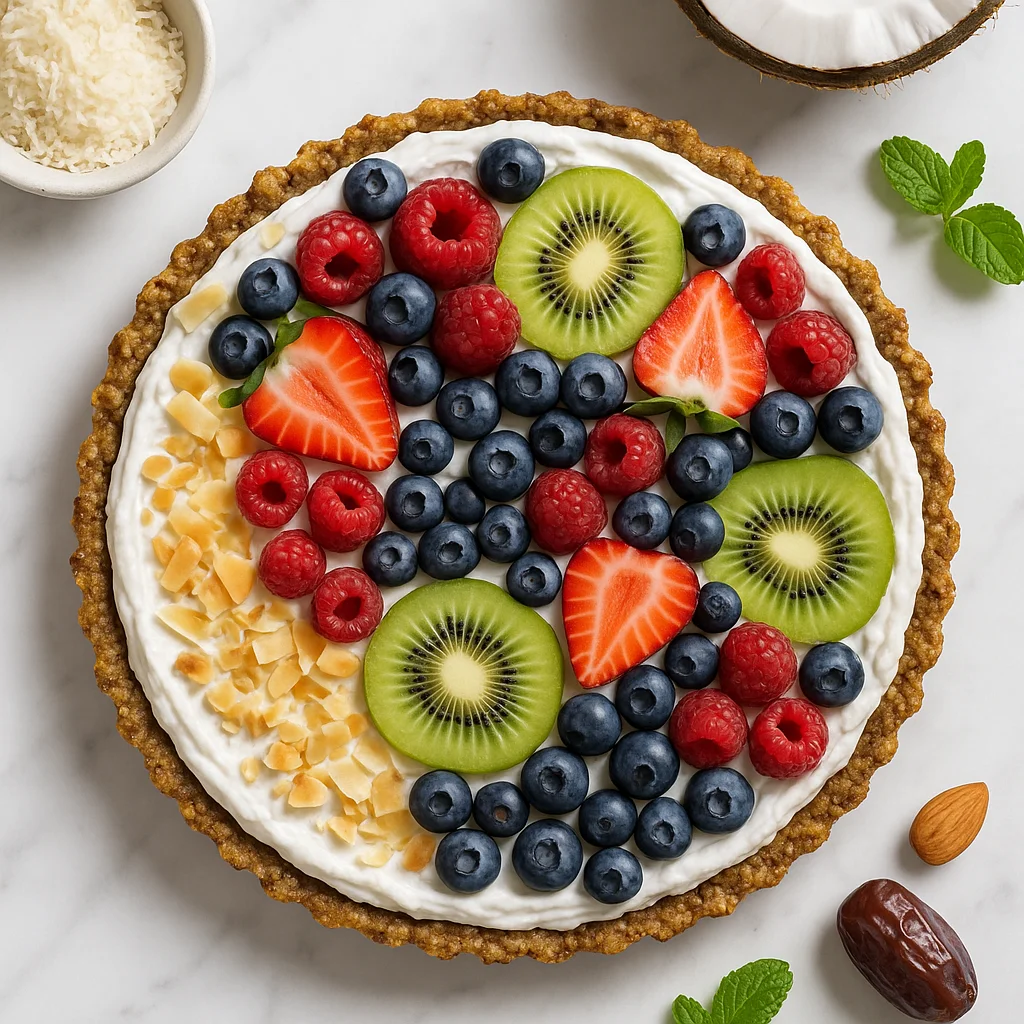
If you have been searching for a showstopping dessert that is as nourishing as it is beautiful, this dairy free coconut whipped cream fruit tart is exactly what your recipe collection has been missing. Bursting with vibrant seasonal fruit, a luscious whipped coconut cream filling, and a naturally sweetened almond and date crust, this tart proves that healthy desserts do not have to compromise on flavour, texture, or visual appeal. Whether you are catering to a dairy free lifestyle, a vegan household, or simply trying to cut back on refined sugar and excess calories, this recipe checks every single box without asking you to sacrifice an ounce of enjoyment.
Traditional fruit tarts are typically built on a buttery shortcrust pastry shell loaded with refined flour and sugar, then filled with a rich pastry cream made from whole milk, heavy cream, egg yolks, and white sugar. While undeniably delicious, a single slice can easily clock in at 400 to 500 calories with very little nutritional value to show for it. This healthier version flips that script entirely. The crust is made from whole almonds and Medjool dates blended with oat flour and a touch of coconut oil, delivering a satisfying crunch alongside genuine fibre, healthy fats, and natural sweetness. There is no baking required for the base, which means less time in the kitchen and less energy used.
The star of the show is the coconut whipped cream filling. By chilling full-fat coconut milk overnight, the thick cream separates from the liquid and whips up into an airy, velvety cloud that rivals any dairy-based whipped cream in both texture and taste. Sweetened lightly with pure maple syrup and flavoured with vanilla extract and a small amount of arrowroot powder for stability, this filling holds its shape beautifully under the weight of fresh fruit without collapsing or weeping. It is rich without being heavy, indulgent without being overwhelming, and absolutely perfect as a base for the colourful fruit arrangement on top.
Speaking of fruit, the topping is where creativity and nutrition truly shine together. This recipe uses a combination of fresh strawberries, blueberries, kiwi slices, and raspberries, all of which provide an impressive array of antioxidants, vitamin C, and dietary fibre. You can easily swap in whatever fruit is in season, mango and passion fruit create a tropical version, while sliced peaches and cherries make a gorgeous summer alternative. Blackberries work beautifully as a dramatic, jewel-toned option, and a sprinkle of toasted coconut flakes adds a complementary crunch that elevates the presentation further. A light brush of warmed apricot jam thinned with a splash of water gives the fruit a professional glaze and keeps everything looking fresh and glossy for hours.
One of the most beloved features of this recipe is how easily it adapts to individual preferences and occasions. A small addition of almond extract to the crust brings a subtle, aromatic depth that pairs particularly well with stone fruits and berries, a trick borrowed from classic French patisserie. If you prefer a creamier, slightly richer filling, blending a handful of soaked cashews into the whipped coconut cream creates a thicker, more custard-like texture that slices even more cleanly and holds up beautifully at room temperature for longer periods. This hybrid coconut-cashew cream approach is popular among vegan dessert enthusiasts and is worth trying for summer entertaining.
From a nutritional standpoint, each serving of this dairy free coconut whipped cream fruit tart comes in at approximately 215 calories, with 4 grams of protein, 5 grams of fibre, and only 9 grams of sugar, compared to the 22 to 28 grams found in a traditional patisserie-style tart. The healthy fats from almonds and coconut support satiety, meaning a single slice genuinely satisfies rather than leaving you reaching for a second helping. The entire tart is gluten free when certified gluten free oats are used, making it suitable for guests with gluten sensitivities as well. It is also completely Whole30 compliant when the maple syrup is omitted and the glaze is replaced with coconut butter.
This recipe is also wonderfully make-ahead friendly. The crust can be pressed into the tart tin and refrigerated up to two days in advance. The coconut cream can be whipped and stored in the fridge for up to 24 hours before assembly. On the day of serving, all you need to do is layer the cream into the prepared shell, arrange the fruit artfully, add the glaze, and you have a dessert that looks like it came from a professional patisserie but took a fraction of the effort and cost.
Perfect for summer garden parties, holiday entertaining, Valentine's Day, weekend meal prep, or simply treating yourself on a Tuesday evening, this dairy free coconut whipped cream fruit tart is a recipe you will return to again and again. It photographs beautifully, travels well in its tin for potlucks, and can be scaled up easily if you need to serve a crowd. Once you experience how satisfying a lighter, plant-based tart can be, it will be very hard to go back to the traditional version. Let this recipe be your new signature dessert, one that keeps both your taste buds and your body genuinely happy.
Ingredients
- 2 cans (400ml each) full-fat coconut milk (refrigerated upright overnight — do not shake. Choose brands with high coconut content and minimal additives such as Aroy-D or Thai Kitchen for the most reliable whipping results.)
- 1.5 cups whole raw almonds (raw and unsalted — blanched almonds produce a slightly paler, smoother crust while skin-on almonds give more texture and fibre)
- 10 large Medjool dates (pitted, soaked in warm water 10 minutes if very firm. Medjool dates are preferred over Deglet Nour for their natural caramel-like sweetness and soft, moist texture which binds the crust more effectively.)
- 0.5 cup certified gluten free rolled oats (blended to a rough flour. Essential if serving to anyone with coeliac disease. Can be substituted with buckwheat flour or almond flour in equal quantity.)
- 2 tbsp coconut oil (melted, plus extra for greasing the tin. Refined coconut oil has a neutral flavour; unrefined adds a subtle coconut aroma to the crust.)
- 0.3 tsp fine sea salt (for the crust — enhances the natural sweetness of the dates and almonds and balances the overall flavour)
- 3 tbsp pure maple syrup (divided — 1 tbsp for crust, 2 tbsp for filling. Grade A amber maple syrup has the best flavour. Can be substituted with raw agave nectar or coconut nectar in equal amounts.)
- 1.5 tsp pure vanilla extract (divided. Use pure extract rather than imitation for the cleanest, most rounded vanilla flavour. A quarter teaspoon of almond extract added to the crust is an optional but highly recommended flavour enhancer.)
- 1.5 tsp arrowroot powder (helps stabilise the coconut cream and prevent weeping. Cornstarch or tapioca starch can be substituted in a 1:1 ratio.)
- 1 cup fresh strawberries (hulled and sliced. Pat dry thoroughly with paper towel before arranging to prevent moisture from softening the cream.)
- 0.5 cup fresh blueberries (rinse and dry completely before use. Blueberries add a beautiful deep colour contrast and are particularly high in antioxidants.)
- 0.5 cup fresh raspberries (handle gently as they bruise easily. Blackberries make an excellent alternative for a dramatic, jewel-toned effect.)
- 2 medium kiwi fruit (peeled and thinly sliced. Gold kiwi is sweeter and slightly less tart than green kiwi if you prefer a milder flavour.)
- 2 tbsp apricot jam (100% fruit, no added sugar preferred. Warmed and thinned with water, this creates a professional glaze that locks in freshness and adds visual shine. Melted coconut butter can be used as a Whole30-compliant alternative.)
- 1 tsp water (to thin the glaze to a brushable consistency)
- 1 tsp lemon zest (optional, stirs into coconut cream for brightness. Lime zest works equally well and pairs especially well with tropical fruit toppings.)
Instructions
- 1
The night before, place both cans of full-fat coconut milk upright in the refrigerator without shaking them. This allows the thick cream to separate and rise to the top, which is essential for whipping.
Use coconut milk with as few additives as possible — ideally just coconut extract and water. Brands with guar gum whip slightly more reliably. If you are short on time, a minimum of 8 hours will work, but 12 to 24 hours is ideal.
- 2
Lightly grease a 9-inch removable-base tart tin with a small amount of melted coconut oil. Add the whole almonds to a food processor and pulse until they form a coarse, sandy crumb — do not over-process into a paste.
A few larger almond chunks in the crust add a pleasant textural contrast against the smooth cream filling. Pulse in short bursts of 3 to 4 seconds rather than running the processor continuously to maintain better control over the texture.
- 3
Add the blended oat flour, pitted Medjool dates, melted coconut oil, sea salt, 1 tablespoon of maple syrup, and half a teaspoon of vanilla extract to the food processor with the ground almonds. Process until the mixture clumps together when pressed between your fingers. It should hold its shape but not be overly sticky.
If the mixture feels too dry and crumbly, add one date at a time and process again. If it feels too wet and sticky, add a tablespoon of oat flour or almond flour. The ideal consistency is similar to wet sand that firmly holds its shape when squeezed.
- 4
Press the crust mixture firmly and evenly into the prepared tart tin, working it up the sides to the rim. Use the back of a measuring cup or a flat-bottomed glass to compress it tightly so it holds together when sliced. Refrigerate the crust for at least 30 minutes while you prepare the filling.
Pressing the crust firmly into the fluted edges of the tin creates a more professional-looking finish. Use your thumb to work the mixture into each ridge. The crust can be made up to 2 days ahead and kept covered in the refrigerator, which makes this recipe very convenient for entertaining.
- 5
Remove the chilled coconut milk cans from the refrigerator without shaking them. Open carefully and scoop out only the thick white cream that has solidified at the top into a large, cold mixing bowl. Reserve the remaining coconut water for smoothies.
Chill your mixing bowl and beaters in the freezer for 10 minutes before scooping in the cream. Cold equipment helps the cream whip faster and hold its peaks significantly longer. If the cream at the top is not thick and solid, the milk was not cold enough — return to the fridge for a further 4 hours and try again.
- 6
Using a hand mixer or stand mixer fitted with the whisk attachment, whip the coconut cream on medium-high speed for 2 to 3 minutes until light and fluffy. Add the remaining 2 tablespoons of maple syrup, 1 teaspoon of vanilla extract, arrowroot powder, and lemon zest if using. Continue whipping for a further 1 to 2 minutes until soft, stable peaks form.
Do not over-whip — once you achieve soft peaks that hold their shape, stop immediately. Over-whipping causes the fat molecules to separate and the cream turns grainy and slightly curdled. If this happens, gently fold in a tablespoon of the reserved coconut water to help bring it back together.
- 7
Spoon the whipped coconut cream into the chilled tart crust and spread it evenly using a spatula or the back of a large spoon, creating a smooth, level surface right to the edges.
For a slightly domed, professional presentation, pile the cream marginally higher in the centre than at the edges before smoothing. This creates an elegant visual effect once the fruit is arranged on top and the tart is viewed from the side.
- 8
Arrange the prepared fruit decoratively over the coconut cream filling. Start from the outer edge and work inward, alternating colours and shapes for a visually striking result. Press each piece of fruit very gently into the cream so it sits securely.
Pat all fruit completely dry with paper towel before placing it on the tart — even a small amount of surface moisture will cause the cream to weep over time. For the most visually stunning result, plan your arrangement before you begin placing fruit, working in concentric circles or radiating fan patterns.
- 9
In a small saucepan or microwave-safe bowl, warm the apricot jam with the teaspoon of water until it is liquid and easy to brush. Using a pastry brush, gently apply a thin, even glaze over all the fruit. This adds shine and helps preserve freshness.
Work quickly with the glaze while it is warm — it will begin to set as it cools and will lock everything in place beautifully. Apply the glaze in one light coat using a very gentle dabbing motion rather than brushing strokes, which can dislodge delicate berries and disrupt your arrangement.
- 10
Transfer the finished tart to the refrigerator and chill for at least 60 minutes before serving. This sets the cream, firms the crust, and ensures clean slices. To remove from the tin, place the base on top of a tall glass or jar and allow the outer ring to drop away, then slide onto a serving plate.
Run a thin knife or offset spatula around the inside edge of the tin before releasing to make removal cleaner. For the cleanest slices, dip a sharp knife in hot water and wipe dry between each cut. Serve within 2 hours of removing from the refrigerator for the best texture and appearance.
Nutrition per serving
215kcal
Calories
4g
Protein
22g
Carbs
13g
Fat
5g
Fibre
9g
Sugar
55mg
Sodium
Pro Tips
- ✓
Always refrigerate full-fat coconut milk cans upright overnight, this single step is the most critical factor in achieving thick, whippable coconut cream. Brands like Aroy-D or Thai Kitchen with minimal additives (just coconut extract and water) consistently yield the best results.
- ✓
Chill your mixing bowl and whisk attachment in the freezer for at least 10 minutes before whipping. Cold equipment dramatically speeds up the process and helps the cream hold firmer peaks for longer.
- ✓
Work quickly once the coconut cream is whipped, as it begins to soften at room temperature within 20 to 30 minutes. Assemble the tart in a cool kitchen and return it to the refrigerator immediately after each step if your kitchen is warm.
- ✓
For a richer, more custard-like filling that slices especially cleanly, blend 100g of soaked raw cashews into the whipped coconut cream along with the maple syrup. This hybrid filling is slightly denser and holds up even better under the fruit topping.
- ✓
Pat every piece of fruit completely dry with paper towel before placing it on the tart, even a small amount of surface moisture can cause the coconut cream to weep and the glaze to slide. This step takes 30 seconds and makes a significant difference to the finished result.
- ✓
Add a quarter teaspoon of almond extract to the crust mixture for a subtle, aromatic depth that pairs beautifully with berries and stone fruits, a simple trick inspired by classic French tart making that elevates the flavour considerably without any extra effort.
Frequently Asked Questions
Variations
- •
Tropical Mango Passion Fruit Tart
Replace the mixed berries and kiwi with sliced fresh mango, passion fruit pulp, pineapple chunks, and toasted coconut flakes. Add a teaspoon of lime zest to the coconut cream for a bright, tropical twist.
- •
Chocolate Coconut Cream Tart
Add 2 tablespoons of raw cacao powder to the whipped coconut cream along with the maple syrup for a chocolatey filling. Top with sliced strawberries and a sprinkle of cacao nibs for contrast.
- •
Peach and Raspberry Summer Tart
Use sliced ripe peaches and fresh raspberries as the topping. Add a teaspoon of almond extract to the crust mixture for a complementary flavour pairing. Glaze with peach jam thinned with a splash of lemon juice.
- •
Citrus Curd Tart
Swap the plain coconut whipped cream for a layer of vegan lemon or orange curd made from citrus juice, coconut oil, maple syrup, and cornstarch, spread over the base before topping with segmented oranges and grapefruit.
Substitutions
- •Medjool dates → Deglet Nour dates or dried figs (Use the same quantity by weight. Soak in warm water for 15 minutes first as they are drier than Medjool dates. The crust will be slightly less caramel-like but still naturally sweet.)
- •Pure maple syrup → Raw agave nectar or coconut nectar (Use in equal amounts. Agave has a milder flavour while coconut nectar adds a slight caramel note. Avoid using honey if keeping the recipe vegan.)
- •Arrowroot powder → Cornstarch or tapioca starch (Use in a 1:1 ratio. Both stabilise the cream effectively. Tapioca starch gives a slightly glossier result.)
- •Whole raw almonds → Cashews or sunflower seeds (Cashews create a slightly softer, buttery crust. Sunflower seeds keep the recipe nut free with a mild, neutral flavour.)
- •Apricot jam glaze → Melted coconut butter or simply omit (A thin layer of melted coconut butter brushed over the fruit adds a light sheen without added sugar. Alternatively, the glaze can be omitted entirely with minimal impact on flavour.)
- •Certified gluten free oats → Buckwheat flour or almond flour (Use the same quantity. Buckwheat adds an earthy, nutty flavour. Almond flour produces a richer, denser crust.)
🧊 Storage
Store the assembled tart loosely covered with plastic wrap or in an airtight container in the refrigerator for up to 2 days. The crust may soften slightly over time but will remain flavourful. Do not freeze the assembled tart as the coconut cream and fresh fruit do not freeze well. The unassembled crust can be frozen for up to 1 month wrapped tightly in plastic wrap.
📅 Make Ahead
The crust can be pressed into the tart tin, covered, and refrigerated for up to 2 days before assembly. The coconut whipped cream can be whipped, covered, and stored in the refrigerator for up to 24 hours, re-whip briefly with a hand mixer if it stiffens too much before spreading. Assemble and glaze the fruit no more than 6 hours before serving for the freshest appearance.
More Dairy-Free Desserts Recipes
Dairy-Free Mango Sorbet
Fudgy Dairy Free Chocolate Fudge Brownies with Black Beans
Dairy Free Banana Oat Cookies Three Ingredient (Ready in 15 Minutes)