Healthy Bienenstich Bee Sting Cake Recipe with Honey Almond Topping
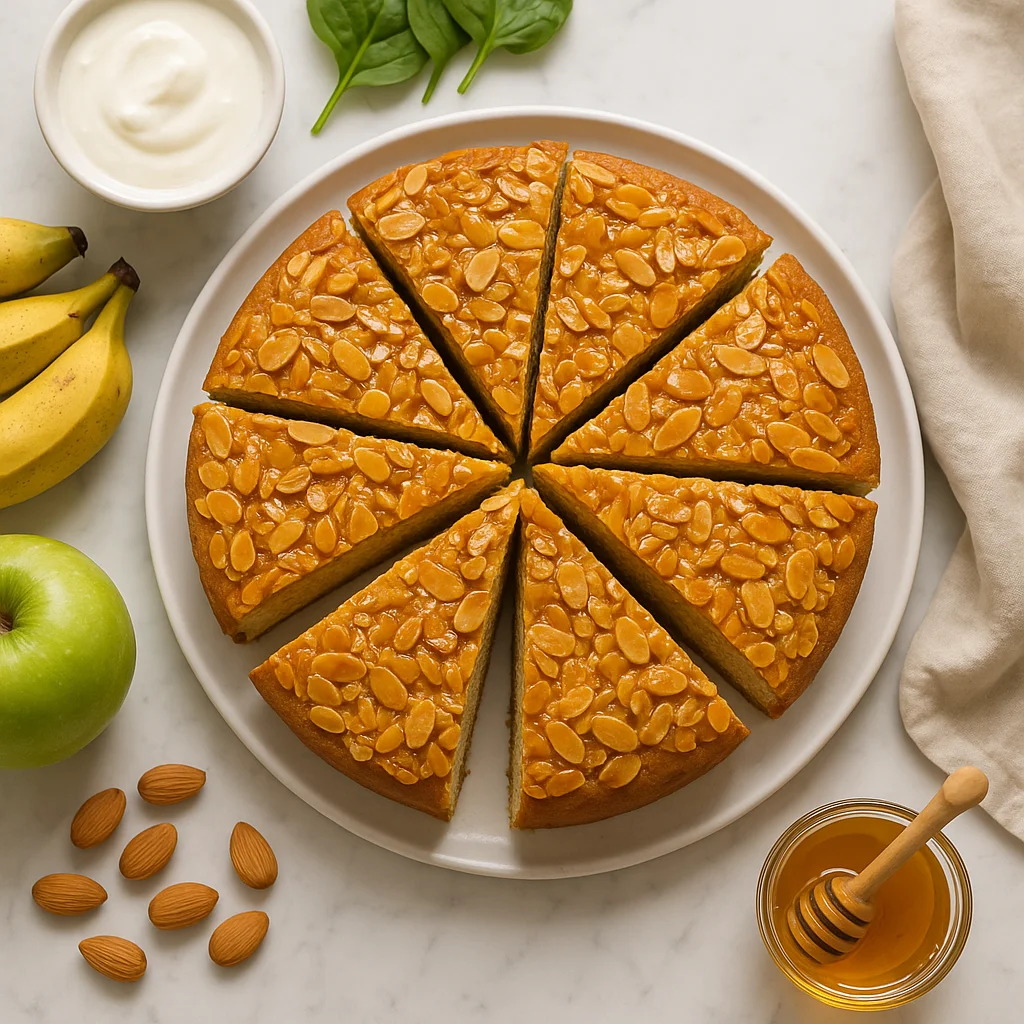
If you have ever fallen in love with a German bakery window, chances are a bienenstich bee sting cake was staring back at you. That caramelised honey almond crust, the pillowy yeasted base, the cloud of vanilla cream hiding in the middle — it is the kind of bake that feels almost too beautiful to eat. This version brings all of that magic to your own kitchen, with some thoughtful swaps that make it genuinely lighter without stripping away any of the joy. This bienenstich bee sting cake recipe is aimed at home bakers who want something impressive enough for a celebration but not so sugar-laden that you feel sluggish afterwards. It sits comfortably in that sweet spot between indulgent and nourishing.
The base is made with a blend of wholegrain spelt flour and plain spelt flour, which gives the dough a slightly nutty depth while boosting the fibre content considerably compared to a standard white flour dough. Spelt is an ancient grain that many people find easier to digest than modern wheat, and it behaves beautifully in a yeasted dough, producing a tender, springy crumb. A modest amount of raw honey is used in both the dough and the signature almond topping, replacing refined white sugar almost entirely. Raw honey carries trace minerals and natural enzymes, and its flavour is far more complex and floral than plain sugar, which actually means you need less of it to feel satisfied. The filling is where the biggest change comes in. Instead of a classic pastry cream made with egg yolks, butter and whole milk, this recipe uses a whipped Greek yogurt cream, stabilised with a small amount of gelatine and naturally sweetened with a little honey and vanilla. It is thick, luscious and genuinely protein-rich, cutting the saturated fat dramatically while keeping that creamy, dreamy filling texture that makes bienenstich so irresistible.
The finished cake has layers that genuinely surprise people. The spelt base is soft and slightly chewy, with just enough structure to hold the filling without collapsing when you slice it. The honey almond topping bakes to a deep amber, crunchy and sticky in the best possible way, with toasted flaked almonds giving every bite a satisfying snap. The Greek yogurt cream filling is cool, lightly sweet and faintly tangy, which balances the richness of the topping beautifully. Serving it slightly chilled is ideal, as the filling sets to the perfect consistency and each slice holds its shape cleanly on the plate. This cake works wonderfully for afternoon tea, a special weekend brunch or as a birthday cake for someone who appreciates something a little different. A light dusting of raw cacao nibs over the top before serving adds a gentle bitterness that pairs really well with the honey flavour.
From a nutritional standpoint, this bienenstich bee sting cake recipe comes in at a fraction of the calories and sugar of the traditional version. The wholegrain spelt flour adds meaningful fibre to each slice, supporting gut health and helping you feel full for longer. The Greek yogurt filling contributes a solid hit of protein, which is rare in a dessert of this type. Using raw honey rather than refined sugar means you are working with a lower glycaemic sweetener that also brings genuine flavour. The flaked almonds on top are a brilliant source of vitamin E, magnesium and healthy monounsaturated fats. This is still a cake, and it is meant to be enjoyed with pleasure rather than guilt, but it is a cake built on ingredients that actually do something good for you. For anyone trying to eat more mindfully without giving up the bakes they love, this recipe is a genuinely satisfying answer.
Ingredients
- 200 g wholegrain spelt flour
- 150 g white spelt flour (plus extra for dusting)
- 7 g fast-action dried yeast (one standard sachet)
- 1 tsp raw honey (for activating the yeast)
- 160 ml warm whole milk (or unsweetened oat milk for dairy-free)
- 2 tbsp raw honey (for the dough)
- 40 g unsalted butter (softened, or coconut oil for dairy-free)
- 1 large free-range egg (at room temperature)
- 0.5 tsp fine sea salt
- 1 tsp vanilla extract (for the dough)
- 50 g unsalted butter (for the almond topping)
- 3 tbsp raw honey (for the almond topping)
- 1 tbsp whole milk (for the almond topping)
- 120 g flaked almonds (natural, untoasted)
- 1 pinch fine sea salt (for the almond topping)
- 400 g full-fat Greek yogurt (thick, strained variety works best)
- 150 ml double cream (or full-fat coconut cream for dairy-free)
- 2 tbsp raw honey (for the cream filling)
- 1.5 tsp vanilla bean paste (or pure vanilla extract)
- 2 tsp powdered gelatine (or 1.5 tsp agar agar for vegetarian)
- 2 tbsp cold water (for blooming the gelatine)
Instructions
- 1
Combine the warm milk and 1 teaspoon of honey in a small bowl or jug. Sprinkle the yeast over the surface, stir gently and leave for 8 to 10 minutes until frothy. This tells you the yeast is alive and active.
The milk should feel warm but not hot to your wrist. Overheating kills the yeast.
- 2
In a large mixing bowl, combine both spelt flours and the sea salt. Make a well in the centre. Pour in the frothy yeast mixture, the 2 tablespoons of honey, the softened butter, egg and vanilla extract. Mix everything together with a wooden spoon until a shaggy dough forms, then turn it out onto a lightly floured surface.
- 3
Knead the dough for 8 to 10 minutes until it becomes smooth and slightly tacky but not sticky. Spelt dough is softer than regular wheat dough, so resist the urge to add too much extra flour. Shape it into a ball, place it in a lightly oiled bowl, cover with a clean damp cloth and leave in a warm place for 60 to 75 minutes until doubled in size.
A switched-off oven with just the light on is a brilliant warm spot for proving dough in cooler months.
- 4
While the dough proves, make the honey almond topping. Melt the 50g of butter in a small saucepan over a low heat. Add the 3 tablespoons of honey, the tablespoon of milk and the pinch of salt. Stir until combined, then add the flaked almonds. Stir to coat all the almonds evenly, then remove from the heat and set aside to cool slightly.
- 5
Preheat your oven to 180 degrees Celsius (160 fan, 350F, gas mark 4). Grease a 9-inch round springform tin with a little butter or coconut oil and line the base with baking paper.
- 6
Once the dough has proved, punch it down gently and press it evenly into the prepared tin. It will be quite springy, so use your fingertips to ease it to the edges. Cover loosely and leave for a further 20 minutes for a second short prove.
- 7
Spoon the honey almond mixture carefully over the surface of the dough, spreading it as evenly as possible right to the edges. Bake for 24 to 28 minutes until the almond topping is deep golden and caramelised and the cake base is cooked through. A skewer inserted into the centre of the base should come out clean.
Keep an eye on the topping from around the 20-minute mark. If the almonds are browning very fast, loosely lay a piece of foil over the top.
- 8
Remove the cake from the oven and leave it to cool completely in the tin for at least 30 minutes, then transfer to a wire rack. Once fully cool, use a long serrated knife to split the cake horizontally through the middle into two equal layers. Set the almond-topped layer aside.
Chilling the cake for 15 minutes before slicing makes this step noticeably easier.
- 9
Make the Greek yogurt cream filling. Sprinkle the gelatine powder over the cold water in a small bowl and leave for 5 minutes to bloom. In a separate bowl, whisk the double cream with the honey and vanilla bean paste until it holds soft peaks. Gently fold in the Greek yogurt. Warm the bloomed gelatine in the microwave for 10 to 15 seconds until just melted and liquid, then drizzle it into the yogurt cream while whisking continuously. Refrigerate the filling for 15 minutes until it starts to firm up slightly.
If using agar agar instead of gelatine, dissolve it in 3 tablespoons of water in a small saucepan over low heat before folding in.
- 10
Spoon the yogurt cream filling onto the bottom layer of the cake, spreading it right to the edges in a generous, even layer. Carefully place the almond-topped layer back on top, pressing very gently.
- 11
Transfer the assembled cake to the fridge and chill for at least 90 minutes, or up to overnight, until the filling is set and the cake slices cleanly. Serve cold, cut into 10 slices with a sharp knife wiped clean between cuts.
Nutrition per serving
295kcal
Calories
9g
Protein
32g
Carbs
14g
Fat
4g
Fibre
11g
Sugar
145mg
Sodium
Pro Tips
- ✓
Do not substitute plain flour for the spelt blend without adjusting the liquid, as spelt absorbs differently.
- ✓
The almond topping hardens as it cools, which is what you want. If it seems soft and sticky when the cake first comes out, give it 20 minutes on a rack before worrying.
- ✓
Slicing the cake cleanly is much easier when it is well chilled. Keep it in the fridge right up until serving.
- ✓
If your Greek yogurt is very wet, strain it through a muslin cloth over a bowl in the fridge for an hour before using it. This gives a thicker, more stable filling.
- ✓
Raw honey varies in sweetness depending on the variety. Taste the almond topping mixture and the cream filling as you go, adjusting to your preference.
Frequently Asked Questions
Variations
- •
Dairy-Free Bienenstich
Replace the butter in the dough and topping with refined coconut oil. Use unsweetened oat milk in place of whole milk throughout. For the filling, swap the double cream for full-fat coconut cream and use a thick coconut yogurt instead of Greek yogurt.
- •
Lemon and Honey Bienenstich
Add the zest of one unwaxed lemon to the dough and fold the zest of a second lemon into the yogurt cream filling along with a teaspoon of fresh lemon juice. The citrus cuts through the richness beautifully and gives the whole cake a fresh, summery lift.
- •
Mini Individual Bienenstich Cakes
Divide the proved dough between a 12-hole deep muffin tin, filling each cavity about two thirds full. Top each one with a heaped teaspoon of the honey almond mixture and bake for 16 to 18 minutes. Pipe or spoon the yogurt cream filling into a slit in each mini cake once cooled.
Substitutions
- •Wholegrain spelt flour → Wholemeal wheat flour (Works well as a direct swap. The flavour will be slightly earthier and the dough may absorb a touch more liquid.)
- •Raw honey → Maple syrup (Use the same quantities. The flavour profile shifts from floral to caramel-like but still pairs beautifully with the almonds.)
- •Powdered gelatine → Agar agar powder (Use 1.5 teaspoons dissolved in 3 tablespoons of water in a small saucepan. Suitable for vegetarians and vegans.)
- •Double cream → Full-fat coconut cream (Refrigerate the can overnight, scoop out the solid cream and whip it. The filling will have a subtle coconut flavour.)
- •Full-fat Greek yogurt → Thick coconut yogurt (Choose a strained variety for the best filling consistency. Adds a gentle coconut note to the cream.)
- •Flaked almonds → Flaked hazelnuts or sunflower seeds (For a nut-free version, use sunflower seeds with a pinch of cinnamon added to the topping mixture.)
🧊 Storage
Store the assembled cake in an airtight container in the fridge for up to 3 days. The filling stays set and the almond topping retains its texture well when chilled. Bring individual slices to room temperature for 10 minutes before serving if you prefer. The unfilled baked cake base can be wrapped tightly and kept at room temperature for up to 2 days, or frozen for up to 1 month.
📅 Make Ahead
The spelt yeast base can be baked up to 2 days ahead and stored wrapped at room temperature. The Greek yogurt cream filling can be made up to 24 hours ahead and kept covered in the fridge. Assemble the full cake the evening before serving and chill overnight for the cleanest slices and best flavour.
More German Desserts Recipes
Healthy Rote Grütze Red Berry Pudding Recipe with Less Sugar
Vanilla Bean Bavarian Cream Recipe Low Sugar with Greek Yogurt
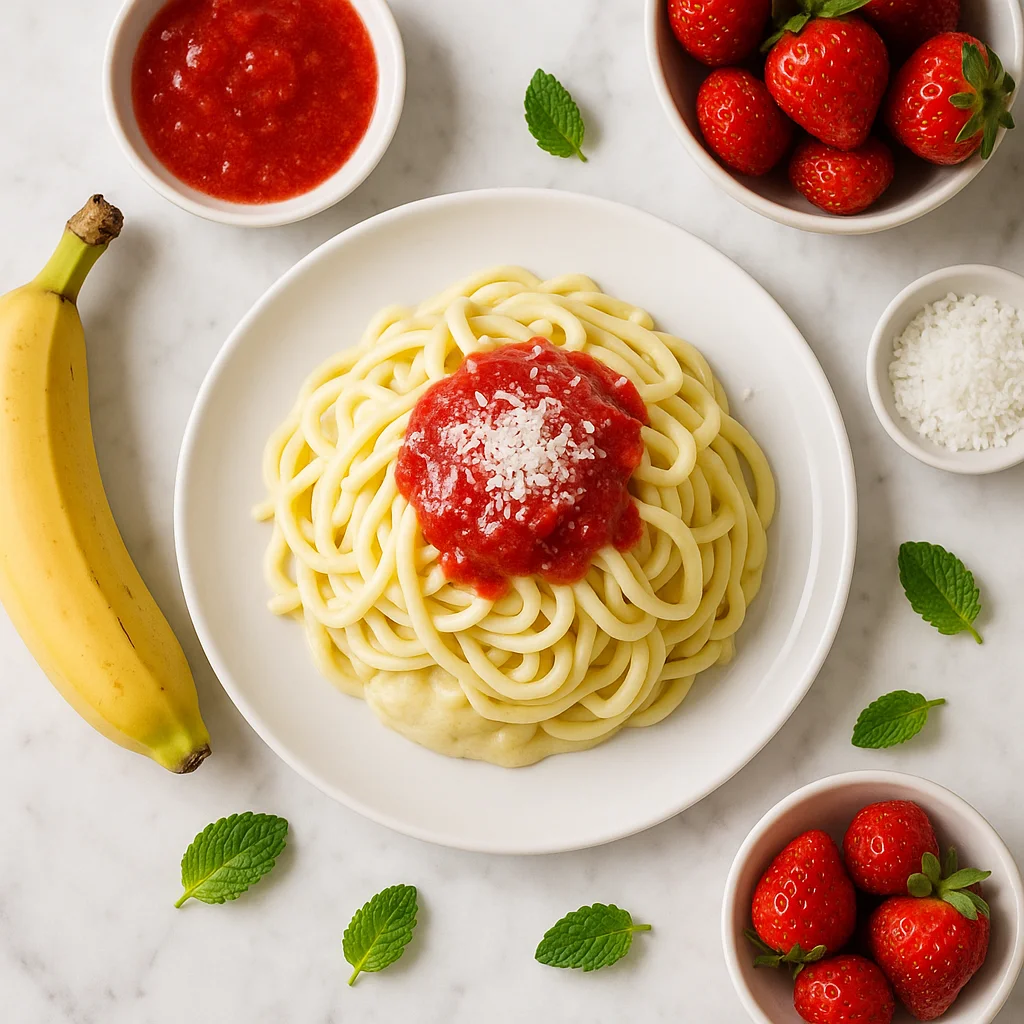
Healthy Spaghetti Ice Cream Spaghettieis Recipe with Frozen Banana Base