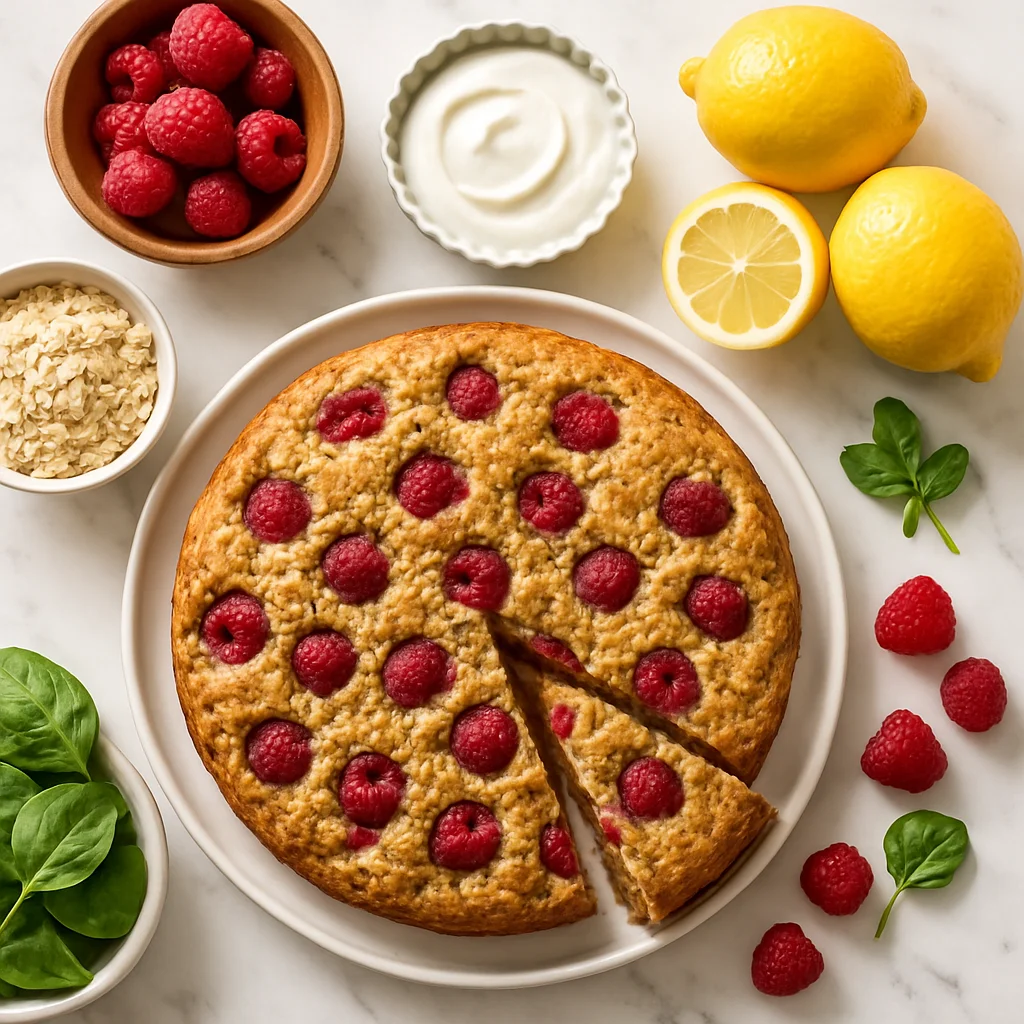
The title of this recipe is its own argument. A cake healthy enough to eat for breakfast is not describing a sad, dense health block. It is describing something that has been built from ingredients that behave well in your body: oat flour, Greek yogurt, a small amount of natural sweetener, eggs and a generous quantity of fresh raspberries and lemon zest. It has a proper, tender crumb. It toasts beautifully and it goes with coffee. The fact that it also qualifies as a reasonable breakfast is not a compromise. It is the whole point.
Why this recipe works
Oat flour and almond flour together create a crumb that is lighter than oat flour alone, with the almond flour contributing fat that makes the cake feel rich and moist. Greek yogurt adds protein and moisture, and its acidity reacts with the baking soda to produce extra lift. The natural pectin in raspberries, released during baking, creates jammy pockets of fruit throughout the cake that provide sweetness without much added sugar. Lemon zest throughout the batter means the citrus flavour is present in every bite rather than just on the surface.
Getting it right
Fold the raspberries in gently at the very end of mixing. Raspberries are fragile and will break apart and turn the batter pink if mixed too vigorously. A few gentle folds with a spatula is enough to distribute them without crushing them.
Do not overfill the tin. This cake rises more than you might expect from a lower-sugar recipe. Fill the tin no more than two-thirds full.
Common mistakes
Using frozen raspberries straight from the freezer makes the batter cold and can extend the baking time unpredictably. If using frozen, thaw and drain them completely before adding.
Under-sweetening in an attempt to make it healthier produces a cake that tastes flat. The lemon and raspberry need enough sweetness to balance their natural acidity.
Substitutions
Blueberries or blackberries replace raspberries well. Orange zest in place of lemon creates a different but equally good citrus profile. Dairy-free yogurt substitutes directly for the Greek yogurt.
Serving suggestion
Serve a warm slice with a spoonful of Greek yogurt and a few fresh raspberries on the side. It keeps in an airtight container for three days at room temperature or five days in the fridge. Slice and freeze individually for a ready-made breakfast on busy mornings.
Ingredients
- 180 g whole wheat flour (spooned and levelled, not packed)
- 1.5 tsp baking powder
- 0.3 tsp baking soda
- 0.3 tsp fine sea salt
- 2 large eggs (room temperature)
- 120 ml raw honey (or pure maple syrup)
- 240 g plain low-fat Greek yogurt (not fat-free, 2% works best)
- 60 ml light olive oil (or melted coconut oil)
- 2 tbsp fresh lemon juice (approximately 1 large lemon)
- 2 tsp lemon zest (from 2 unwaxed lemons, finely grated)
- 1 tsp pure vanilla extract
- 150 g fresh raspberries (or frozen, do not thaw if using frozen)
- 1 tsp whole wheat flour (for tossing raspberries)
- 1 tsp icing sugar (optional, for dusting before serving)
Instructions
- 1
Preheat your oven to 175 degrees Celsius (350 degrees Fahrenheit). Lightly grease a 20cm round cake tin with a little olive oil and line the base with baking parchment.
Lining the base makes unmoulding much easier and stops any honey caramelisation from sticking.
- 2
In a large mixing bowl, whisk together the whole wheat flour, baking powder, baking soda and sea salt. Give it a good stir to make sure the raising agents are evenly distributed.
- 3
In a separate medium bowl, whisk the eggs and honey together for about one minute until slightly pale and combined. Add the Greek yogurt, olive oil, lemon juice, lemon zest and vanilla extract. Whisk again until smooth and uniform.
Room temperature eggs and yogurt incorporate far more smoothly here. Take them out of the fridge 20 minutes before you start.
- 4
Pour the wet ingredients into the flour mixture and fold gently with a rubber spatula until just combined. Stop as soon as you can no longer see dry flour streaks. A few small lumps are completely fine. Over-mixing develops gluten and toughens the crumb.
Folding rather than stirring vigorously is the single most important thing you can do for a tender texture.
- 5
Place the raspberries in a small bowl and toss them gently with the teaspoon of whole wheat flour. This light coating helps them stay suspended in the batter rather than sinking to the bottom during baking.
If using frozen raspberries, keep them frozen and coat them from frozen. They will hold their shape better.
- 6
Fold the coated raspberries into the batter very gently, using just three or four broad strokes. You want to keep as many berries intact as possible so you get distinct fruity pockets in each slice.
- 7
Scrape the batter into the prepared tin and spread it evenly to the edges with your spatula. The batter will be quite thick.
- 8
Bake in the centre of the preheated oven for 42 to 48 minutes. The cake is ready when a wooden skewer inserted into the centre comes out clean or with just a few moist crumbs. The top should be deep golden and spring back lightly when you press it.
Start checking at the 40-minute mark. Oven temperatures vary and whole wheat flour can cause the top to brown faster than white flour. Tent loosely with foil if the top is colouring too quickly before the centre is set.
- 9
Remove from the oven and leave the cake to cool in the tin for 15 minutes before turning it out onto a wire rack. Allow it to cool for at least another 20 minutes before slicing.
Cutting into a warm cake made with honey can cause it to collapse slightly. Patience pays off here.
- 10
Once cooled, dust lightly with icing sugar if you like a little extra sweetness and a pretty finish. Serve as is or with a dollop of plain Greek yogurt on the side.
Nutrition per serving
210kcal
Calories
6g
Protein
31g
Carbs
7g
Fat
3g
Fibre
12g
Sugar
145mg
Sodium
Pro Tips
- ✓
Use unwaxed lemons so you can safely use the zest. If only waxed lemons are available, scrub the skin thoroughly with hot water and a vegetable brush before zesting.
- ✓
Whole wheat flour absorbs liquid differently to plain flour. Do not be tempted to add extra liquid if the batter looks thick. That density is normal and gives the finished cake its structure.
- ✓
Honey browns faster than white sugar in the oven. If your oven runs hot, reduce the temperature to 165 degrees Celsius after the first 30 minutes.
- ✓
Measure your flour by spooning it into the measuring cup and levelling off, never by scooping directly. Scooping compacts the flour and can make the cake dense and dry.
- ✓
For a stronger lemon flavour, add an extra half teaspoon of zest. The zest carries far more aromatic oil than the juice does.
- ✓
This cake actually improves overnight as the flavours deepen. Make it the day before a gathering and it will taste even better.
Frequently Asked Questions
Variations
- •
Raspberry Lemon Loaf Cake
Pour the batter into a lined 23cm x 13cm loaf tin instead of a round tin. Bake at the same temperature for 50 to 55 minutes. Check with a skewer from 48 minutes. This version slices beautifully and is great for packing into lunchboxes.
- •
Blueberry Lemon Healthy Cake
Swap the raspberries for the same weight of fresh blueberries. Blueberries have a slightly lower acidity so the citrus flavour comes through even more sharply. A handful of blueberries scattered on top before baking looks stunning.
- •
Lemon Poppy Seed Version
Omit the raspberries and add two tablespoons of poppy seeds to the dry ingredients along with an extra teaspoon of lemon zest. This gives a classic lemon poppy seed cake that is still wholesome and lighter than a traditional version.
- •
Mini Muffin Version
Divide the batter between 12 lined muffin cups and bake at the same temperature for 22 to 26 minutes. Each muffin becomes a perfectly portioned healthy raspberry lemon treat, great for meal prep or kids school snacks.
Substitutions
- •Whole wheat flour → Spelt flour (Spelt flour has a lighter texture than whole wheat but retains much of the nutritional benefit. Use the same quantity and expect a slightly more delicate crumb.)
- •Greek yogurt → Plain kefir (Kefir works brilliantly at a direct 1:1 swap. The batter will be slightly thinner but the finished cake bakes up just as well. It also adds extra probiotic benefit.)
- •Light olive oil → Melted coconut oil (Use refined coconut oil if you do not want any coconut flavour coming through. Unrefined coconut oil adds a subtle tropical note that works surprisingly well with raspberry and lemon.)
- •Eggs → Flax eggs (Mix one tablespoon of ground flaxseed with three tablespoons of water per egg and allow to sit for five minutes to gel. The cake will be slightly denser but still holds together well. This makes the recipe fully vegan when combined with maple syrup instead of honey.)
- •Raw honey → Coconut sugar (Use 90 grams of coconut sugar in place of the honey. Add an extra two tablespoons of Greek yogurt to the batter to compensate for the lost liquid. The flavour is slightly more caramel-like but still delicious.)
- •Fresh raspberries → Frozen raspberries (A straight swap by weight. Keep frozen and do not thaw before adding to the batter. Toss in flour the same way as fresh.)
🧊 Storage
Store the cooled cake in an airtight container at room temperature for up to two days, or in the fridge for up to five days. The fridge actually suits this cake well because the yogurt base keeps it moist. Bring slices back to room temperature before serving for the best flavour and texture. Individual slices can be wrapped and frozen for up to two months. Thaw at room temperature for about an hour.
📅 Make Ahead
This cake is an excellent make-ahead bake. Bake it a full day before you need it and store it covered at room temperature or in the fridge. The lemon flavour deepens and the crumb becomes slightly more tender overnight. Dust with icing sugar only just before serving so it does not dissolve into the surface.
More Lemon Desserts Recipes
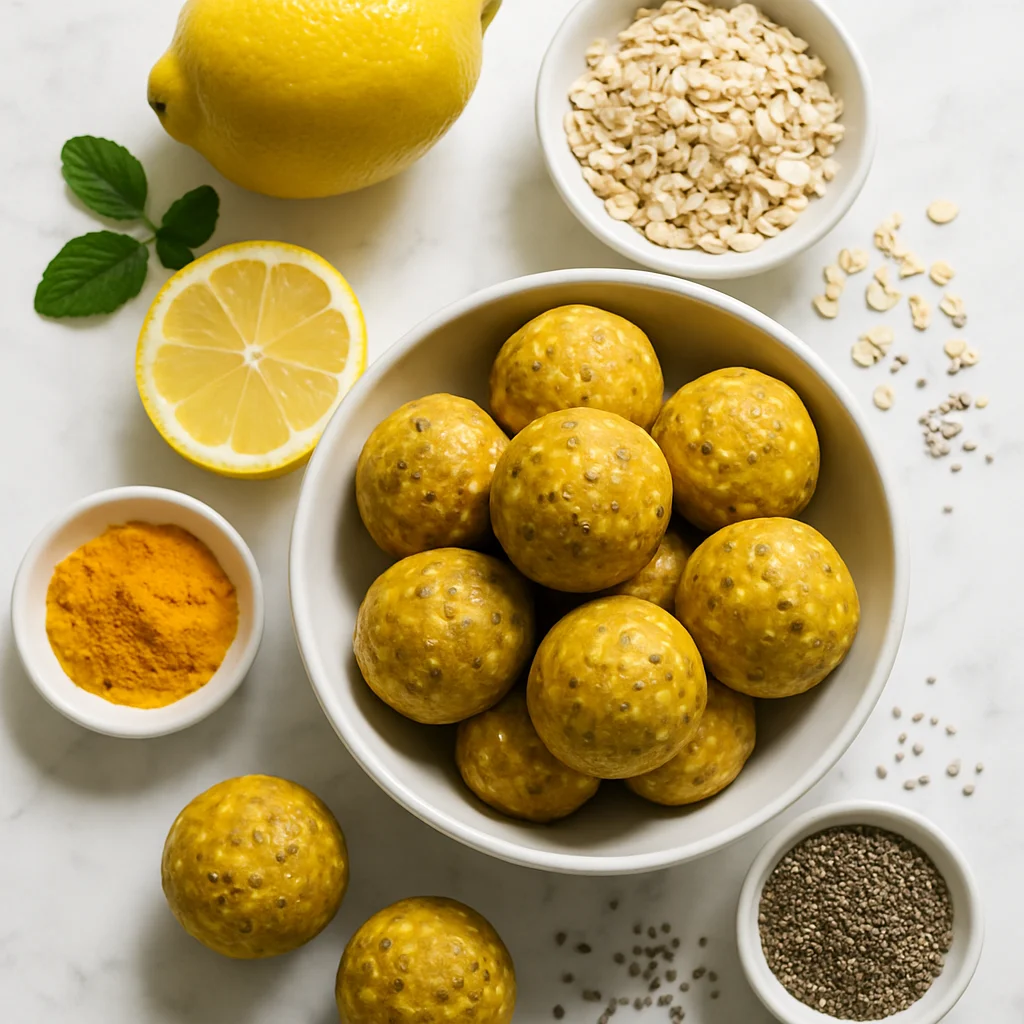
Lemon Turmeric Energy Balls with Oats and Chia Seeds
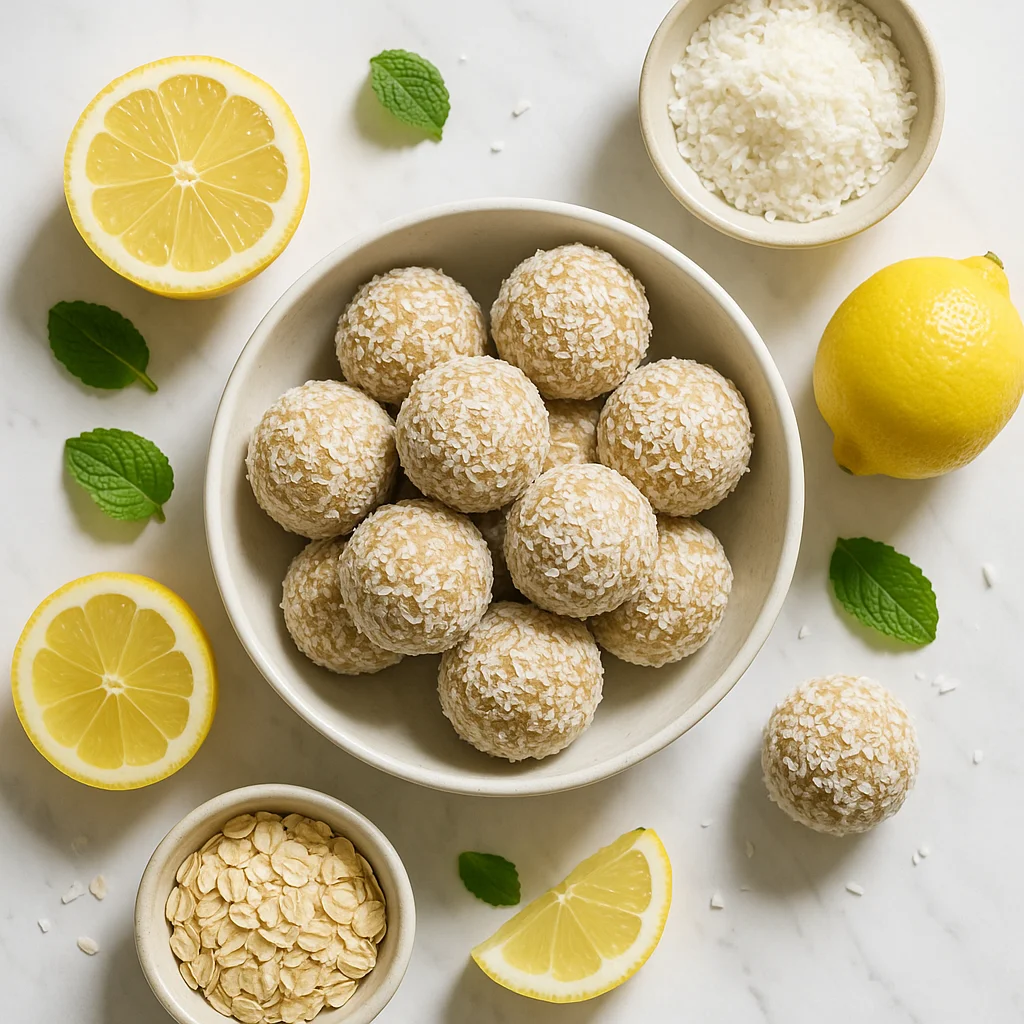
Lemon Coconut Energy Balls (Healthy, No-Bake, Refined Sugar Free)
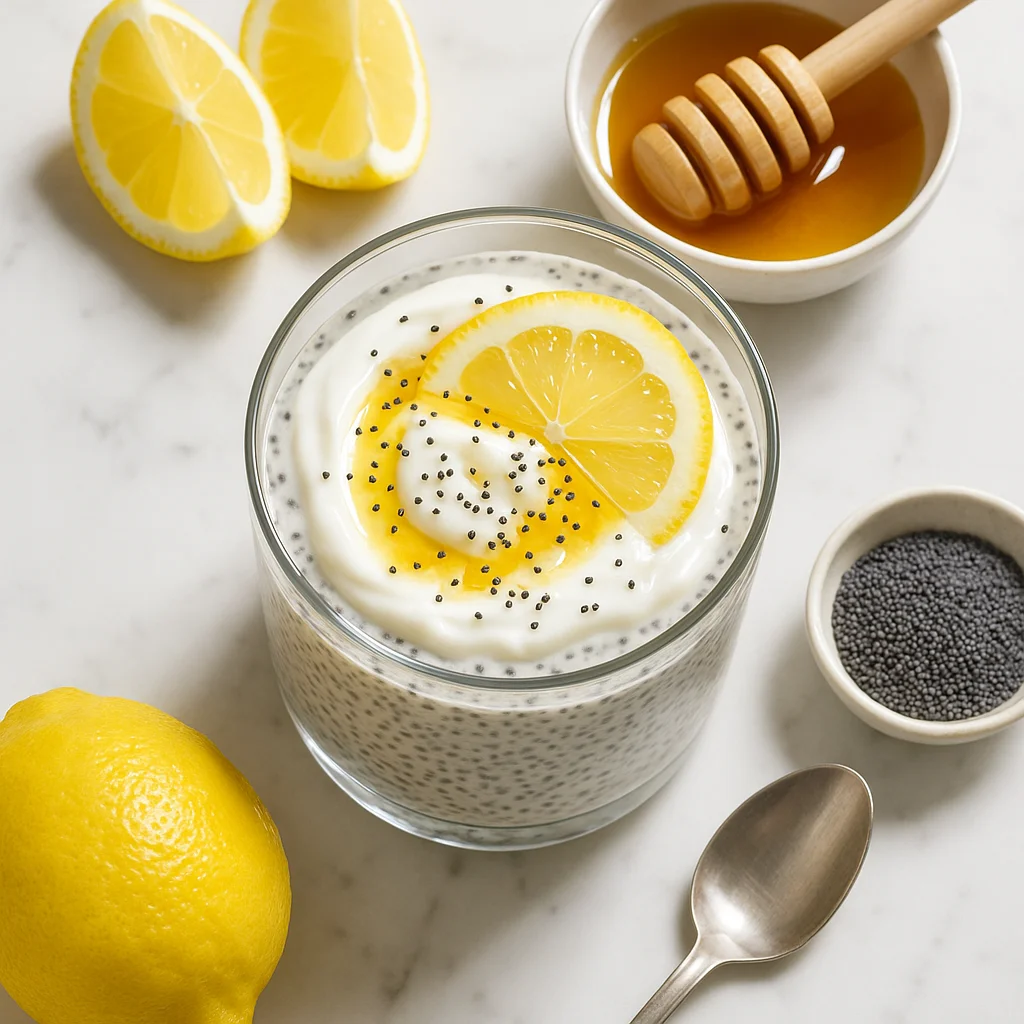
Lemon Poppy Seed Chia Pudding with Greek Yogurt and Honey