Rasgulla Soft Cottage Cheese Balls Recipe with Reduced Sugar Syrup
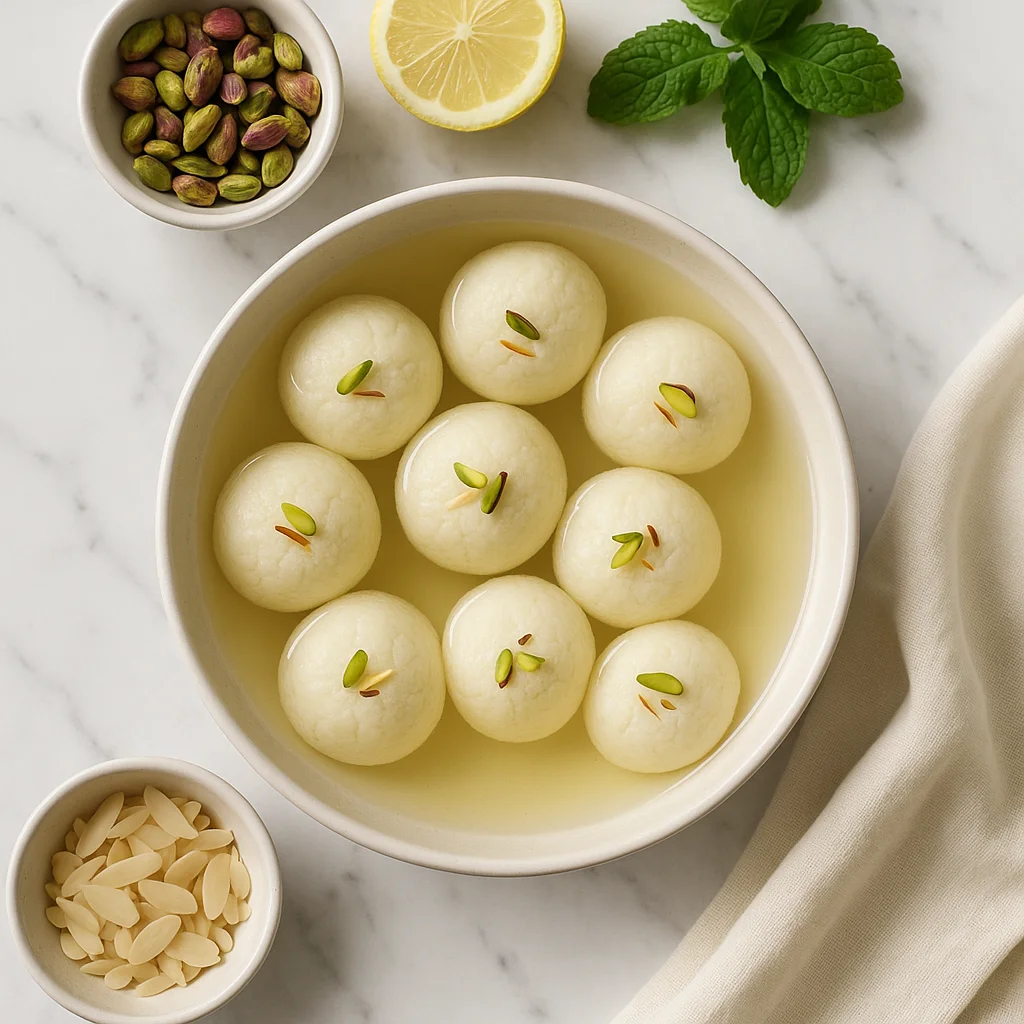
The squeeze test is how you know rasgulla is done. Take one of the soft white balls from the simmering sugar syrup and squeeze it gently between your fingers. If it springs back immediately, it is properly cooked and spongy throughout. If it leaves an indent that stays, it needs more time. Rasgulla, one of the most beloved sweets in Bengali and Odia cuisine, is made from fresh chenna, an unaged cottage cheese produced by curdling milk with lemon juice or vinegar and straining it until dry, then kneading it smooth, shaping it into balls and simmering them in a light sugar syrup until they puff and become spongy. This version uses a reduced-sugar syrup which lets the fresh, milky character of the chenna come through more clearly.
Why this recipe works
Chenna has a very different texture to commercial ricotta or cottage cheese. Made fresh and properly drained, it is smooth, slightly grainy and dry enough to knead into a dough. Kneading develops the proteins and creates the smooth, non-crumbly surface that allows the balls to hold together during cooking without falling apart. The simmering sugar syrup causes the chenna balls to puff as they absorb liquid and expand, creating the characteristic light, spongy interior. Reducing the sugar concentration in the syrup slightly produces balls that are subtly sweet rather than intensely so, which makes them easier to eat more than one of.
Getting it right
Drain the chenna thoroughly. Any remaining whey in the cheese makes the dough sticky and prevents the balls from holding their shape in the syrup. Hang the chenna in a muslin cloth for at least two hours.
Knead the chenna for at least eight minutes until it is completely smooth. Insufficiently kneaded chenna produces rasgulla that crack or crumble during simmering.
Common mistakes
Simmering at too high a temperature causes the balls to expand too quickly and break apart in the syrup. Keep the syrup at a gentle simmer throughout, never a rolling boil.
Not making the balls smooth enough before dropping them into the syrup means they develop a rough, pitted surface rather than the smooth, glossy exterior the dish should have.
Substitutions
A few drops of rose water added to the cooled syrup after cooking gives the rasgulla a floral, slightly perfumed quality that is very traditional. Saffron threads steeped in a tablespoon of warm water and added to the syrup produce a pale golden colour and a subtle depth of flavour.
Serving suggestion
Serve chilled in the syrup, in small bowls, after a meal. Rasgulla are best eaten cold. They keep in the syrup in the fridge for up to four days, absorbing more of the syrup as they sit and becoming even more flavourful.
Ingredients
- 1.5 litres whole milk (full-fat works best for soft texture)
- 3 tablespoons fresh lemon juice (or white vinegar)
- 1 teaspoon fine semolina (helps balls hold shape without heaviness)
- 0.3 teaspoon ground cardamom
- 4 cups water (for the syrup)
- 4 tablespoons coconut sugar (adds gentle caramel notes)
- 1 tablespoon raw honey (stir in off heat to preserve enzymes)
- 1 teaspoon rose water (add just before serving for best fragrance)
- 0.3 teaspoon saffron strands (soaked in 1 tablespoon warm water for 10 minutes)
- 1 tablespoon crushed unsalted pistachios (optional, for garnish)
Instructions
- 1
Pour the milk into a large, heavy-bottomed saucepan and bring it to a gentle boil over medium heat, stirring occasionally so it does not scorch on the bottom.
Use a wide pan so the milk heats evenly and you have room to stir.
- 2
Once the milk reaches a rolling boil, reduce the heat to low and slowly drizzle in the lemon juice, stirring gently. The milk will begin to curdle and separate into soft white curds and thin greenish-yellow whey within about 1 to 2 minutes.
Stop adding lemon juice as soon as the whey runs clear. Adding too much makes the chena grainy and acidic.
- 3
Line a colander with a double layer of cheesecloth or a clean muslin cloth. Pour the curdled milk through the cloth, letting the whey drain away. Gather the cloth and rinse the curds gently under cool running water for about 30 seconds to remove the lemon flavour.
Save the whey. It is packed with protein and works brilliantly in smoothies, soups or bread dough.
- 4
Squeeze the cloth gently to remove excess water, then hang the bundle or press it under a heavy plate for 20 minutes. You want the chena to be soft and slightly moist, not dry and crumbly. It should feel like a firm dough, not wet putty.
Under-drained chena will fall apart in the syrup. Over-drained chena makes hard, rubbery balls.
- 5
Transfer the drained chena to a clean surface. Add the fine semolina and ground cardamom. Knead firmly with the heel of your hand for 8 to 10 minutes until the mixture is completely smooth, slightly shiny and forms a cohesive, crack-free dough.
This kneading step is non-negotiable. Any cracks in the dough will cause the balls to break apart during cooking.
- 6
Divide the dough into 18 equal portions. Roll each portion between your palms using gentle but firm pressure, forming smooth balls with no surface cracks. Place them on a clean plate and cover with a damp cloth while you prepare the syrup.
Keep your hands clean and dry. Even a small crack will cause the ball to open up in the boiling syrup.
- 7
Pour the 4 cups of water into a wide, deep pot that has a tight-fitting lid. Add the coconut sugar and stir until dissolved. Bring to a brisk boil over medium-high heat, then add the saffron water.
Use a pot that is large enough for the balls to float and expand freely. They will roughly double in size as they cook.
- 8
Gently lower the cheese balls into the boiling syrup one by one. Immediately place the lid on the pot and cook on a vigorous medium boil for 18 to 20 minutes. Do not lift the lid during cooking as the steam is essential for the balls to puff up properly.
A gentle rolling boil throughout is the sweet spot. Too low and they will not expand. Too fierce and they can crack.
- 9
After 18 to 20 minutes, remove the lid and check the balls. They should have nearly doubled in size and feel light and spongy when pressed very gently with a spoon. Turn off the heat. Stir in the raw honey and rose water gently, swirling the pot rather than stirring to avoid breaking the balls.
Adding honey off the heat means its natural enzymes and delicate flavour compounds are preserved.
- 10
Allow the rasgulla to cool in the syrup at room temperature for 20 minutes, then transfer everything to a container and refrigerate for at least 1 hour before serving. Serve chilled in small bowls with a little syrup spooned over the top, and scatter over crushed pistachios if using.
They taste even better the next day once the balls have fully absorbed the syrup.
Nutrition per serving
98kcal
Calories
5.8g
Protein
12.4g
Carbs
3.1g
Fat
0.2g
Fibre
11.1g
Sugar
38mg
Sodium
Pro Tips
- ✓
Full-fat whole milk gives the softest, most spongy results. Avoid low-fat or UHT milk for this recipe.
- ✓
Knead the chena thoroughly. Eight minutes feels like a long time but it is the single biggest factor in getting soft, bouncy balls.
- ✓
The boil must be maintained throughout the cooking time. Check your flame after you put the lid on.
- ✓
Do not crowd the pot. The balls need room to expand and float freely. Cook in batches if needed.
- ✓
Chilling is important. The balls firm up slightly in the fridge and absorb more syrup, which intensifies the flavour.
- ✓
If your balls crack during cooking, your dough was either too dry or not kneaded enough. Adjust next time.
- ✓
Taste the syrup before serving and add a tiny extra drizzle of honey if you prefer a slightly sweeter result.
Frequently Asked Questions
Variations
- •
Cardamom and Pistachio Rasgulla
Double the ground cardamom in the dough and fold in one teaspoon of very finely ground unsalted pistachios. The syrup takes on a nutty green hue and the flavour is richer and more aromatic.
- •
Saffron and Orange Rasgulla
Add one teaspoon of fresh orange zest to the chena dough along with the cardamom, and use a generous pinch of saffron in the syrup. The citrus lifts the flavour and makes these feel especially fresh and bright.
- •
Rose and Hibiscus Rasgulla
Brew two dried hibiscus flowers in the syrup water before adding the sweetener. The balls take on a beautiful blush pink colour and a gently floral, slightly tart flavour that is stunning for special occasions.
Substitutions
- •Coconut sugar → Jaggery powder (Jaggery gives a deeper, more traditional flavour and is equally unrefined. Use the same quantity.)
- •Raw honey → Maple syrup (Maple syrup keeps the recipe plant-based and has a similar low glycaemic index. Add it off the heat just like the honey.)
- •Rose water → Kewra water (Kewra, made from screwpine flowers, is commonly used in Indian sweets. It has a more intensely floral, slightly musky note. Use half the quantity as it is stronger.)
- •Lemon juice → White wine vinegar (Vinegar works just as well to curdle the milk and is flavour-neutral after rinsing the chena.)
- •Fine semolina → Arrowroot powder (Arrowroot makes the recipe fully gluten-free. Use half a teaspoon as it is a finer, more powerful binder.)
🧊 Storage
Store the rasgulla balls submerged in their syrup in an airtight container in the refrigerator for up to 4 days. Do not freeze, as freezing damages the delicate spongy texture and the balls become grainy when thawed. Always serve chilled.
📅 Make Ahead
This recipe is ideal for making a day ahead. Prepare and cook the balls, cool to room temperature, then refrigerate overnight. The texture and flavour both improve significantly with an overnight rest, making this a great option for dinner parties or festival preparation.
More Indian Desserts Recipes
Healthy Oat and Almond Ladoo Recipe: Homemade Indian Sweet with No Refined Sugar

Mango Barfi Recipe with Fresh Mango Puree and Coconut Sugar

Healthy Barfi Indian Milk Fudge Recipe with Coconut Sugar and Cardamom
