Healthy Pineapple Kesari Sweet Semolina Recipe with Coconut Sugar
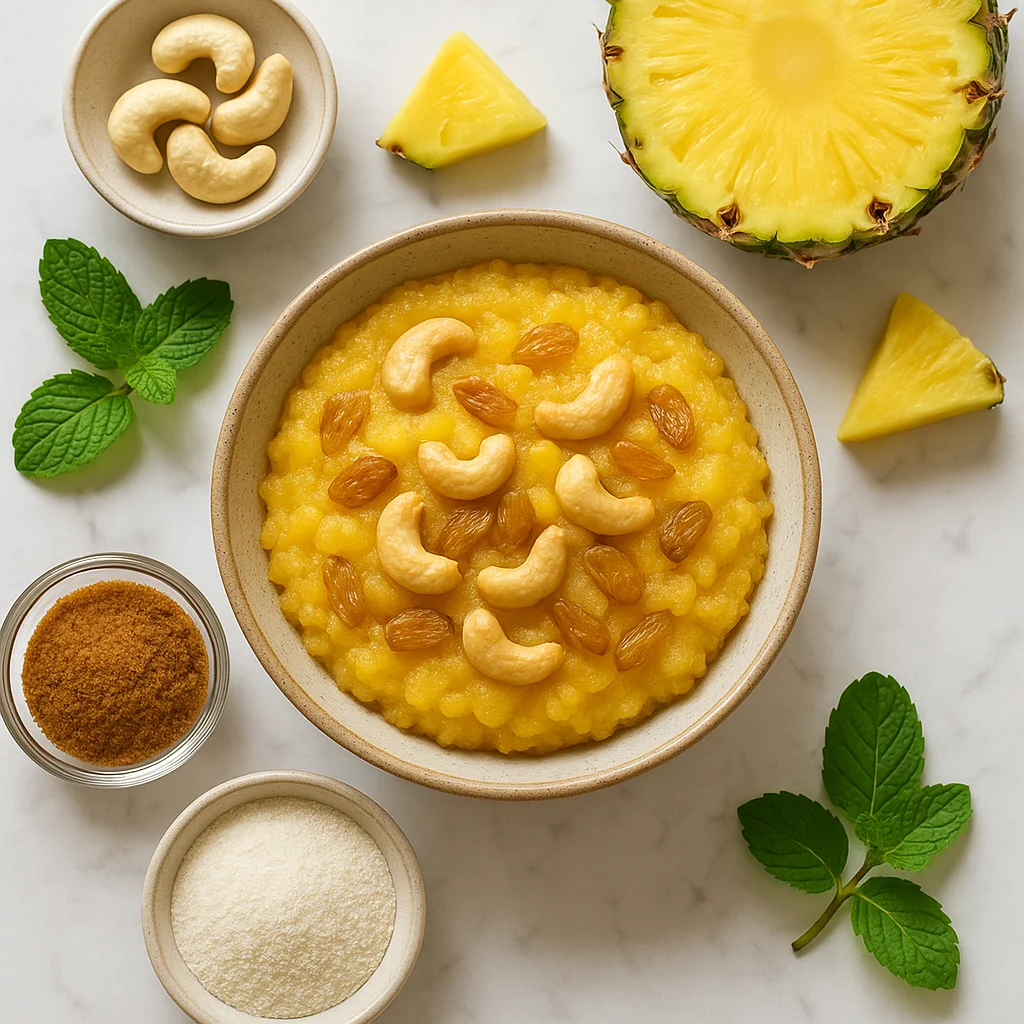
If you have ever tasted a traditional pineapple kesari and thought, I wish I could enjoy this more often without the sugar guilt, this recipe was made for you. This lighter take on the classic South Indian pineapple kesari sweet semolina recipe keeps everything you love about the original, the golden colour, the fragrant cardamom, the juicy pineapple chunks, and that signature melt-in-the-mouth texture, while cutting the refined sugar and excess ghee significantly. Each serving comes in under 180 calories, making it a genuinely guilt-free dessert, festive snack or even a wholesome weekend breakfast treat. Home bakers who want to honour traditional South Indian flavours without derailing their health goals will find this recipe a real keeper.
The ingredient list here does a lot of heavy lifting in the health department. Whole wheat semolina, sometimes labelled as atta rava, replaces the standard fine white semolina, bringing extra fibre and a slightly nutty depth of flavour that actually complements the pineapple beautifully. Coconut sugar stands in for white sugar, offering a lower glycaemic index sweetener with subtle caramel notes that pair wonderfully with the tropical fruit. Fresh pineapple is the star, providing natural sweetness, bromelain enzymes that support digestion, and vitamin C. A small amount of pure ghee is retained because it genuinely elevates the aroma and helps toast the semolina properly, but the quantity is reduced to just one tablespoon for the whole batch. A pinch of saffron dissolved in warm water adds that signature golden hue naturally, while ground cardamom ties everything together with its warm, floral fragrance. Cashews are kept but lightly toasted in a dry pan first to reduce any additional fat from frying them in butter.
The texture of this healthier version is softer and slightly more porridge-like than a firm, sliceable kesari, which actually makes it feel more comforting and homemade. Every spoonful carries tiny pieces of warm pineapple, a gentle crunch from the toasted cashews, and that gorgeous saffron-tinted, honey-gold colour. Serve it warm in small bowls right after cooking for the best experience. A light garnish of fresh pineapple pieces and a few strands of saffron makes it look quite stunning if you are serving guests. It also works beautifully as a prasad or offering during festivals and puja, staying true to its South Indian roots while being a little kinder on the body. For a slightly more filling version, a small spoonful of Greek yogurt on the side adds protein and a pleasant tang.
From a nutritional standpoint, this recipe delivers around 4 grams of fibre per serving compared to roughly 1 gram in a standard kesari, thanks to the whole wheat semolina and fresh fruit. The switch to coconut sugar reduces the glycaemic impact meaningfully, which is useful for anyone managing blood sugar levels or simply trying to avoid energy spikes and crashes after dessert. Fresh pineapple contributes manganese, a trace mineral important for bone health, along with vitamin B6 and thiamine. The small amount of ghee provides fat-soluble vitamins A and E as well as short-chain fatty acids that support gut lining health. This recipe is naturally egg-free and can be made dairy-free by swapping the ghee for refined coconut oil with almost no change to the final flavour. For those avoiding gluten, certified gluten-free fine oat semolina or a rice rava can be used as a straight swap in the same quantities.
Ingredients
- 1 cup whole wheat semolina (atta rava) (or fine whole wheat rava)
- 1.5 cups fresh pineapple, finely chopped (approximately half a small pineapple)
- 0.5 cup pineapple juice (freshly squeezed from the same pineapple)
- 1.5 cups water (warm)
- 0.3 cup coconut sugar (adjust to taste, can reduce to 1/4 cup if pineapple is very sweet)
- 1 tablespoon pure ghee (or refined coconut oil for dairy-free)
- 0.3 teaspoon ground cardamom
- 1 small pinch saffron strands (dissolved in 2 tablespoons warm water)
- 0.3 teaspoon turmeric powder (for colour, optional if using saffron)
- 3 tablespoons raw cashews, roughly chopped (dry toasted)
- 2 tablespoons raisins (unsweetened)
- 1 pinch fine sea salt (balances sweetness)
Instructions
- 1
Place the chopped cashews in a dry non-stick pan over medium-low heat. Toast them, stirring constantly, for about 2 to 3 minutes until they turn light golden. Remove and set aside on a small plate.
Keep the heat low and do not walk away. Cashews go from golden to burnt very quickly.
- 2
In the same pan, add the ghee over medium heat. Once it melts and shimmers, add the whole wheat semolina. Stir continuously with a wooden spoon, roasting the semolina for 6 to 8 minutes until it smells nutty and turns a light golden-beige colour.
Properly roasted semolina is the single most important step for a smooth, lump-free kesari. Do not rush this stage.
- 3
While the semolina is roasting, combine the warm water and pineapple juice in a small saucepan or microwave-safe jug and heat until just below boiling. Add the saffron water, turmeric (if using) and a pinch of salt to this liquid. Keep it warm.
Always add warm or hot liquid to hot roasted semolina. Cold liquid causes lumps and uneven cooking.
- 4
Once the semolina is roasted, reduce the heat to low. Carefully and slowly pour the warm liquid into the pan while stirring constantly with your other hand. The mixture will bubble and spit initially, so stand back slightly and stir quickly to prevent clumping.
- 5
Once the liquid is absorbed and the mixture thickens, add the coconut sugar and ground cardamom. Stir well to combine. The sugar will release a little moisture, so continue stirring over low heat for another 2 minutes.
Taste at this point and adjust sweetness. The pineapple adds natural sugar, so you may want less than the recipe states.
- 6
Add the chopped fresh pineapple and raisins. Stir gently to distribute them evenly through the semolina mixture. Cook for a further 3 to 4 minutes on low heat, stirring occasionally, until the pineapple pieces soften slightly and the whole mixture comes together into a cohesive, glossy porridge.
Fresh pineapple releases juice as it heats. If the kesari looks too thick, add a splash of water. If too loose, cook uncovered for an extra minute.
- 7
Remove the pan from the heat. Scatter the toasted cashews over the top, stir them through gently and serve immediately in small bowls. Garnish with a few fresh pineapple pieces and saffron strands if desired.
Nutrition per serving
175kcal
Calories
4g
Protein
30g
Carbs
5g
Fat
4g
Fibre
12g
Sugar
45mg
Sodium
Pro Tips
- ✓
Roasting the semolina well in ghee is non-negotiable. Under-roasted semolina gives a raw, starchy aftertaste.
- ✓
Always use warm liquid when adding it to the roasted semolina. This one habit prevents almost all lumping issues.
- ✓
Coconut sugar dissolves more slowly than white sugar, so give it a good minute of stirring to fully incorporate.
- ✓
Fresh pineapple gives the best flavour and texture here. Canned pineapple in juice (not syrup) works as a backup but makes the kesari slightly wetter.
- ✓
This recipe scales up easily. Simply double all quantities for a larger batch for celebrations or festivals.
- ✓
For a firmer, sliceable version similar to kesari bars, press the hot mixture into a greased tray, smooth the top and allow it to cool for 20 minutes before cutting into diamonds or squares.
Frequently Asked Questions
Variations
- •
Mango Kesari
Swap the fresh pineapple for the same quantity of ripe Alphonso or Kesar mango pieces. Reduce the coconut sugar to 3 tablespoons as ripe mango is sweeter. Omit the saffron and use a small pinch of turmeric for colour instead.
- •
Banana Kesari
Replace the pineapple with 2 ripe bananas, mashed and stirred in during the last 2 minutes of cooking. Banana caramelises slightly in the heat and creates a naturally very sweet, creamy kesari that needs only 2 to 3 tablespoons of coconut sugar.
- •
Pineapple Kesari Bars
After cooking, press the hot kesari mixture into a greased 20cm square tin. Smooth the surface flat, press in a few extra cashews decoratively and allow to cool at room temperature for 30 minutes. Cut into diamond shapes or squares. These travel well and are great for lunchboxes or gifting.
- •
Coconut Pineapple Kesari
Replace 0.5 cup of the water with full-fat coconut milk for a richer, creamier texture with a tropical depth. Add 2 tablespoons of desiccated unsweetened coconut along with the cashews for extra fibre and texture.
Substitutions
- •Whole wheat semolina → Fine rice rava (rice semolina) (Makes the recipe naturally gluten-free. Use the exact same quantity and roast in the same way. The texture will be slightly lighter and the colour a little paler.)
- •Coconut sugar → Jaggery powder (unrefined cane sugar) (Use the same quantity. Jaggery adds a deeper, more molasses-like flavour that works beautifully with pineapple. Look for fine jaggery powder rather than the block form for easier incorporation.)
- •Ghee → Refined coconut oil (Use an equal amount. This makes the recipe fully dairy-free and vegan. The coconut flavour is very mild once cooked and complements the tropical pineapple well.)
- •Cashews → Sunflower seeds or pumpkin seeds (Turns the recipe nut-free. Toast the seeds the same way in a dry pan. They add a pleasant crunch and contribute zinc and magnesium.)
- •Fresh pineapple → Tinned pineapple in natural juice (Drain well and use the juice as part of the liquid. Reduce coconut sugar slightly as tinned pineapple is sweeter than fresh.)
- •Saffron → A small pinch of turmeric powder (Provides a similar golden colour at a fraction of the cost. The flavour contribution of saffron is subtle in this recipe, so turmeric works well as a visual substitute.)
🧊 Storage
Store any leftover kesari in an airtight container in the refrigerator for up to 3 days. Reheat gently in a small saucepan over low heat with a splash of water to loosen it, or microwave for 60 to 90 seconds, stirring halfway through. The texture may firm up in the fridge, which is normal.
📅 Make Ahead
You can roast the semolina in ghee up to 2 days ahead and store it in an airtight jar at room temperature. When ready to serve, simply proceed from step 3 onwards. The chop of pineapple can also be done a day ahead and refrigerated in a sealed container. Full assembly takes just 12 minutes from that point.
More Indian Desserts Recipes
Healthy Oat and Almond Ladoo Recipe: Homemade Indian Sweet with No Refined Sugar

Mango Barfi Recipe with Fresh Mango Puree and Coconut Sugar

Healthy Barfi Indian Milk Fudge Recipe with Coconut Sugar and Cardamom