Mitarashi Dango Recipe with Sweet Soy Glaze (Lower Sugar, High Fibre)
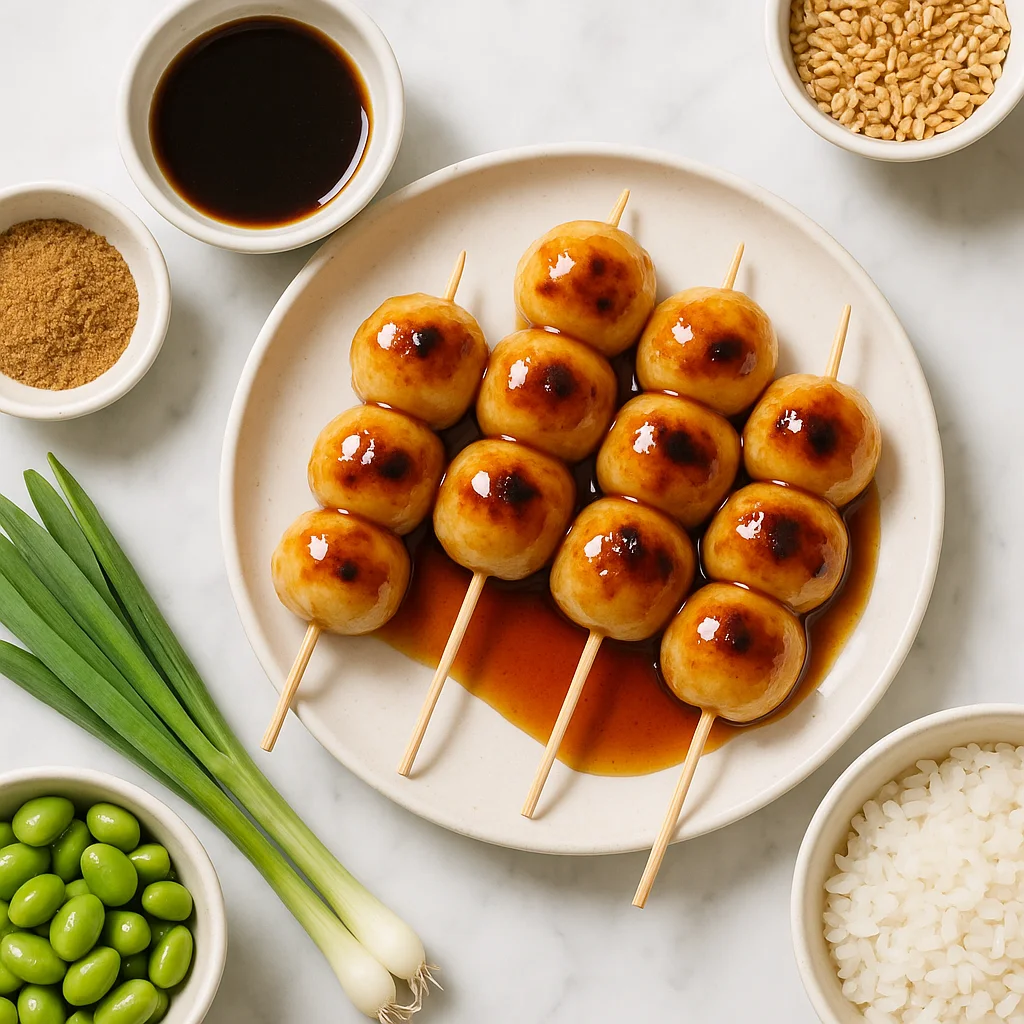
Soy sauce in a dessert glaze sounds like a mistake until you taste it, and then it sounds like the most obvious thing in the world. Mitarashi dango, the skewered Japanese rice dumplings coated in a sweet, glossy soy glaze, are one of the most popular wagashi, traditional Japanese sweets, precisely because the glaze achieves a flavour balance that purely sweet confections cannot. The soy contributes umami and a slight saltiness that amplifies the sweetness rather than competing with it, and the caramelised sugar in the glaze adds colour and a slightly smoky depth. This lower-sugar version uses less mirin and soy, producing a glaze that is less intense but better balanced.
Why this recipe works
The dango dumplings are made from shiratamako, a high-quality glutinous rice flour that produces a smoother, more elastic texture than standard mochiko. Mixed with water and shaped into balls, they are boiled until they float and then briefly grilled or torched to add the characteristic lightly charred surface that is traditional in authentic mitarashi dango. The glaze is made by combining soy sauce, mirin, sake and a small amount of sugar or maple syrup, thickened with a little arrowroot or cornflour to produce the glossy, coating consistency. The fibre comes from the glutinous rice itself, which is a surprisingly good source.
Getting it right
The water temperature and quantity for the dango dough matters. Add cool water gradually until the dough is soft and pliable, like an earlobe in texture. Too dry and the dumplings crack during boiling; too wet and they fall apart.
Thread the boiled dumplings onto skewers while they are still warm and pliable, then grill or torch to add colour before glazing. The grilling adds a slight char that is genuinely integral to the flavour of mitarashi dango.
Common mistakes
Using regular mochiko instead of shiratamako produces a slightly rougher, less smooth dumpling texture. The difference is noticeable, and shiratamako is worth seeking out from a Japanese grocery.
Applying the glaze before grilling rather than after causes it to burn under the heat. Always grill first, glaze after.
Substitutions
Tamari replaces soy sauce for a gluten-free version of the glaze. Coconut aminos, used in a slightly higher quantity, replace soy for a lower-sodium alternative with a more mellow umami note. A small amount of grated fresh ginger added to the glaze creates an additional layer of warmth.
Serving suggestion
Serve immediately after glazing while the dumplings are still warm and the glaze is glossy and fluid. A cup of hot green tea is the traditional accompaniment. Two to three skewers per person is the right amount for a dessert serving.
Ingredients
- 80 g shiratamako glutinous rice flour (find at Japanese grocery stores or online)
- 40 g whole grain brown rice flour (adds fibre and a mild nutty flavour)
- 1 tsp coconut sugar (for gentle sweetness in the dough)
- 90 ml warm water (add gradually, dough should be soft but not sticky)
- 3 tbsp tamari (use gluten free tamari for a fully GF recipe)
- 2 tbsp coconut sugar (for the glaze)
- 1 tbsp pure maple syrup (adds depth to the glaze)
- 1 tbsp mirin (traditional Japanese sweet rice wine, adds authenticity)
- 1.5 tsp arrowroot powder (mixed with water before adding to sauce)
- 80 ml cold water (for the glaze base)
- 0.5 tsp toasted sesame oil (optional, adds a subtle warmth to the glaze)
- 4 bamboo skewers (soak in water for 10 minutes before use to prevent scorching)
Instructions
- 1
Soak your bamboo skewers in cold water for at least 10 minutes while you prepare everything else. This stops them from burning when you char the dango.
- 2
Combine the shiratamako, brown rice flour and 1 teaspoon of coconut sugar in a medium mixing bowl. Whisk them together briefly to distribute the sugar evenly through the flour blend.
Brown rice flour can be slightly coarser than joshinko, so giving it a good mix ensures the final dango have an even texture.
- 3
Add the warm water to the flour mixture a little at a time, mixing with a spatula or your hands between each addition. Knead gently until you have a smooth, soft dough that holds its shape when pressed. It should feel like soft earlobe consistency. If the dough feels too dry, add water half a teaspoon at a time.
Do not rush the water addition. Adding it slowly gives you much more control over the final dough texture.
- 4
Divide the dough into 16 equal pieces, each roughly 14 grams. Roll each piece between your palms into a smooth ball, then use your thumb to press a very slight indent into the top of each one. This small dip helps them cook more evenly.
- 5
Bring a large pot of water to a rolling boil. Drop the dango balls in carefully and boil for 8 to 10 minutes, stirring gently once or twice to prevent sticking. They will begin floating to the surface after a few minutes. Once they have all floated and bobbed for about 2 minutes after floating, they are ready.
Do not overcrowd the pot. Cook in two batches if needed, as crowding lowers the water temperature and leads to uneven cooking.
- 6
Remove the boiled dango with a slotted spoon and transfer them immediately into a bowl of cold water. Leave them for 2 minutes to firm up slightly, then drain in a colander. Thread 4 dango onto each soaked bamboo skewer.
The cold water bath stops the cooking process and helps the dango hold their round shape neatly.
- 7
Heat a lightly oiled cast iron pan or non-stick grill pan over medium-high heat. Place the skewers in the pan and cook for about 1 to 2 minutes per side until you get light golden-brown patches on the dango. You want colour and a little char, not full browning all over.
A cast iron pan gives the best char marks. If you have a kitchen blowtorch, you can skip this step and torch the dango directly for a more authentic yakitori-style finish.
- 8
While the dango are charring, make the mitarashi glaze. Mix the arrowroot powder with 2 tablespoons of the cold water in a small cup until fully dissolved, then set aside. Combine the remaining cold water, tamari, coconut sugar, maple syrup and mirin in a small saucepan over medium heat.
- 9
Stir the glaze mixture continuously as it heats. Once it begins to bubble around the edges, pour in the arrowroot slurry while stirring constantly. Reduce the heat to low and keep stirring for another 1 to 2 minutes until the glaze thickens into a glossy, translucent sauce. Remove from heat and stir in the sesame oil if using.
The glaze thickens quickly once the arrowroot activates. Pull it off the heat as soon as it turns glossy and coats the back of a spoon.
- 10
Spoon or brush the warm mitarashi glaze generously over the charred dango skewers. Serve immediately for the best texture and flavour.
Tilt the pan and use a pastry brush to get full, even coverage on every dango ball.
Nutrition per serving
115kcal
Calories
2.2g
Protein
24.5g
Carbs
0.8g
Fat
1.4g
Fibre
7.2g
Sugar
310mg
Sodium
Pro Tips
- ✓
Shiratamako is not the same as regular glutinous rice flour from Asian supermarkets. The specific coarse-ground texture of shiratamako is what gives dango their signature chew, so it is worth sourcing the real thing.
- ✓
Your dough consistency is the most important variable. Too wet and the dango will spread; too dry and they will crack during boiling. Aim for a soft, smooth dough that does not stick to your hands.
- ✓
If you cannot find mirin, a mixture of 1 tablespoon of dry white wine and half a teaspoon of extra maple syrup makes a reasonable substitute in the glaze.
- ✓
Leftover glaze keeps in the fridge in a sealed jar for up to a week and is excellent drizzled over plain rice or steamed tofu.
- ✓
For the most attractive dango, keep your balls as uniform in size as possible. Using a kitchen scale to portion the dough makes this simple.
Frequently Asked Questions
Variations
- •
Sesame Crusted Dango
After charring, roll the dango in a mixture of toasted black and white sesame seeds before glazing. The seeds add a pleasant crunch, extra fibre and a nutty flavour that complements the sweet soy glaze beautifully.
- •
Matcha Dango
Add 1 teaspoon of ceremonial grade matcha powder to the dough when mixing the flours. This gives the dango a pale green colour and a subtle earthy bitterness that balances the sweetness of the glaze in a really lovely way.
- •
Spiced Glaze Variation
Add a small pinch of ground ginger and a tiny pinch of five spice powder to the mitarashi glaze for a warming, aromatic twist that makes this recipe feel especially cosy in colder months.
- •
Yuzu Citrus Glaze
Stir half a teaspoon of yuzu juice or a small strip of yuzu zest into the finished glaze just before serving. The citrus brightness cuts through the richness of the sweet soy and lifts the whole dish.
Substitutions
- •Shiratamako → Mochiko sweet rice flour (Mochiko is easier to find in many Western supermarkets and produces a similar chew, though the texture will be slightly less silky and springy than shiratamako.)
- •Brown rice flour → Joshinko (non-glutinous rice flour) (Joshinko is the traditional choice in this role and works perfectly. Using brown rice flour is the healthy swap in this recipe, but joshinko will give a slightly more tender result.)
- •Coconut sugar → Muscovado or raw cane sugar (Both have a similar brown sugar depth and are less refined than white sugar, though they will increase the glycaemic impact slightly compared to coconut sugar.)
- •Arrowroot powder → Cornstarch (Use the same quantity. Cornstarch works well and is more widely available, though arrowroot produces a slightly clearer and glossier glaze.)
- •Mirin → Dry white wine with a touch of maple syrup (Combine 1 tablespoon of dry white wine with half a teaspoon of maple syrup as a reasonable swap if mirin is not available.)
- •Maple syrup → Rice malt syrup (Rice malt syrup has a very mild, neutral sweetness and an even lower fructose content, making it a good option for those watching fructose intake.)
🧊 Storage
Store leftover glazed dango in an airtight container in the refrigerator for up to 2 days. The dough will firm up in the fridge, so reheat briefly in a microwave for 20 to 30 seconds or steam gently until soft before eating. The glaze can be stored separately in a sealed jar for up to 1 week and warmed in a small pan before serving.
📅 Make Ahead
You can boil the dango balls up to 4 hours ahead and keep them at room temperature in cold water. Drain them fully before skewering and charring. The mitarashi glaze can be made a day in advance and refrigerated. Reheat it gently in a saucepan over low heat, stirring until smooth and glossy again before spooning over the skewers.
More Japanese Desserts Recipes
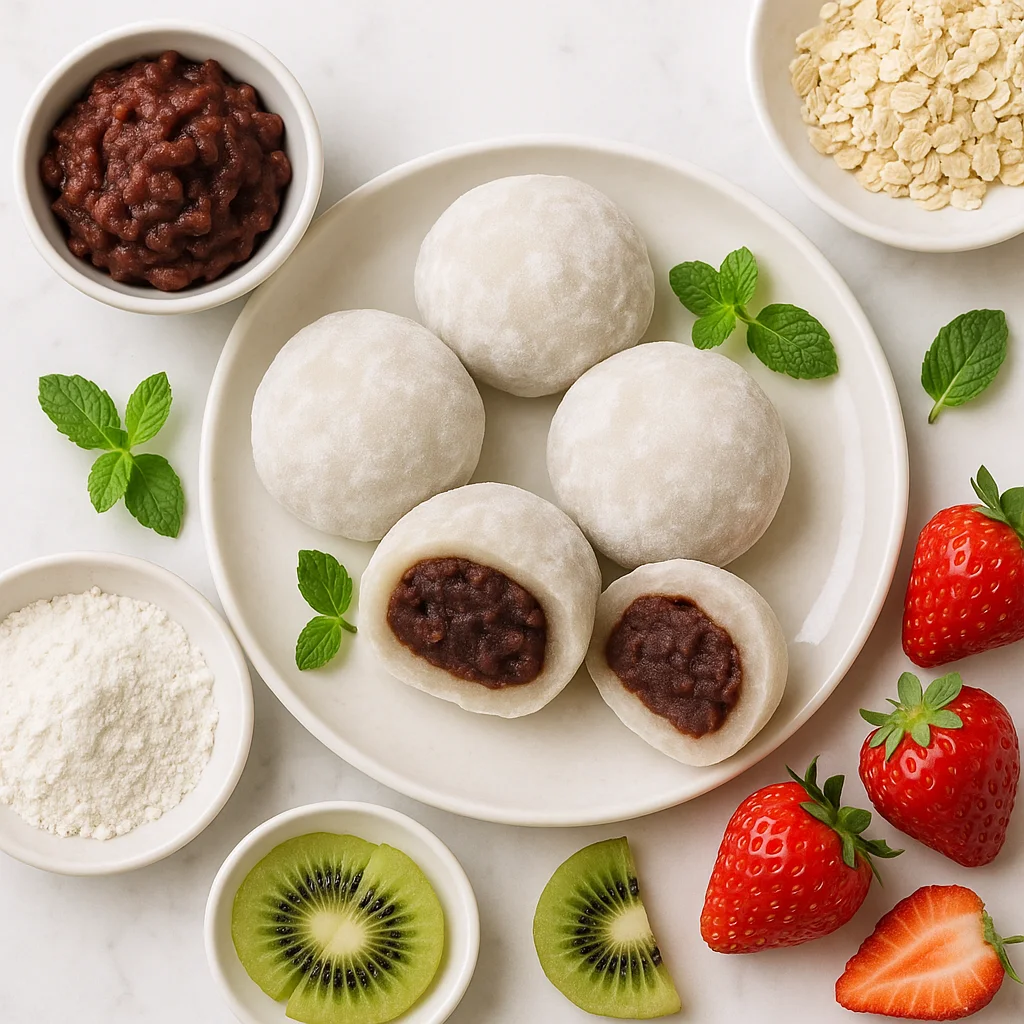
Healthy Daifuku Mochi Recipe with Red Bean Paste (Lower Sugar)
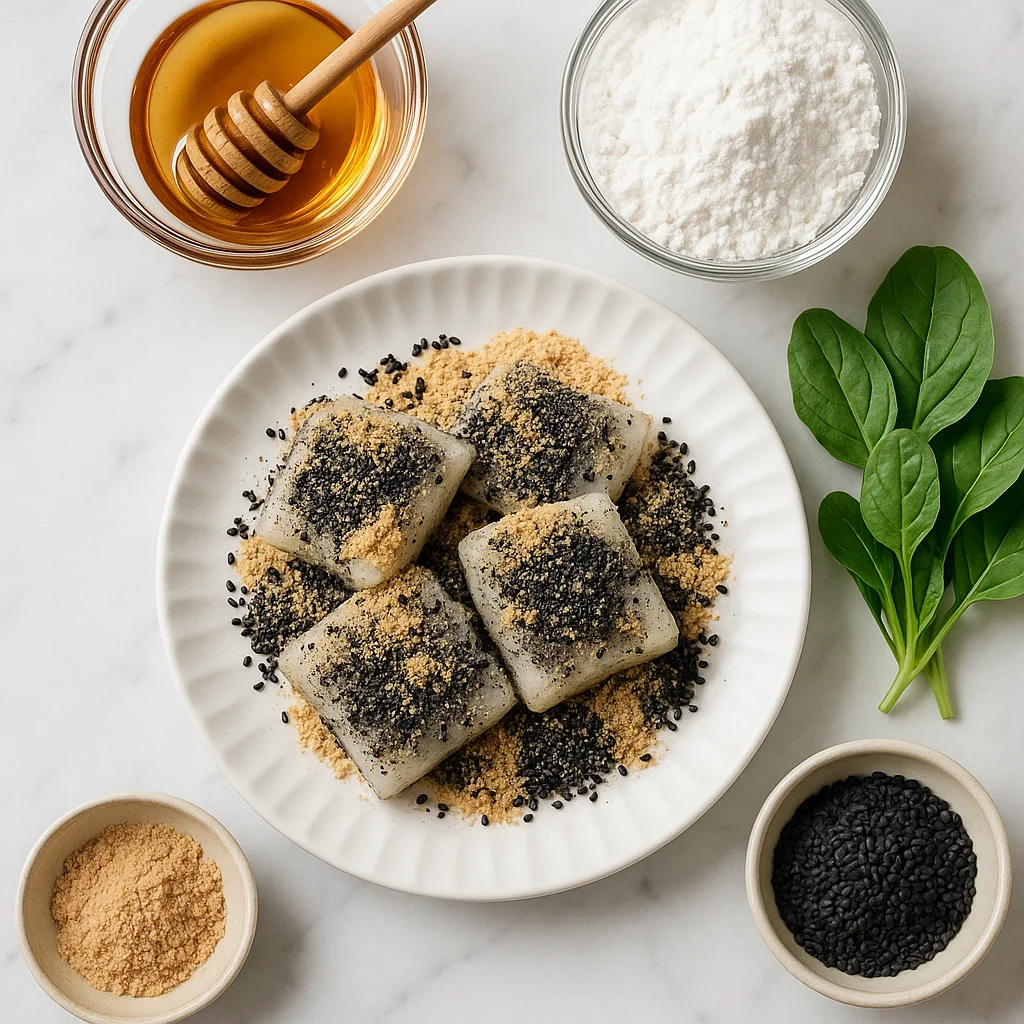
5-Minute Microwave Mochi Recipe with Honey and Black Sesame
Raindrop Cake Mizu Shingen Mochi Agar Agar Recipe with Coconut Water and Matcha Drizzle