Creamy Mango Coconut Milk Pudding No Eggs Required
Some desserts just feel like sunshine, and this mango coconut milk pudding is exactly that. Made without eggs, without gelatin, and without any baking at all, it comes together in about 20 minutes before the fridge does the rest of the work for you. This recipe was created for anyone who wants a genuinely light, tropical dessert that does not compromise on creaminess or flavour. It suits vegans, dairy-free eaters, and anyone with an egg allergy, but honestly, it is the kind of pudding that wins over everyone at the table regardless of dietary preferences.
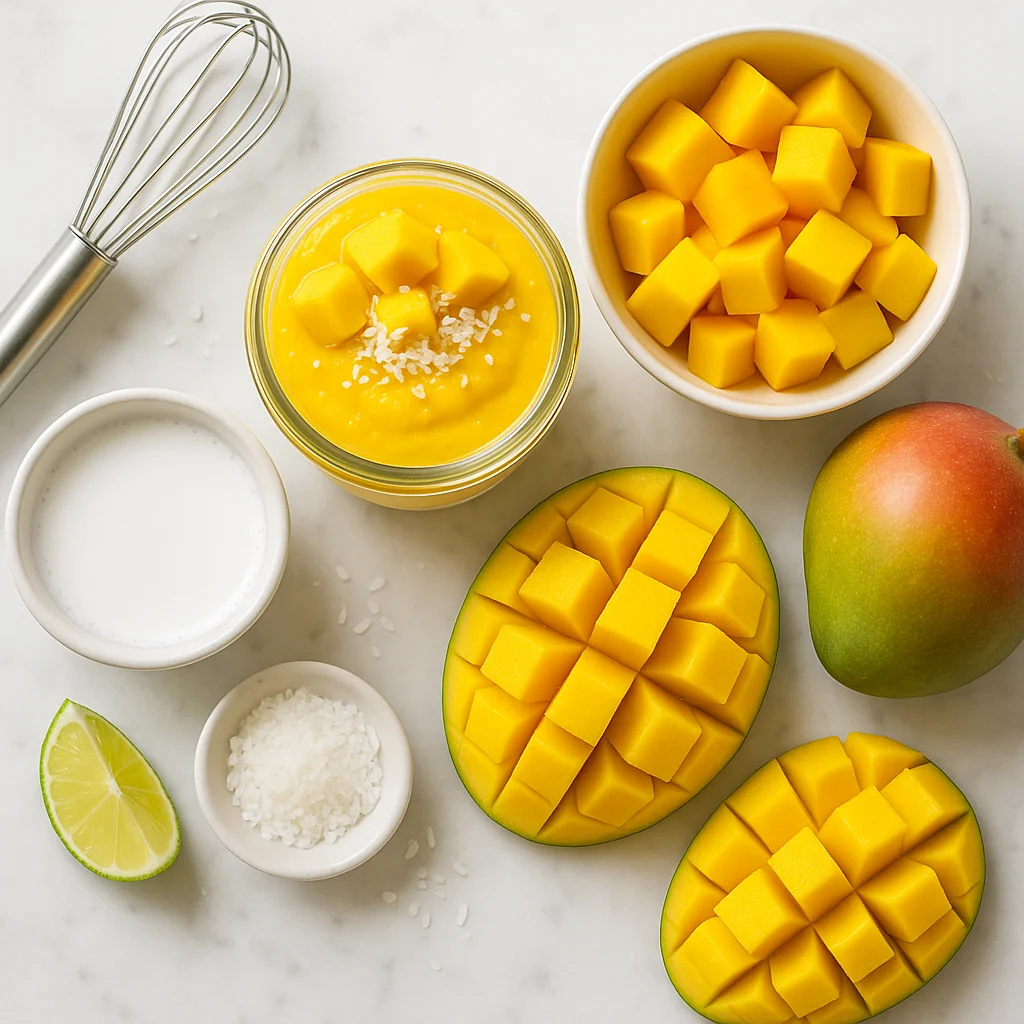
The star here is ripe mango, and choosing a deeply fragrant, naturally sweet variety like Alphonso or Ataulfo means you need far less added sweetener than most pudding recipes call for. Full-fat coconut milk brings that signature richness and a gentle tropical warmth, while also keeping the pudding completely dairy-free. Arrowroot powder is used as the thickener rather than cornflour or refined cornstarch, because it is easier to digest, has a slightly lower glycaemic impact, and produces a beautifully glossy, smooth set. A small amount of pure maple syrup rounds out the sweetness without spiking the sugar content, and a squeeze of fresh lime juice lifts the whole flavour profile and keeps the mango colour vibrant.
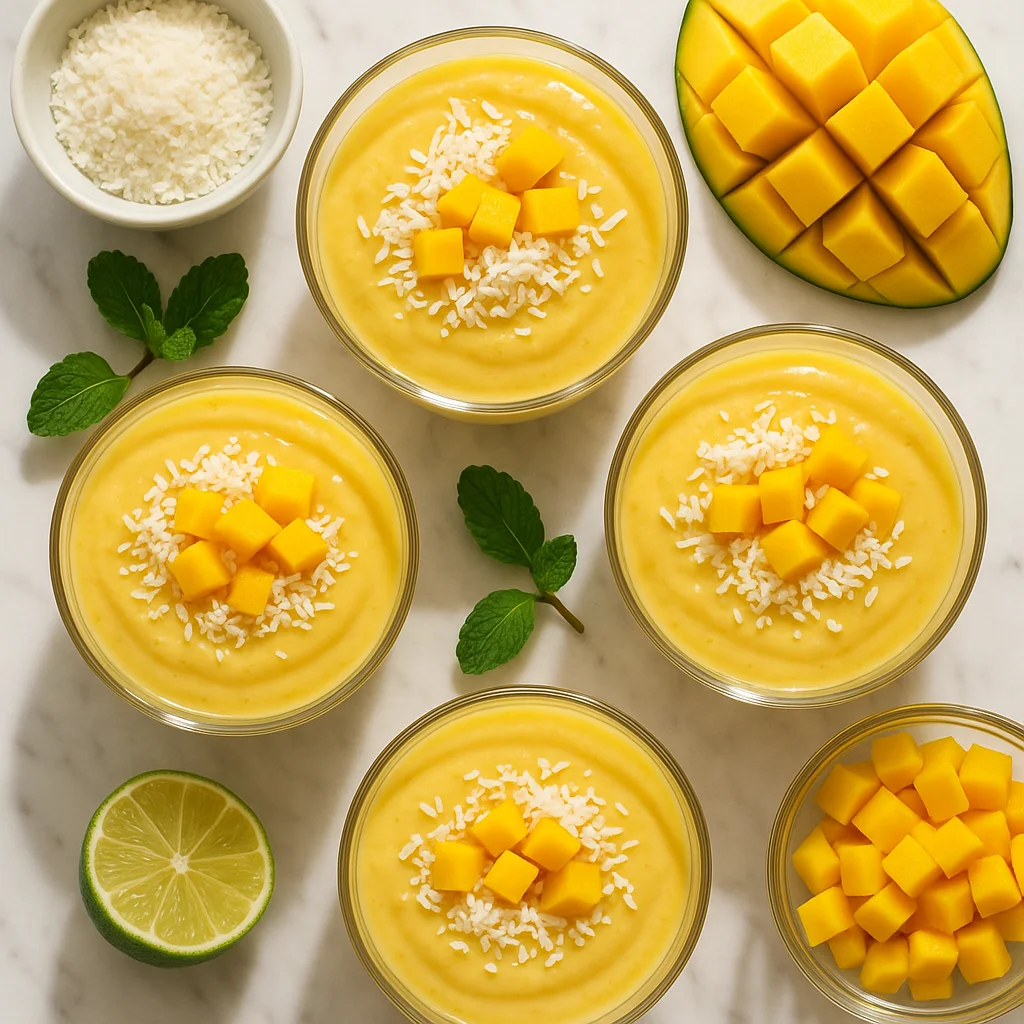
The texture lands somewhere between a panna cotta and a mousse, which makes it feel indulgent even though the calorie count per serving is impressively modest. Once chilled, the pudding slices cleanly if set in a loaf tin, or it scoops into elegant rounds if you use ramekins or small glasses. For serving, a few thin slices of fresh mango on top and a light dusting of toasted coconut flakes add a satisfying contrast of textures. A small drizzle of extra maple syrup or a few fresh mint leaves make it feel restaurant-worthy with almost zero extra effort. This pudding also works beautifully layered into glasses for a no-fuss dinner party dessert that you can prepare the day before.
From a nutritional standpoint, this recipe delivers a genuinely better-for-you alternative to traditional egg-based puddings and custards. Mango is loaded with vitamin C, vitamin A, and dietary fibre, particularly when you use whole pureed fruit rather than juice or concentrate. Coconut milk contributes medium-chain triglycerides, which the body processes differently from other saturated fats. The total sugar content per serving sits well below that of most shop-bought or restaurant puddings, and there is no refined white sugar anywhere in this recipe. With around 3 grams of fibre per serving and a calorie count under 200, this is a dessert you can feel good about enjoying regularly, not just as an occasional treat.
Ingredients
- 2 large ripe mangoes (Alphonso or Ataulfo work best, peeled and roughly chopped)
- 400 ml full-fat coconut milk (one standard tin, shaken well before opening)
- 3 tablespoons arrowroot powder (levelled, not heaped)
- 2 tablespoons pure maple syrup (adjust to taste depending on mango sweetness)
- 1 tablespoon fresh lime juice (approximately half a lime)
- 1 pinch fine sea salt
- 2 tablespoons toasted coconut flakes (optional, for garnish)
- 1 small ripe mango (optional, sliced for garnish)
Instructions
- 1
Add the chopped mango flesh to a blender and blitz on high for about 60 seconds until completely smooth. You should have roughly 300 ml of thick mango puree. If your blender is less powerful, pass the puree through a fine sieve to remove any fibrous bits.
Taste your mango at this stage. If it is very sweet, start with just 1 tablespoon of maple syrup and adjust after cooking.
- 2
Pour the mango puree into a medium saucepan. Add the coconut milk and maple syrup. Stir everything together gently with a whisk over medium-low heat until the mixture is fully combined and just beginning to steam. Do not let it boil yet.
- 3
In a small bowl, mix the arrowroot powder with 3 tablespoons of cold water, stirring firmly until no lumps remain. This slurry is your thickener and it must be completely smooth before it goes into the pan.
Always mix arrowroot with cold liquid first. Adding it directly to a hot liquid causes instant lumping.
- 4
Pour the arrowroot slurry slowly into the warm mango coconut mixture while whisking constantly. Continue to whisk over medium heat as the mixture comes to a gentle boil. Within 2 to 3 minutes you will see it thicken noticeably into a pourable custard consistency.
Keep the heat at medium rather than high. Arrowroot can break down and lose its thickening power if cooked too aggressively.
- 5
Remove the pan from the heat immediately once the pudding has thickened. Stir in the fresh lime juice and the pinch of sea salt. Give it a final taste and add a touch more maple syrup if needed.
- 6
Divide the pudding evenly between 4 ramekins, small glasses, or a lightly greased silicone mould. Allow the pudding to cool at room temperature for 15 minutes before transferring to the fridge.
Covering the surface with a small piece of cling film pressed directly against the pudding prevents a skin from forming on top.
- 7
Chill the puddings in the fridge for at least 2 hours, or overnight for a firmer set. When ready to serve, top each pudding with a few slices of fresh mango and a scatter of toasted coconut flakes.
Nutrition per serving
188kcal
Calories
2.1g
Protein
24.3g
Carbs
10.2g
Fat
2.8g
Fibre
17.4g
Sugar
48mg
Sodium
Pro Tips
- ✓
Ripe, fragrant mangoes are non-negotiable here. Under-ripe fruit will produce a sour, thin-tasting pudding that needs far more sweetener to compensate.
- ✓
Full-fat coconut milk gives the creamiest result. Light coconut milk works but produces a softer, less rich set.
- ✓
If your pudding seems too thick after cooking, whisk in an extra splash of coconut milk off the heat before pouring into moulds.
- ✓
For a smoother top, tap each ramekin gently on the counter a few times after filling to release any air bubbles.
- ✓
Arrowroot sets more softly than gelatin, so the pudding will hold its shape in a cup but may not unmould as sharply as a gelatin-based version.
Frequently Asked Questions
Variations
- •
Mango Chilli Coconut Pudding
Add a pinch of mild chilli powder and a tiny pinch of smoked paprika to the mango puree before cooking. The gentle heat creates a grown-up, complex flavour that pairs beautifully with the sweetness of the fruit.
- •
Mango Ginger Pudding
Grate half a teaspoon of fresh ginger into the pan along with the mango and coconut milk. Ginger adds warmth and also has well-documented digestive benefits, making this version especially good after a rich meal.
- •
Layered Mango and Coconut Pudding
Make a plain coconut layer using half the coconut milk thickened with 1.5 tablespoons of arrowroot and no mango. Pour this into glasses first, chill until set, then pour the mango layer on top for a striking two-tone presentation.
- •
High Protein Mango Coconut Pudding
Stir 2 tablespoons of unflavoured or vanilla plant-based protein powder into the mango puree before cooking. This bumps the protein content significantly and makes each serving a more satisfying post-workout snack.
Substitutions
- •arrowroot powder → tapioca starch (Use the same quantity. Tapioca starch produces a very similar glossy, smooth set and is equally easy to digest.)
- •maple syrup → medjool date syrup or raw honey (Use the same quantity. Date syrup adds a slight caramel depth while honey adds a floral note. Note that honey makes the recipe non-vegan.)
- •full-fat coconut milk → light coconut milk (The pudding will be less rich and set slightly softer. You may want to increase arrowroot by half a tablespoon to compensate.)
- •fresh lime juice → fresh lemon juice (Works equally well. Lemon juice is slightly less fragrant but still brightens the mango flavour effectively.)
- •fresh mango → frozen mango, fully thawed (Drain any excess liquid before blending. Flavour is slightly less vibrant than fresh but still produces a delicious pudding, making this recipe viable year-round.)
🧊 Storage
Store individual portions in airtight containers or cover ramekins tightly with cling film. Keep refrigerated and consume within 3 days. Stir gently before eating if any liquid separation occurs on the surface.
📅 Make Ahead
This pudding is an excellent make-ahead dessert. Prepare it the evening before you need it, pour into serving glasses, and refrigerate overnight. Add garnishes just before serving so the coconut flakes stay crisp.
More Mango Desserts Recipes
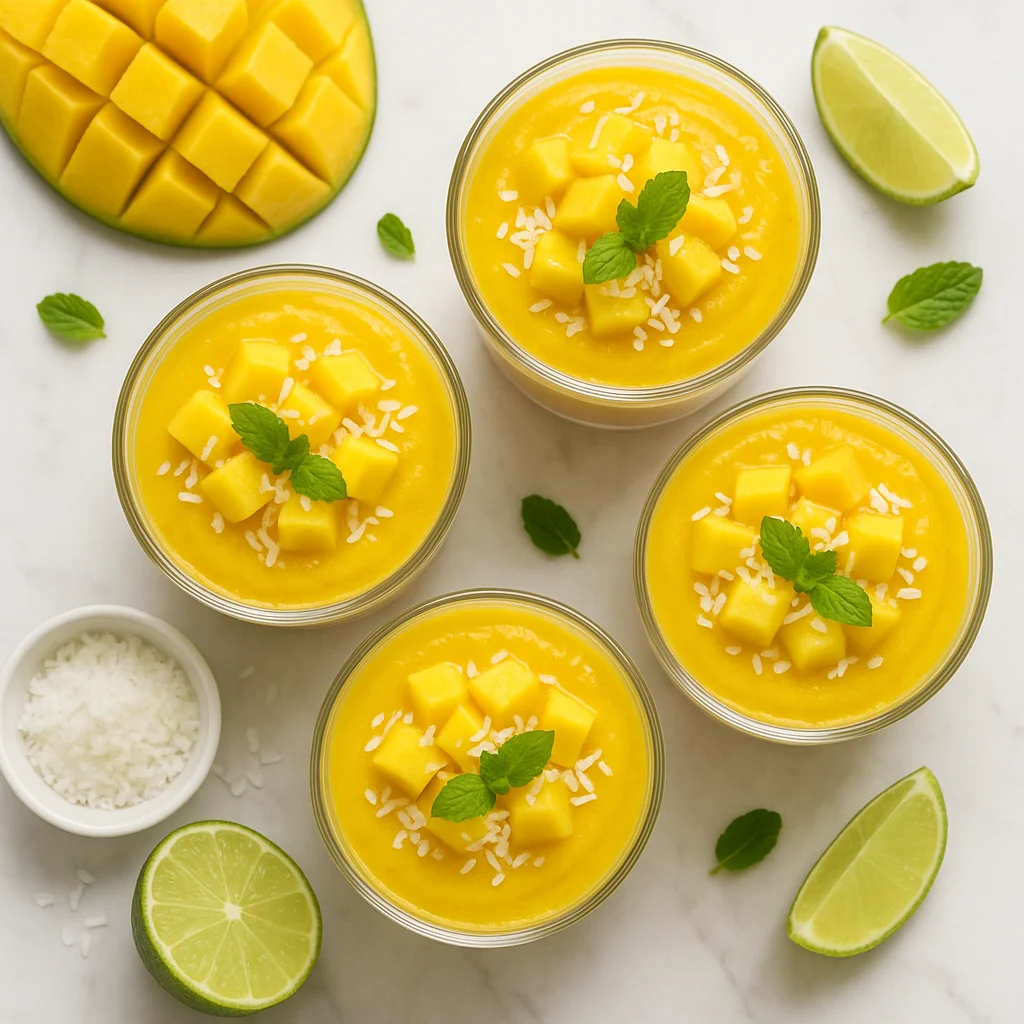
Creamy Mango Lime Coconut Cream Dessert Cups
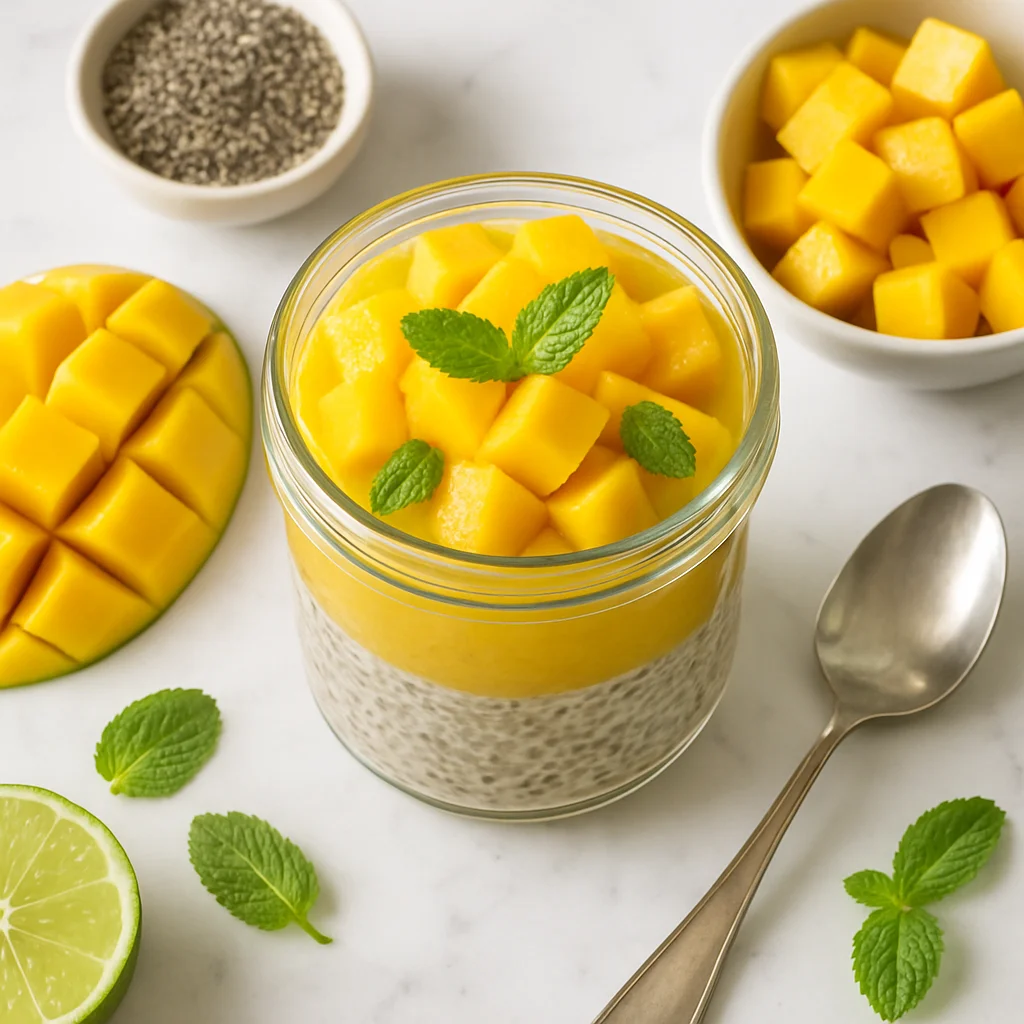
Mango Chia Pudding: A Healthy Summer Breakfast You'll Make on Repeat
Mango Cream Dessert with Coconut Milk (No Sugar, No Bake)