Honey Poached Figs with Whipped Ricotta and Toasted Walnuts
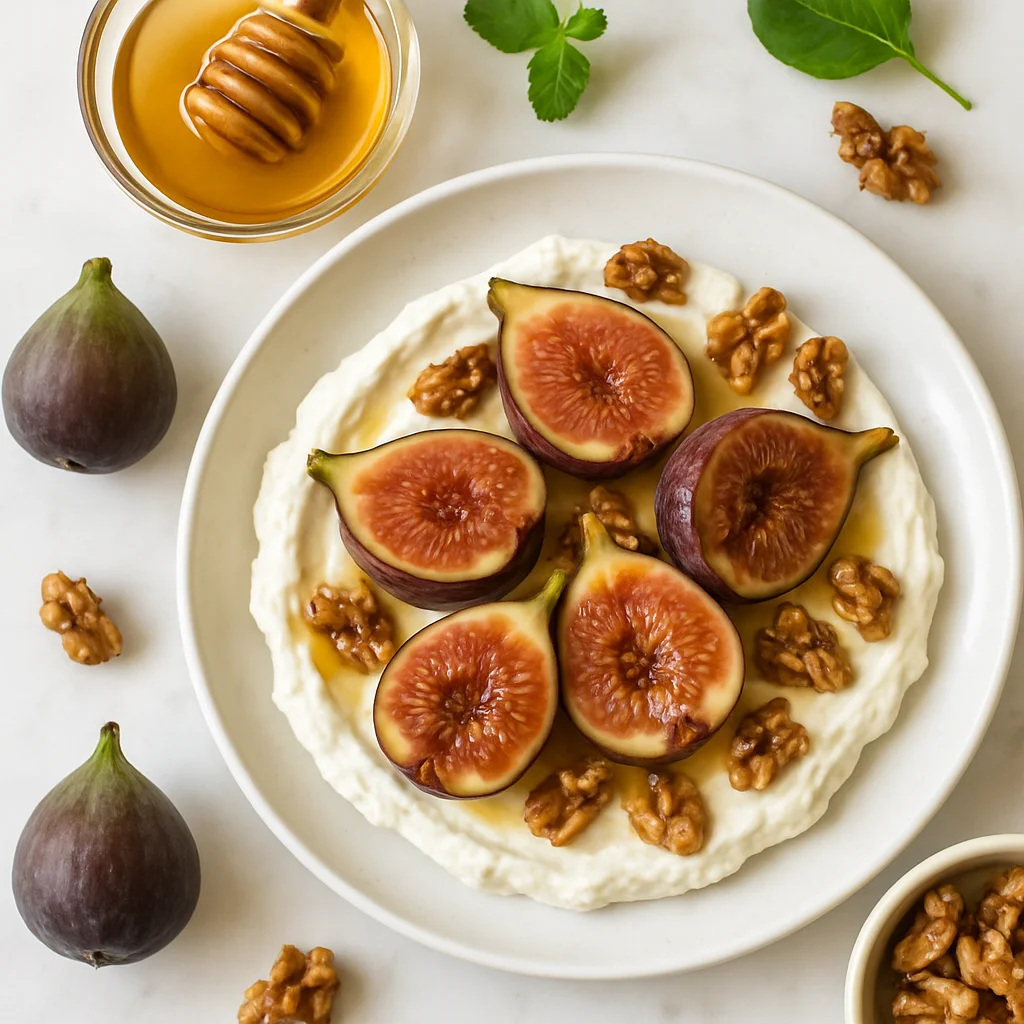
If you are looking for a dessert that feels genuinely indulgent without derailing your healthy eating goals, these honey poached figs with ricotta are exactly what you need. This recipe takes the classic combination of fresh figs and creamy ricotta and elevates it with a gentle poaching technique that deepens the natural sweetness of the figs while keeping added sugar to an absolute minimum. The result is a warm, jewel-toned dessert that looks like it came from a high-end restaurant but is quietly one of the most nutritious sweet treats you can put on your table.
Figs are one of nature's most underrated superfoods. They are naturally high in dietary fibre, particularly soluble fibre that supports digestive health and helps keep you feeling satisfied for longer. They also provide meaningful amounts of potassium, calcium, and magnesium, along with natural antioxidants including polyphenols. When you poach fresh figs gently in a light honey and spice syrup, their flesh becomes silky and tender, their natural sugars concentrate, and they take on a gorgeous deep colour that is genuinely beautiful on the plate.
Unlike traditional versions of this dish that call for generous amounts of honey, this recipe uses just one tablespoon of raw honey for the entire poaching liquid, allowing the figs to do the heavy lifting flavour-wise. Raw honey is used intentionally here because it retains beneficial enzymes and trace antioxidants that processed honey does not, and a little goes a very long way when combined with aromatic companions like a cinnamon stick, a strip of orange zest, and a small splash of balsamic vinegar.
The whipped ricotta base in this recipe is made with part-skim ricotta rather than full-fat, which shaves calories and saturated fat without sacrificing creaminess. A small amount of vanilla bean paste and a drizzle of lemon juice are whisked in to give the ricotta a bright, lightly sweet flavour that complements the warm poached figs beautifully. Part-skim ricotta is also a solid source of protein and calcium, making this dessert genuinely nourishing rather than just a treat.
Toasted walnuts finish the dish with a satisfying crunch and add heart-healthy omega-3 fatty acids, further boosting the nutritional profile. Walnuts are one of the best plant-based sources of alpha-linolenic acid, and their slightly bitter, earthy flavour creates a wonderful contrast to the sweet figs and creamy ricotta. A small scattering goes a long way, so the calorie contribution remains modest.
This recipe is naturally gluten-free, refined sugar-free, and egg-free, making it suitable for a wide range of dietary needs. It comes together in about 25 minutes, with most of that time being hands-off poaching, making it an ideal dinner party dessert or a special weekend treat that does not require hours in the kitchen.
One of the most appealing things about this recipe is its versatility. The poached figs can be served warm straight from the pan, at room temperature for a relaxed dinner party, or even slightly chilled over cold whipped ricotta in the warmer months. The flavour profile shifts subtly depending on how you serve it, which means one recipe gives you multiple experiences across different seasons.
The entire dish works brilliantly as a plated dessert for four people, or you can scale it up easily for a larger gathering. The poached figs can even be prepared a day ahead and stored in their syrup in the refrigerator, which actually deepens their flavour further. Just bring them to room temperature or warm them briefly before serving alongside freshly whipped ricotta.
If you have never poached fruit before, this is the ideal recipe to start with. The technique is simple, forgiving, and endlessly adaptable. The fragrant poaching liquid fills your kitchen with the scent of cinnamon, orange, and warm honey, which is reason enough to make this recipe on a cold evening. Serve it in shallow bowls or on small dessert plates for maximum visual impact, and do not skip the fresh thyme garnish if you can find it. The herbal note it adds against the sweet figs is subtle but genuinely special.
For a brunch-style twist inspired by similar recipes, you can also spoon the whipped ricotta onto thick slices of toasted sourdough or seeded rye bread and pile the warm poached figs on top, finishing with the reduced balsamic honey syrup and walnuts. It transforms this dessert into an extraordinary savoury-sweet brunch dish that works beautifully for weekend entertaining.
Whether you are serving this as a weeknight dessert, a sophisticated dinner party finale, a special brunch dish, or a healthy snack that actually satisfies a sweet tooth, these honey poached figs with ricotta deliver on every front. Beautiful, nourishing, and completely original, this is the kind of healthy dessert recipe that converts sceptics.
Ingredients
- 8 whole fresh figs (Black Mission or Brown Turkey variety work best; halved lengthwise. Choose figs that give slightly when gently pressed but still hold their shape — peak ripeness gives the best flavour and the figs will hold together during poaching.)
- 1 tablespoon raw honey (Plus a tiny extra drizzle for serving if desired. Raw honey retains trace enzymes and antioxidants that processed honey loses — look for it at health food stores or farmers markets. Manuka or wildflower honey both work beautifully here.)
- 180 ml water (About three-quarters of a cup. Using filtered water gives a cleaner-tasting syrup. For an even more aromatic result, substitute half the water with freshly squeezed orange juice.)
- 1 strip orange zest (Use a vegetable peeler to remove a wide strip, avoiding the white pith, which can make the syrup bitter. Unwaxed organic oranges are ideal as you are using the skin.)
- 1 whole cinnamon stick (Ceylon cinnamon has a softer, more nuanced flavour than Cassia cinnamon and is worth seeking out for this recipe if you can find it. Do not substitute with ground cinnamon as it will cloud the syrup.)
- 2 teaspoons balsamic vinegar (Use a good quality, slightly aged balsamic for best flavour. A cheap thin balsamic can taste sharp and harsh once reduced. Look for one labelled 'aged' or 'traditional style' — it should have a slightly syrupy consistency even before reducing.)
- 1 pod star anise (Optional but adds beautiful warmth and a subtle anise depth that complements figs particularly well. One pod is enough — more than one can overwhelm the other flavours.)
- 300 g part-skim ricotta cheese (Strained through a fine sieve for at least 10 minutes if very wet — this is the single most important step for achieving a light, fluffy whipped texture rather than a watery one. Use a good quality, fresh ricotta from the deli section if available rather than a long-life tub variety.)
- 1 teaspoon vanilla bean paste (Or the seeds of half a vanilla pod. Vanilla bean paste gives better flavour than vanilla extract here as it is more concentrated and you can see the beautiful vanilla specks in the finished ricotta. Avoid imitation vanilla essence.)
- 1 teaspoon fresh lemon juice (Freshly squeezed only — bottled lemon juice has a flat, slightly bitter taste that does not brighten the ricotta in the same way. This small amount is key to lifting the overall flavour of the whipped base.)
- 30 g raw walnut halves (Roughly chopped and lightly toasted in a dry pan for 2 to 3 minutes until fragrant. Toasting is essential — it activates the natural oils, dramatically deepening the flavour. Store your walnuts in the freezer between uses to keep them fresh and prevent the oils from going rancid.)
- 1 teaspoon fresh thyme leaves (Optional garnish; lemon thyme is especially good here as its citrus note ties together the orange zest in the syrup and the lemon in the ricotta. Strip the leaves from the stems just before serving so they stay fresh and fragrant.)
Instructions
- 1
Begin by making the poaching liquid. Combine the water, raw honey, orange zest strip, cinnamon stick, balsamic vinegar, and star anise in a small saucepan over medium heat. Stir gently to dissolve the honey and bring the liquid to a gentle simmer. Let it simmer for 3 minutes so the spices begin to infuse their flavour into the liquid.
Keep the heat at a gentle simmer rather than a rolling boil. You want the liquid fragrant and warm, not aggressively bubbling, which can break down the figs too quickly. If you want even more complexity, replace half the water with freshly squeezed orange juice — it makes the syrup richer and more vibrant in colour.
- 2
While the poaching liquid is warming, prepare the figs. Halve each fig lengthwise from stem to base. You should have 16 halves total. Check that your saucepan is wide enough to hold all the fig halves in a mostly single layer, or work in two batches.
Choose figs that are ripe but still have some firmness when gently pressed. Overripe figs will collapse during poaching and become mushy. If your figs are very large, you can quarter them instead of halving for more elegant plating and a slightly shorter cooking time.
- 3
Gently lower the fig halves cut-side down into the simmering poaching liquid. Reduce the heat to low, cover the pan with a lid slightly ajar, and poach the figs for 4 to 5 minutes. They are ready when they have softened and taken on a deeper colour but still hold their shape. Use a slotted spoon to carefully transfer them to a plate.
Do not stir the figs once they are in the liquid. Simply let them poach undisturbed to preserve their shape. If some figs are thicker than others, place them cut-side down first and check those larger ones a minute earlier to avoid overcooking.
- 4
Remove the cinnamon stick, star anise, and orange zest from the poaching liquid. Increase the heat to medium-high and allow the remaining liquid to reduce for 3 to 4 minutes until it thickens slightly into a light syrup. Remove from the heat and set aside. It will thicken a little more as it cools.
Watch the reducing syrup carefully as it can go from perfect to over-reduced very quickly at this stage. Swirl the pan rather than stirring. You are looking for a syrup that lightly coats the back of a spoon — it should be pourable, not thick like jam. It will continue to thicken as it cools, so pull it off the heat slightly earlier than you think.
- 5
While the syrup reduces, prepare the whipped ricotta. Add the strained part-skim ricotta to a medium bowl along with the vanilla bean paste and fresh lemon juice. Use a hand whisk or electric hand mixer to beat the mixture for about 90 seconds until it becomes noticeably lighter, smoother, and slightly fluffy.
If your ricotta is still a little grainy after whisking, transfer it to a blender and blend for 20 to 30 seconds. This produces a restaurant-smooth, almost mousse-like texture. A pinch of fine sea salt added at this stage might seem counterintuitive in a dessert, but it sharpens and elevates all the other flavours noticeably.
- 6
To serve, spoon a generous mound of whipped ricotta into the centre of each serving plate or shallow bowl. Arrange four poached fig halves around or on top of the ricotta. Drizzle the reduced honey balsamic syrup generously over the figs and ricotta. Scatter the toasted walnuts over the top and finish with a few fresh thyme leaves if using. Serve immediately while the figs are still warm.
For a dinner party presentation, warm the serving plates briefly in a low oven before plating so the dessert stays at the perfect temperature a little longer. Use the back of a spoon to spread the ricotta in a swooping motion rather than a tidy circle — it looks more elegant and gives the figs a natural resting place. A few pomegranate seeds scattered alongside the thyme leaves add a jewel-like finish if you have them.
Nutrition per serving
178kcal
Calories
9g
Protein
22g
Carbs
7g
Fat
3g
Fibre
16g
Sugar
72mg
Sodium
Pro Tips
- ✓
Toast your walnut pieces in a small dry frying pan over medium heat for just 2 to 3 minutes, shaking the pan frequently. Watch them closely, they go from perfectly golden and fragrant to burnt in under a minute. Toasting activates their natural oils and dramatically improves both flavour and aroma. Let them cool on a piece of baking paper before adding to the dish so they stay crisp rather than steaming.
- ✓
Strain your ricotta through a fine mesh sieve or a piece of cheesecloth for at least 10 minutes before whipping. This step is non-negotiable for the best texture. Removing excess moisture makes the whipped ricotta noticeably lighter and prevents it from becoming watery or sliding off the plate once the warm figs are placed on top. If you are in a hurry, press the ricotta gently against the sieve with a spoon to speed up the draining.
- ✓
If fresh figs are out of season, this recipe works beautifully with dried figs. Rehydrate them in warm water for 20 minutes first, then poach as directed, reducing the poaching time to just 2 to 3 minutes as dried figs soften considerably faster. Dried figs actually produce a richer, more intensely flavoured syrup, so they are a worthy substitute rather than just a compromise.
- ✓
The reduced poaching syrup is delicious far beyond this recipe. Store any leftovers in a small jar in the fridge and use it drizzled over morning porridge, natural yoghurt, a cheese board, or even a simple bowl of vanilla ice cream. It keeps for up to one week refrigerated and makes a lovely edible gift when poured into a small bottle.
- ✓
For an impressive brunch presentation, spread the freshly whipped ricotta generously onto thick slices of toasted sourdough or seeded rye bread, pile the warm poached figs on top, then drizzle with the balsamic honey syrup and scatter over the walnuts. This transforms the dessert into a stunning savoury-sweet brunch toast that is one of the easiest entertaining dishes you will ever make.
- ✓
For a beautiful colour contrast on the plate, use a mix of green Kadota and black Mission figs if both are available at your market. The different varieties also have subtly different flavour profiles, Mission figs are jammy and rich, while Kadota figs are milder and slightly honey-like, and the combination adds genuine complexity and visual drama to the finished dish.
Frequently Asked Questions
Variations
- •
Cardamom and Rose Water Poached Figs
Replace the cinnamon stick and star anise with 4 lightly crushed green cardamom pods in the poaching liquid, and add half a teaspoon of rose water to the whipped ricotta. The floral, fragrant result is elegant and works beautifully as a Middle Eastern-inspired dessert plating.
- •
Vanilla and Earl Grey Poached Figs
Brew a strong cup of Earl Grey tea and use it in place of plain water in the poaching liquid. The bergamot in the tea adds a perfumed citrus note that pairs wonderfully with figs. Add a small piece of vanilla pod to the poaching liquid instead of the star anise.
- •
Dairy-Free Version with Coconut Cream Ricotta
For a completely dairy-free version, substitute the part-skim ricotta with a blend of thick coconut cream and silken tofu blended until very smooth. Add the same vanilla and lemon juice. The result has a similar creamy texture and is naturally vegan while keeping the calorie count comparable.
- •
Savoury-Sweet Version with Blue Cheese and Thyme
For a sophisticated cheese board or starter version, replace the whipped ricotta with a small amount of crumbled mild blue cheese or goat cheese quenelle. The salty, tangy cheese against the sweet honey poached figs is a classic flavour combination that works brilliantly as an appetiser or light starter.
Substitutions
- •Raw honey → Pure maple syrup (Use the same quantity. Maple syrup is vegan-friendly and has a slightly different but equally delicious flavour profile with the figs. It has a similar calorie count to honey.)
- •Fresh figs → Dried figs, rehydrated (Soak dried figs in warm water for 20 minutes before using. Reduce poaching time to 2 to 3 minutes as they soften faster. Available year-round, making this a great off-season option.)
- •Part-skim ricotta → Low-fat cottage cheese, blended (Blend low-fat cottage cheese in a food processor for 60 seconds until completely smooth before adding vanilla and lemon juice. The texture and protein content are very similar and it is often more affordable.)
- •Walnuts → Toasted pumpkin seeds (Use the same weight for a nut-free option. Toast in a dry pan for 2 to 3 minutes. Pumpkin seeds provide a satisfying crunch and are rich in zinc and magnesium.)
- •Balsamic vinegar → Pomegranate molasses (Use one teaspoon of pomegranate molasses in place of the two teaspoons of balsamic vinegar. It adds a similar depth and slight tartness with a beautiful colour contribution to the syrup.)
- •Fresh thyme → Fresh mint leaves (A few torn fresh mint leaves make an equally beautiful garnish with a brighter, cooler flavour contrast. Micro basil is another lovely option if you can find it.)
🧊 Storage
Store leftover poached figs and syrup in an airtight container in the refrigerator for up to 2 days. Keep the whipped ricotta in a separate covered container in the fridge for up to 2 days. Do not freeze the poached figs as they will become watery upon thawing. Re-whip the ricotta briefly with a fork before serving. Warm the figs gently in a small saucepan over low heat or allow to come to room temperature before serving.
📅 Make Ahead
Both components of this dessert can be fully prepared up to 24 hours ahead, making it ideal for dinner parties. Prepare the poached figs and reduce the syrup as directed, then cool completely and refrigerate in their syrup. Prepare and refrigerate the whipped ricotta separately. When ready to serve, warm the figs gently or serve at room temperature, give the ricotta a brief re-whip, then plate and garnish as directed.
More Mediterranean Diet Desserts Recipes

Mediterranean Walnut Date Energy Balls with Orange Zest and Cardamom
Mediterranean Fig Honey Bites No Bake
Layered Greek Yogurt Honey Walnut Parfait with Berries and Chia