Healthy Peanut Butter Cake Gluten Free with Oat Flour and Honey
If you have been searching for a healthy peanut butter cake gluten free recipe that actually tastes like a real celebration cake, this is it. No dense, crumbly texture. No strange aftertaste from obscure flour blends. Just a genuinely moist, golden cake packed with peanut butter flavour, sweetened with honey instead of refined sugar, and built on a base of certified gluten free oat flour. This recipe was created for anyone managing gluten sensitivity, anyone trying to cut back on processed sugar, or simply anyone who wants a slice of something deeply satisfying without the post-dessert guilt. It works beautifully as a birthday cake, a weekend bake, or an after-school treat that you can feel good about serving.
The ingredient list is short and purposeful. Certified gluten free oat flour forms the backbone of this cake. It is naturally higher in soluble fibre than many alternative flours, and it gives the crumb a soft, slightly nutty texture that pairs brilliantly with peanut butter. Speaking of peanut butter, this recipe uses natural, unsweetened peanut butter with no added oils or sugar, which means you are getting genuine protein and healthy monounsaturated fats rather than a processed spread. Raw honey steps in as the primary sweetener. It is lower on the glycaemic index than white sugar and brings a gentle floral warmth to the batter. Greek yogurt replaces butter almost entirely, keeping the cake incredibly moist while slashing saturated fat and adding a quiet tanginess that balances the richness of the peanut butter. Two eggs bind everything together and contribute to a beautifully tender crumb. A small amount of coconut sugar in the frosting keeps things refined-sugar-free while still delivering that caramel-like sweetness you want from a proper icing.
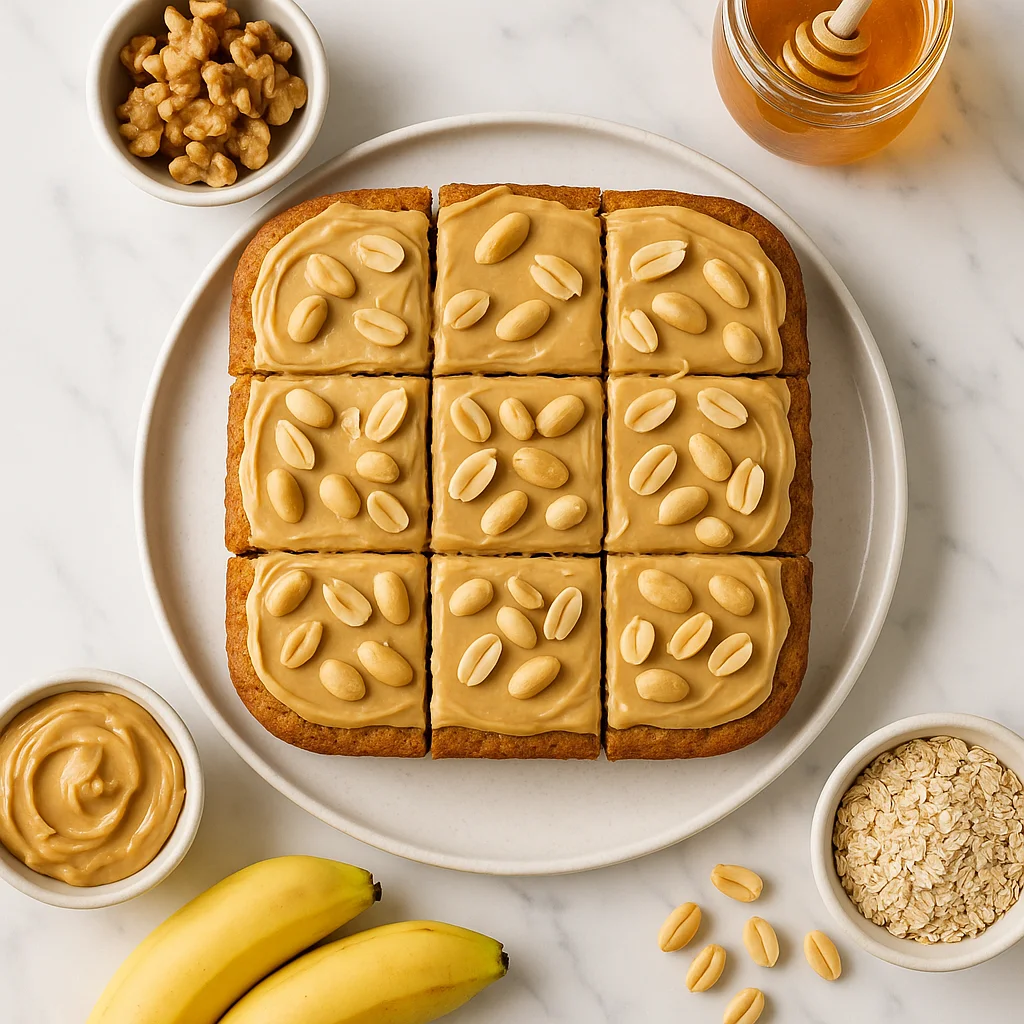
The texture here is the real surprise. Because oat flour holds moisture so well and the Greek yogurt keeps everything tender, each slice has a soft, pillowy crumb that stays fresh for days. The frosting is a simple whipped peanut butter and Greek yogurt blend, stirred together in minutes, with just enough coconut sugar to make it taste indulgent. Spread it generously over the cooled cake and finish with a scatter of lightly salted, dry-roasted peanuts for crunch. That contrast of creamy frosting and crunchy peanuts on top is genuinely addictive. For serving, a small square goes beautifully alongside a black coffee or a mug of chamomile tea. Slice it into 12 modest portions for a lighter treat, or cut 9 bigger squares if this is standing in as a proper celebration cake. Both are delicious options.
From a nutritional standpoint, this cake punches well above its weight. Each serving comes in at around 215 calories, with roughly 9 grams of protein thanks to the peanut butter, eggs and Greek yogurt combination. The oat flour contributes around 2 grams of dietary fibre per slice, which is notably higher than cakes made with white rice flour or tapioca starch. The total sugar per slice sits at approximately 8 grams, compared to 20 to 28 grams you would typically find in a conventional frosted peanut butter cake. There is no refined white flour, no butter, no white sugar and no artificial additives anywhere in this recipe. It is naturally gluten free, refined sugar free, and can easily be made dairy free by swapping the Greek yogurt for a thick coconut yogurt. For anyone following a higher protein lifestyle, this cake is a genuinely smart choice for satisfying a sweet craving without derailing your daily targets.
Ingredients
- 2 cups certified gluten free oat flour (spooned and levelled)
- 1.5 tsp baking powder (gluten free certified)
- 0.5 tsp baking soda
- 0.3 tsp fine sea salt
- 0.8 cup natural unsweetened peanut butter (smooth, no added sugar or oil, stirred well)
- 0.5 cup raw honey (or pure maple syrup for vegan version)
- 2 large eggs (room temperature)
- 0.8 cup plain low-fat Greek yogurt (full fat works too for extra richness)
- 0.3 cup unsweetened almond milk (or any milk of choice)
- 1 tsp pure vanilla extract
- 0.5 cup natural unsweetened peanut butter (for the frosting)
- 0.5 cup plain low-fat Greek yogurt (for the frosting, thick and cold)
- 3 tbsp coconut sugar (for the frosting, blended to a fine powder if possible)
- 1 tsp pure vanilla extract (for the frosting)
- 3 tbsp dry-roasted salted peanuts (roughly chopped, for topping)
Instructions
- 1
Preheat your oven to 175C (350F). Lightly grease a 9x9 inch square baking pan with a little coconut oil and line the base with baking paper. This prevents sticking and makes lifting the finished cake much easier.
If you only have a round 9-inch cake tin, that works just as well. Adjust your slicing accordingly.
- 2
In a large mixing bowl, whisk together the gluten free oat flour, baking powder, baking soda and fine sea salt until evenly combined. Whisking rather than sifting ensures the leavening agents are distributed throughout the flour without any clumping.
- 3
In a separate medium bowl, whisk together the peanut butter, honey, eggs, Greek yogurt, almond milk and vanilla extract until the mixture is completely smooth and glossy. This usually takes about 60 to 90 seconds of vigorous whisking.
If your natural peanut butter is very stiff, warm it gently in the microwave for 15 seconds before measuring. It will incorporate far more easily into the wet mixture.
- 4
Pour the wet ingredients into the bowl with the dry ingredients. Fold gently using a spatula until just combined. Stop as soon as you can no longer see streaks of flour. Overmixing oat flour batter can make the cake dense, so a light hand is your best friend here.
- 5
Transfer the batter into your prepared pan and smooth the top with your spatula. The batter will be thick but pourable. Tap the pan gently on the counter two or three times to release any large air bubbles.
- 6
Bake for 25 to 28 minutes, until the top is golden and a toothpick inserted into the centre comes out clean or with just a few moist crumbs attached. Start checking at the 24-minute mark as ovens vary.
Do not open the oven door before 22 minutes or the cake may sink slightly in the centre.
- 7
Remove from the oven and allow the cake to cool in the pan for 10 minutes, then lift it out onto a wire rack using the baking paper. Allow it to cool completely before frosting. A warm cake will melt the yogurt frosting immediately.
- 8
While the cake cools, make the frosting. Combine the peanut butter, Greek yogurt, powdered coconut sugar and vanilla extract in a bowl. Stir vigorously until the mixture is completely smooth and thick. Taste and adjust sweetness if needed.
Chilling the frosting for 15 to 20 minutes before spreading makes it firmer and easier to work with.
- 9
Once the cake is fully cool, spread the frosting evenly over the top using an offset spatula or the back of a spoon. Scatter the roughly chopped dry-roasted salted peanuts over the frosting, pressing them in very gently so they stick.
- 10
Slice into 12 equal squares and serve. For the cleanest cuts, run a sharp knife under hot water, wipe it dry between each cut, and press straight down rather than dragging through the frosting.
Nutrition per serving
215kcal
Calories
9g
Protein
22g
Carbs
11g
Fat
2g
Fibre
8g
Sugar
185mg
Sodium
Pro Tips
- ✓
Always use certified gluten free oat flour to keep this recipe safe for anyone with coeliac disease or serious gluten sensitivity. Standard oat flour is often cross-contaminated.
- ✓
Natural peanut butter with oil separation is ideal. Give it a thorough stir before measuring so the oil is evenly distributed throughout the jar.
- ✓
Do not swap Greek yogurt for regular yogurt. Greek yogurt is much thicker and contributes to the structure of both the cake and the frosting.
- ✓
Room temperature eggs incorporate into the batter more smoothly and help the cake rise more evenly in the oven.
- ✓
For a deeper golden top, position your oven rack in the centre rather than the top third of the oven.
- ✓
Blending coconut sugar into a fine powder in a small blender or spice grinder before adding it to the frosting creates a smoother, less grainy texture.
Frequently Asked Questions
Variations
- •
Chocolate Chip Peanut Butter Cake
Fold 3 tablespoons of dark chocolate chips (70% cocoa or higher) into the batter before baking. The bittersweet chocolate works beautifully against the natural sweetness of the honey and peanut butter, and adds a small antioxidant boost.
- •
Banana Peanut Butter Cake
Replace the Greek yogurt in the cake batter with half a cup of mashed very ripe banana. This reduces the need for honey, so you can cut the honey back to one third of a cup. The banana adds natural sweetness, extra potassium and a subtle fruity note.
- •
Peanut Butter and Jam Layer Cake
Split the batter between two greased 8-inch round cake pans and bake for 18 to 20 minutes. Once cooled, spread a thin layer of no-added-sugar raspberry or strawberry jam on one layer before stacking and frosting. A classic combination made genuinely healthy.
- •
Dairy Free Peanut Butter Cake
Swap all Greek yogurt in both the cake and frosting for an equal quantity of unsweetened coconut yogurt. Choose a thick, full-fat variety for the best results. Use almond milk or oat milk in the batter as directed.
Substitutions
- •Certified gluten free oat flour → Almond flour (Use 1.75 cups and reduce yogurt to 0.5 cup. The cake will be denser and higher in fat but lower in carbohydrates.)
- •Raw honey → Pure maple syrup (Use an equal quantity. The flavour is slightly more caramel-like. This makes the recipe fully vegan.)
- •Plain Greek yogurt → Thick unsweetened coconut yogurt (Use in equal amounts for a dairy free version. Choose a full-fat variety for the best moisture and richness in both the cake and frosting.)
- •Eggs → Flax eggs (Mix 1 tablespoon ground flaxseed with 3 tablespoons water per egg. Rest for 5 minutes. The cake will be slightly denser but remains moist and fully vegan.)
- •Natural peanut butter → Almond butter or sunflower seed butter (Both work in equal quantities. Sunflower seed butter is ideal for nut-free households, though it can give the crumb a slightly greenish tint due to a natural reaction with baking soda.)
- •Coconut sugar → Medjool dates blended to a paste (Use 3 tablespoons of date paste in the frosting for a whole-food sweetener option. The frosting will be slightly darker in colour but deeply sweet and caramel-like.)
🧊 Storage
Store the frosted cake in an airtight container in the refrigerator for up to 4 days. The yogurt-based frosting must be kept chilled. Bring individual slices to room temperature for 10 minutes before serving for the best texture and flavour.
📅 Make Ahead
The unfrosted cake can be baked up to 2 days in advance and stored wrapped tightly at room temperature. The frosting can be made up to 24 hours ahead and kept covered in the refrigerator. Assemble just before serving or up to a day in advance if storing in the fridge.
More Peanut Butter Desserts Recipes
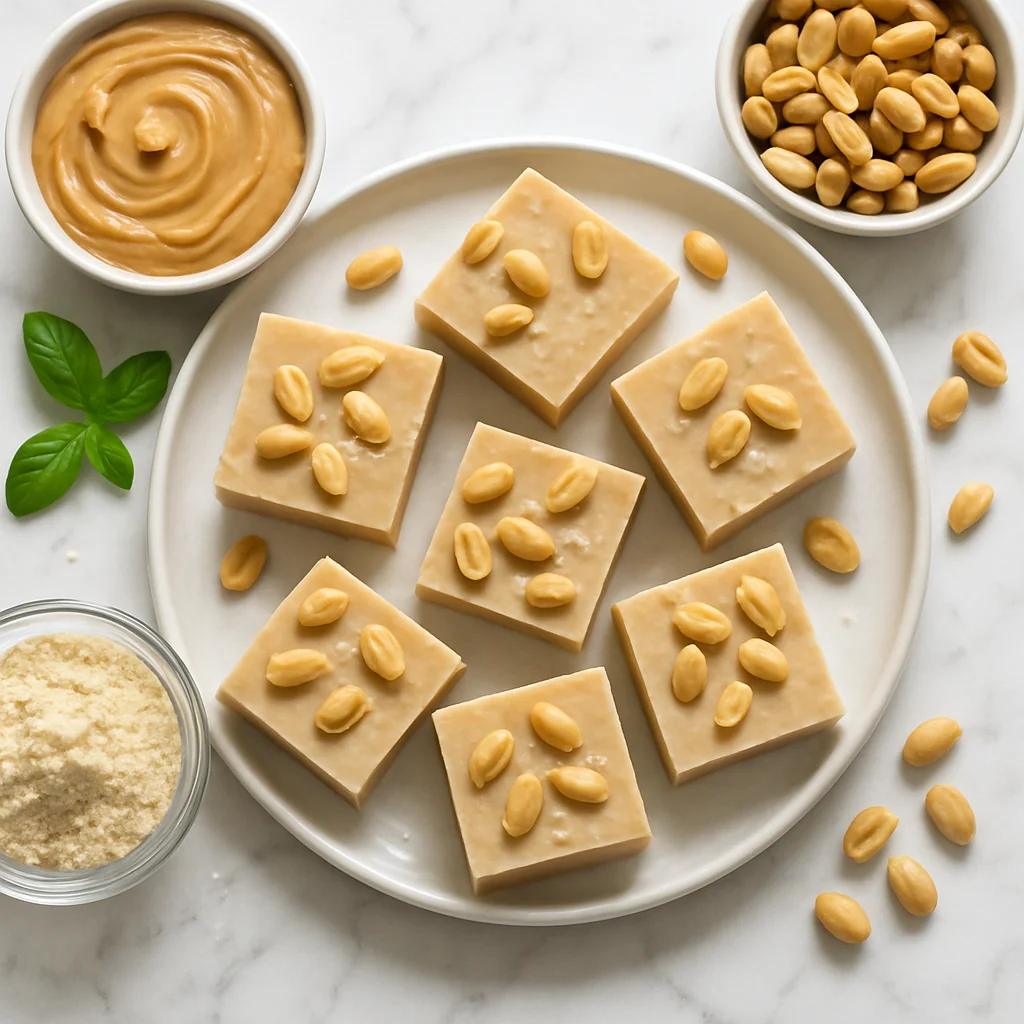
Creamy Vegan Peanut Butter Fudge No Bake (High Protein, Low Sugar)
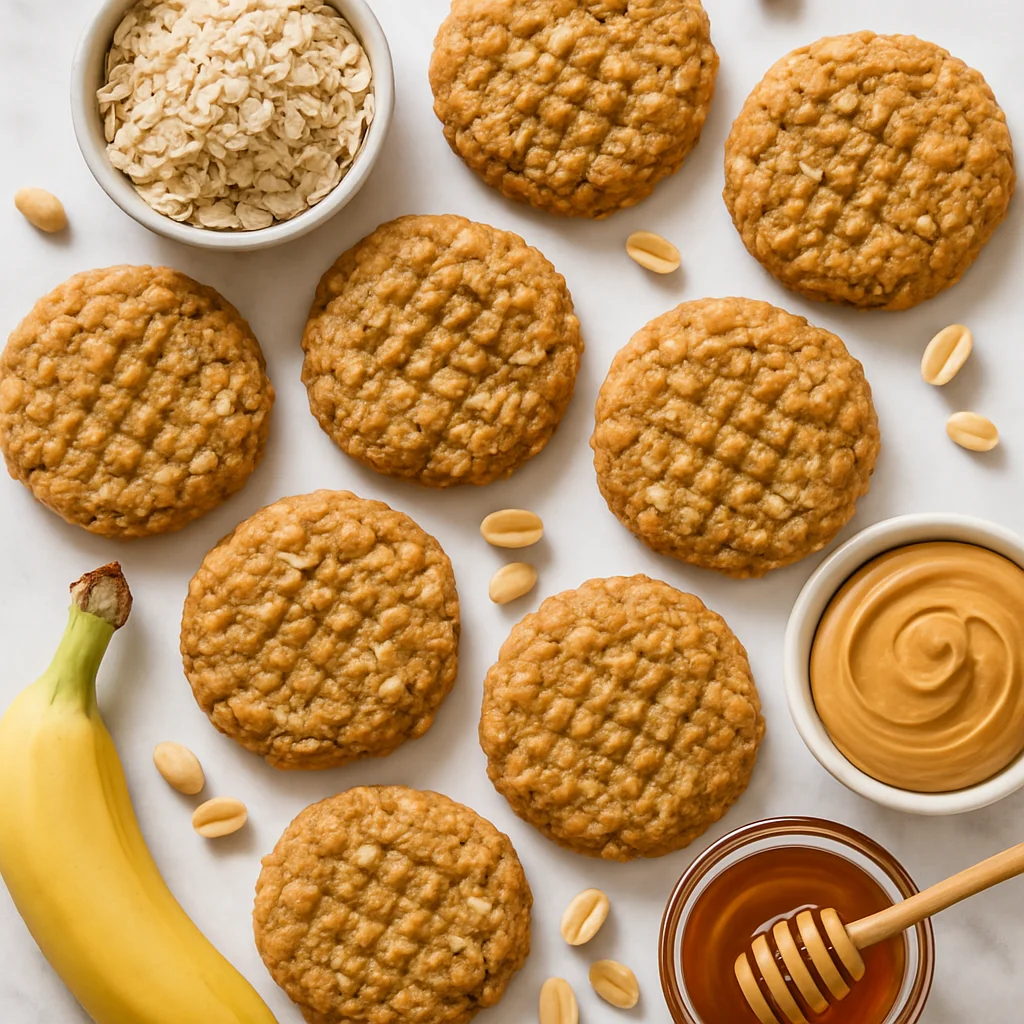
Healthy Peanut Butter Oatmeal Cookies Chewy and Naturally Sweetened
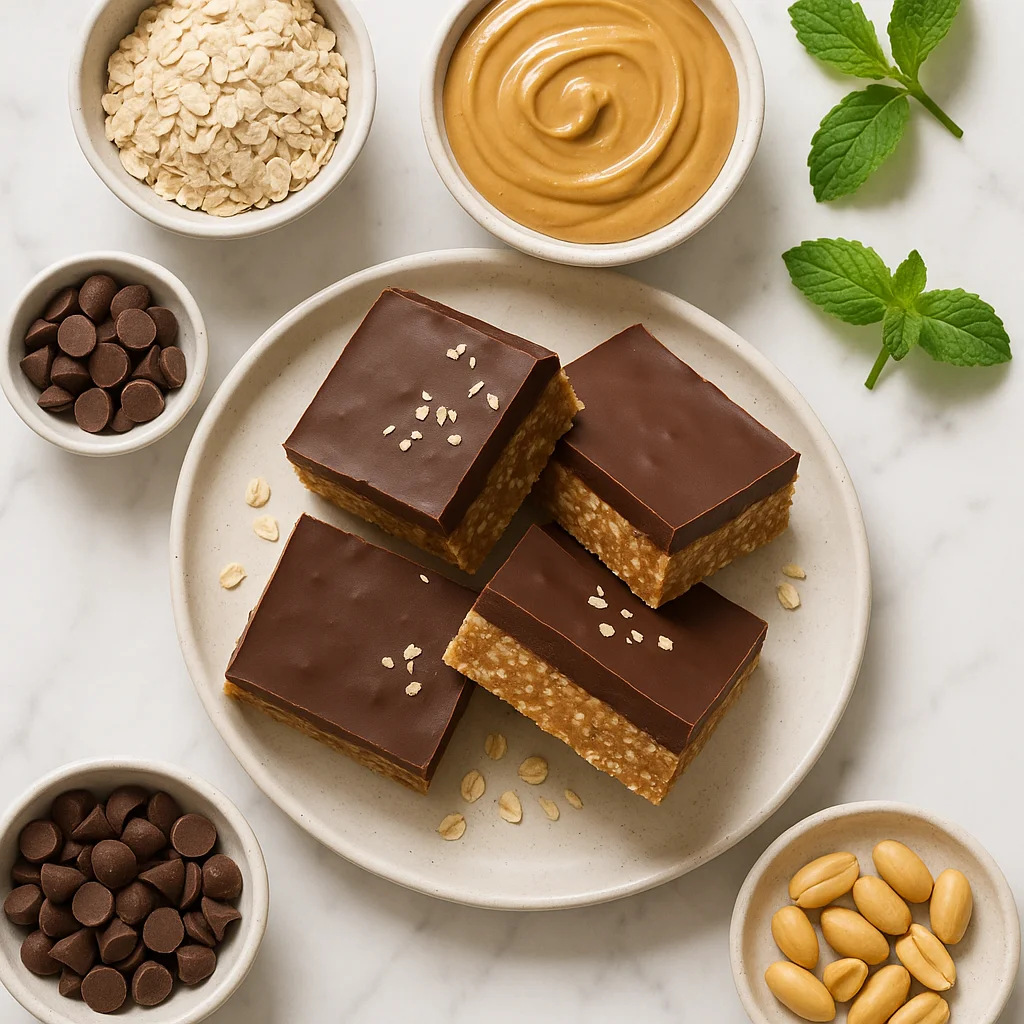
No Bake Chocolate Peanut Butter Bars (Healthy, High Fibre)