Gulab Jamun Recipe Easy Homemade (Healthier Baked Version)
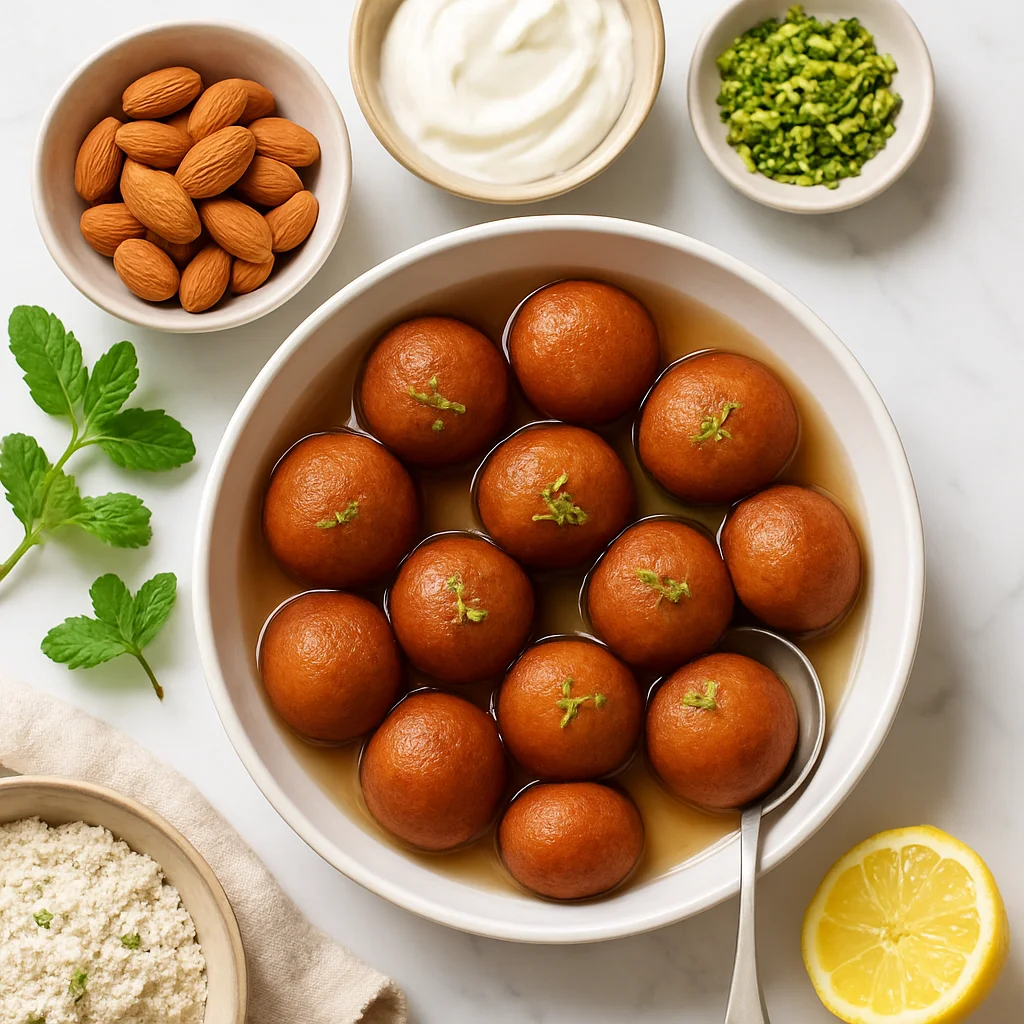
Rose water is the ingredient most people forget, and it is the ingredient that makes gulab jamun what it is. The name itself is a clue: gulab means rose in several South Asian languages, and jamun refers to a dark berry whose colour and size the fried milk dumplings are thought to resemble. The rose water soaked into the warm sugar syrup is what gives gulab jamun its distinctive floral perfume, and without it you have fried milk dough in a sweet syrup, which is good but not the same thing. This baked version avoids the deep fryer, reducing both the oil content and the difficulty level considerably. The texture is slightly less crisp on the outside but the syrup-soaking produces the same yielding, fragrant interior.
Why this recipe works
The dough is made from milk powder, a small amount of plain flour, a little ghee and enough milk to bring it together into a soft, pliable ball. Milk powder gives the finished dumpling the characteristic milky richness and slight density that makes gulab jamun different from an ordinary fried dough ball. Baking rather than frying means less oil is absorbed, and the slow soak in warm sugar syrup after baking compensates for the slightly less caramelised exterior by infusing flavour throughout. The rose water is added to the syrup, not the dough, and needs to be added after the syrup cools slightly to preserve the volatile aromatic compounds that make it smell so distinctively good.
Getting it right
Roll the dough balls very smoothly with no cracks on the surface. Cracks allow the syrup to penetrate unevenly and cause the dumplings to break apart during soaking. Smooth, even surface tension on each ball is the technical goal.
Soak the baked gulab jamun in warm syrup for at least thirty minutes before serving. The full soaking time is essential for the flavour and texture the dish should have. Rushed gulab jamun tastes like dry cake dipped briefly in sugar water.
Common mistakes
Making the dough balls too large means they do not soak through evenly and the centre remains dense and unsaturated. Keep them small, about the size of a large marble.
Using too much flour in the dough makes the finished dumpling tough and bread-like rather than soft and yielding.
Substitutions
Cardamom pods can replace or supplement the rose water in the syrup for a different but equally aromatic result. Saffron threads steeped in a tablespoon of warm water and added to the syrup produce a beautiful golden colour and a subtle depth of flavour.
Serving suggestion
Serve warm in a small bowl with a little syrup spooned over. A scoop of vanilla ice cream alongside, if not keeping this dairy-free, turns it into an occasion dessert. Also excellent at room temperature, where the syrup has fully settled and the flavour is at its most developed.
Ingredients
- 100 g fine semolina (also called sooji or rava)
- 60 g chickpea flour (besan, sifted)
- 1 tsp baking powder
- 120 g full-fat Greek yogurt (at room temperature)
- 2 tbsp whole milk (add gradually as needed)
- 1 tsp ghee or melted coconut oil (for greasing and dough richness)
- 1 tsp ground cardamom (for the dough)
- 200 ml water (for the syrup)
- 80 g coconut sugar (or raw cane sugar)
- 4 whole green cardamom pods (lightly crushed)
- 1 small pinch saffron strands (soaked in 1 tbsp warm water)
- 1 tsp rose water (added at the end of syrup cooking)
- 2 tbsp crushed unsalted pistachios (to garnish)
- 1 tbsp dried edible rose petals (optional, to garnish)
Instructions
- 1
Preheat your oven to 190 degrees Celsius (375 F). Lightly grease a small baking tray with a tiny amount of ghee or coconut oil and set aside.
Use a tray with a lip so the balls do not roll around while baking.
- 2
In a medium mixing bowl, combine the sifted chickpea flour, fine semolina, baking powder and ground cardamom. Stir well to distribute everything evenly.
Sifting the chickpea flour removes any lumps and gives you a smoother final dough.
- 3
Add the Greek yogurt and ghee to the dry ingredients. Mix gently with a fork until a rough dough forms. Add the milk one tablespoon at a time until the dough just comes together. It should be soft and slightly sticky but hold its shape when rolled.
Do not overwork the dough or the balls can turn dense. Mix only until combined.
- 4
Let the dough rest for 10 minutes at room temperature. This allows the semolina to absorb the moisture fully and makes the dough easier to shape.
- 5
Divide the dough into 16 equal portions, roughly 15 to 16 grams each. Roll each portion between your palms into a smooth ball with no cracks. Cracks can cause the balls to break apart in the syrup.
If the dough sticks to your hands, rub a tiny drop of ghee on your palms before rolling.
- 6
Place the balls on the prepared baking tray, spacing them slightly apart. Bake for 18 to 22 minutes until they turn a deep golden brown all over. Rotate the tray halfway through baking for even colour.
They should look darker than you might expect. A deep golden colour means a better flavour and texture once soaked.
- 7
While the balls bake, make the syrup. Combine the water, coconut sugar and crushed cardamom pods in a small saucepan over medium heat. Stir until the sugar dissolves, then let it simmer gently for 5 to 6 minutes until it thickens very slightly. Add the saffron water and stir to combine.
The syrup should be thin enough to soak into the balls easily. If it looks too thick, add a splash more water.
- 8
Remove the syrup from the heat and stir in the rose water. Let it cool for 2 minutes. The syrup should still be warm but not boiling when you add the baked balls.
- 9
Transfer the freshly baked gulab jamun balls directly into the warm syrup. Gently spoon syrup over the top of each ball. Cover the pan loosely with a lid or foil and allow the balls to soak for at least 30 minutes.
The balls will absorb the syrup and plump up noticeably as they soak. Do not rush this step.
- 10
Serve warm or at room temperature, garnished with crushed pistachios and dried rose petals. Spoon a little extra syrup from the pan over each portion when plating.
Gently warming them in the pan for 2 minutes before serving brings out the fragrance beautifully.
Nutrition per serving
118kcal
Calories
3.8g
Protein
19.2g
Carbs
3.1g
Fat
1.4g
Fibre
9.6g
Sugar
72mg
Sodium
Pro Tips
- ✓
Rest the dough for the full 10 minutes. Skipping this step leads to crumbly balls that crack during rolling.
- ✓
Bake until deeply golden. Under-baked balls will not absorb the syrup properly and can stay dense in the centre.
- ✓
Use warm syrup, not hot and not cold. Warm syrup absorbs gradually and evenly into the balls.
- ✓
Make the syrup while the balls bake so the timing lines up perfectly.
- ✓
Rolling the balls with slightly oiled hands prevents sticking and gives a smoother, crack-free surface.
- ✓
Store any leftover syrup and drizzle it over yogurt or oatmeal the next morning.
Frequently Asked Questions
Variations
- •
Chocolate Cardamom Gulab Jamun
Replace 15g of the chickpea flour with raw cacao powder for a chocolate-spiced twist. The syrup gains a lovely depth when paired with the cacao and cardamom combination.
- •
Orange Blossom Gulab Jamun
Swap the rose water in the syrup for orange blossom water and add a small strip of fresh orange zest to the simmering syrup. A brighter, more floral flavour profile that works beautifully in summer.
- •
Stuffed Gulab Jamun
Press a tiny piece of pitted Medjool date or a single crushed pistachio into the centre of each ball before rolling closed. The hidden filling adds a lovely surprise texture inside each piece.
Substitutions
- •Greek yogurt → Plain coconut yogurt (Use the same quantity. The balls will be slightly softer in texture but still absorb the syrup well. Suitable for dairy-free diets.)
- •Coconut sugar → Raw cane sugar or jaggery powder (Jaggery gives a more traditional molasses-forward flavour. Use the same quantity as coconut sugar.)
- •Fine semolina → Fine rice flour (This makes the recipe gluten-free. The texture is slightly more tender. Avoid coarse rice flour for best results.)
- •Ghee → Melted coconut oil (Works well as a vegan alternative. The flavour is slightly different but still warm and rich.)
- •Whole milk → Oat milk or almond milk (Use unsweetened varieties. The dough behaves almost identically. Add gradually as the dough may need slightly less liquid.)
🧊 Storage
Store the gulab jamun in their syrup in an airtight container in the refrigerator for up to 4 days. Reheat gently in a small saucepan over low heat for 2 to 3 minutes before serving, or enjoy at room temperature.
📅 Make Ahead
You can bake the balls up to one day ahead and store them in an airtight container at room temperature. Make the syrup fresh on the day of serving, then soak the balls for 30 minutes before eating. Alternatively, the fully soaked gulab jamun actually taste better the next day as the flavours develop overnight in the syrup.
More Indian Desserts Recipes
Healthy Oat and Almond Ladoo Recipe: Homemade Indian Sweet with No Refined Sugar

Mango Barfi Recipe with Fresh Mango Puree and Coconut Sugar

Healthy Barfi Indian Milk Fudge Recipe with Coconut Sugar and Cardamom