Healthier Empanadas de Cajeta Mexican Dessert Pastry with Whole Wheat Dough
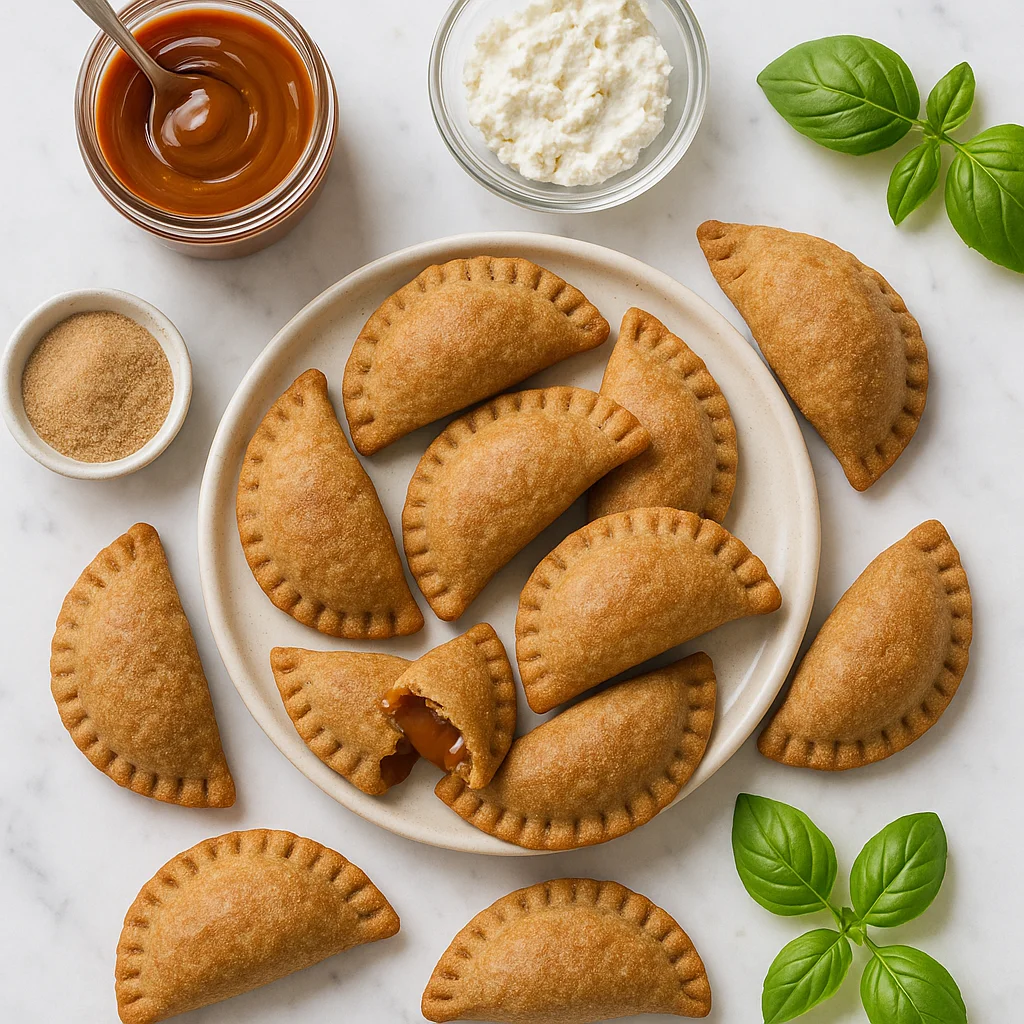
Cajeta is Mexico's version of dulce de leche: a slow-cooked goat milk caramel that is thicker, tangier and more complex than the Argentine version made with cow milk. It is used throughout Mexican confectionery and dessert pastries, most beautifully in empanadas de cajeta, where it is folded inside a crisp, lard-based pastry and baked or fried until golden. This healthier version uses a whole wheat pastry dough made with coconut oil rather than lard, which lightens the fat profile while keeping the pastry tender and pliable. The cajeta filling is made with a smaller amount of coconut sugar and a longer cook time to develop depth without excess sweetness.
Why this recipe works
Whole wheat flour in the pastry adds fibre and a subtle nuttiness that actually complements the caramel filling rather than competing with it. Coconut oil produces a flakier pastry than you might expect from a non-lard fat, because its solid state at room temperature works similarly to cold butter or lard in creating layers. The cajeta filling needs time and patience: slow cooking at a low heat with constant stirring develops the deep caramel flavour without burning. A small amount of vanilla and a pinch of salt in the filling are the additions that take it from sweet to genuinely complex.
Getting it right
Roll the pastry dough thinly, to about three millimetres, for the best crisp-to-filling ratio. Thick pastry overwhelms the filling and does not bake through evenly.
Seal the edges of each empanada firmly, pressing with a fork. The cajeta filling is liquid when warm and will leak out through any gaps during baking, burning on the tray.
Common mistakes
Overfilling causes leaking and makes the edges difficult to seal properly. A small tablespoon of filling per empanada is sufficient when the pastry is rolled thinly.
Not chilling the assembled empanadas before baking allows the pastry to shrink back and thin patches to appear. Twenty minutes in the fridge before baking produces a more stable result.
Substitutions
Store-bought dulce de leche can replace homemade cajeta if time is short, though the flavour is less complex. Peanut butter mixed with a small amount of maple syrup makes an accessible filling that requires no cooking. Pumpkin puree spiced with cinnamon creates a different but equally satisfying seasonal version.
Serving suggestion
Serve warm, dusted with a light amount of cinnamon sugar and accompanied by a small pot of extra cajeta for dipping. A cup of Mexican hot chocolate alongside makes this a proper afternoon treat.
Ingredients
- 1.5 cups whole wheat pastry flour (plus extra for dusting)
- 0.5 cup oat flour (certified gluten-free if needed)
- 0.3 tsp fine sea salt
- 0.5 tsp ground cinnamon (for the dough)
- 3 tbsp cold coconut oil (solid, scooped and kept cold)
- 3 tbsp plain full-fat Greek yogurt (adds moisture and a little tang)
- 1 large egg (lightly beaten, for the dough)
- 2 tbsp cold water (add gradually as needed)
- 2 cups fresh goat milk (full-fat for best cajeta texture)
- 0.3 cup coconut sugar (for the cajeta filling)
- 0.3 tsp bicarbonate of soda (helps cajeta develop its colour)
- 1 tsp pure vanilla extract (for the cajeta)
- 0.5 tsp ground cinnamon (for the cajeta filling)
- 1 small egg (beaten, for egg wash)
- 1 tsp coconut sugar (mixed with a pinch of cinnamon, for optional dusting)
Instructions
- 1
Make the lightened cajeta first since it needs time to cool. Pour the goat milk into a medium heavy-bottomed saucepan over medium heat. Add the coconut sugar and bicarbonate of soda and stir well to combine. Bring to a gentle simmer, stirring frequently.
Use a pan larger than you think you need. The mixture bubbles up when the bicarbonate goes in.
- 2
Reduce the heat to medium-low and cook the cajeta for 35 to 45 minutes, stirring every few minutes, until it thickens to a spreadable, caramel-like consistency and turns a deep amber colour. Remove from heat and stir in the vanilla extract and cinnamon. Transfer to a bowl and allow to cool completely.
The cajeta will thicken further as it cools, so pull it off the heat when it is slightly looser than you want it to end up.
- 3
While the cajeta cools, prepare the dough. Whisk together the whole wheat pastry flour, oat flour, sea salt, and cinnamon in a large mixing bowl. Add the cold coconut oil in small pieces and use your fingertips to rub it into the flour until the mixture resembles coarse breadcrumbs.
Work quickly so the coconut oil stays cold. Cold fat is what creates a flaky texture in the finished pastry.
- 4
Add the beaten egg and Greek yogurt to the flour mixture and stir with a fork. Add cold water one tablespoon at a time until the dough just comes together into a smooth, pliable ball. Do not overwork it.
The dough should feel soft but not sticky. A little roughness is fine at this stage.
- 5
Flatten the dough into a disc, wrap it in reusable beeswax wrap or a clean cloth, and refrigerate for 30 minutes. Chilling relaxes the gluten and makes rolling much easier.
- 6
Preheat your oven to 190 degrees Celsius (375 degrees Fahrenheit). Line two large baking sheets with parchment paper.
- 7
On a lightly floured surface, roll the chilled dough out to about 3mm thickness. Use a round cutter or the rim of a glass approximately 10cm in diameter to cut out 12 circles. Re-roll any scraps carefully once.
Chill the cut circles for 5 minutes if your kitchen is warm. This prevents shrinkage during baking.
- 8
Place a generous teaspoon of the cooled cajeta filling into the centre of each dough circle. Do not overfill, as the cajeta will bubble and leak if you add too much.
About 1 heaped teaspoon per empanada is the sweet spot.
- 9
Fold each circle over to form a half-moon shape. Press the edges firmly together with your fingers, then crimp with a fork to seal completely. Place on the lined baking sheets with a little space between each one.
Make sure there are no gaps in the seal or the cajeta will ooze out during baking.
- 10
Brush each empanada lightly with the beaten egg wash. Bake for 20 to 22 minutes until golden brown and the pastry feels firm when you gently tap it.
Rotate the trays halfway through baking for even colour.
- 11
Allow the empanadas to cool on the baking sheet for at least 10 minutes before moving them. The cajeta filling will be very hot straight out of the oven.
Dust with the cinnamon-coconut sugar mixture just before serving if you like a little extra sweetness on top.
Nutrition per serving
148kcal
Calories
4g
Protein
19g
Carbs
6g
Fat
2.5g
Fibre
7g
Sugar
82mg
Sodium
Pro Tips
- ✓
Keep your cajeta stirring consistent in the last 10 minutes of cooking to prevent it catching on the bottom of the pan.
- ✓
Cold dough is easier dough. If at any point the pastry becomes sticky or hard to handle, pop it back in the fridge for 10 minutes.
- ✓
Whole wheat pastry flour is lighter than regular whole wheat flour. Using regular whole wheat flour will make the dough noticeably denser.
- ✓
Make the cajeta the day before to save time and allow it to cool and thicken fully overnight in the fridge.
- ✓
A slightly underbaked cajeta that is still a little runny will actually fill better and taste more gooey once baked inside the pastry.
Frequently Asked Questions
Variations
- •
Cajeta and Dark Chocolate
Add a small piece of 85 percent dark chocolate into the centre of each empanada alongside the cajeta for a richer, bittersweet filling that also adds antioxidants.
- •
Cajeta and Toasted Pecan
Place a small amount of roughly chopped toasted pecans on top of the cajeta before folding. The nuts add crunch, healthy fats, and a lovely contrast in texture.
- •
Spiced Cajeta with Cardamom
Add a quarter teaspoon of ground cardamom to the cajeta while cooking for a warmly spiced version that feels slightly more exotic and pairs especially well with black coffee.
Substitutions
- •Goat milk → Full-fat cow milk (Cow milk produces a dulce de leche style filling rather than true cajeta, but it works well and the process is identical.)
- •Whole wheat pastry flour → Spelt flour (Spelt flour is similarly light with a slightly nutty flavour and swaps in at a 1:1 ratio.)
- •Greek yogurt in dough → Plain dairy-free yogurt (A thick, unsweetened coconut or cashew yogurt works well and keeps the dough dairy-free to match a dairy-free cajeta option.)
- •Coconut oil → Cold unsalted grass-fed butter (Use the same quantity. Butter will produce a slightly richer, more traditional flavour in the pastry.)
- •Egg in dough → 1 tablespoon flaxseed meal mixed with 3 tablespoons water, rested for 5 minutes (This flax egg works reasonably well as a binder though the dough will be slightly less pliable. Handle gently.)
🧊 Storage
Store cooled empanadas in an airtight container at room temperature for up to 2 days or in the refrigerator for up to 5 days. Reheat in a 170 degree Celsius oven for 8 to 10 minutes to restore the crispness of the pastry. Avoid microwaving if possible as it softens the dough.
📅 Make Ahead
The cajeta filling can be made up to 5 days ahead and stored in a sealed jar in the refrigerator. The dough can be made up to 24 hours ahead and kept wrapped in the fridge. Having both components ready means you can assemble and bake the empanadas in under 45 minutes on the day.
More Mexican Desserts Recipes
Easy Mexican Churro Bites Sugar Free with Crispy Cinnamon Poppers
Mexican Chocolate Avocado Truffles Keto with Spiced Dark Chocolate Bites
Mexican Horchata Chia Pudding Vegan with Creamy Cinnamon Rice Milk Dessert